01. Edit your form online
Type text, add images, blackout confidential details, add comments, highlights and more.

Type text, add images, blackout confidential details, add comments, highlights and more.

Draw your signature, type it, upload its image, or use your mobile device as a signature pad.

Send it via email, link, or fax. You can also download it, export it or print it out.
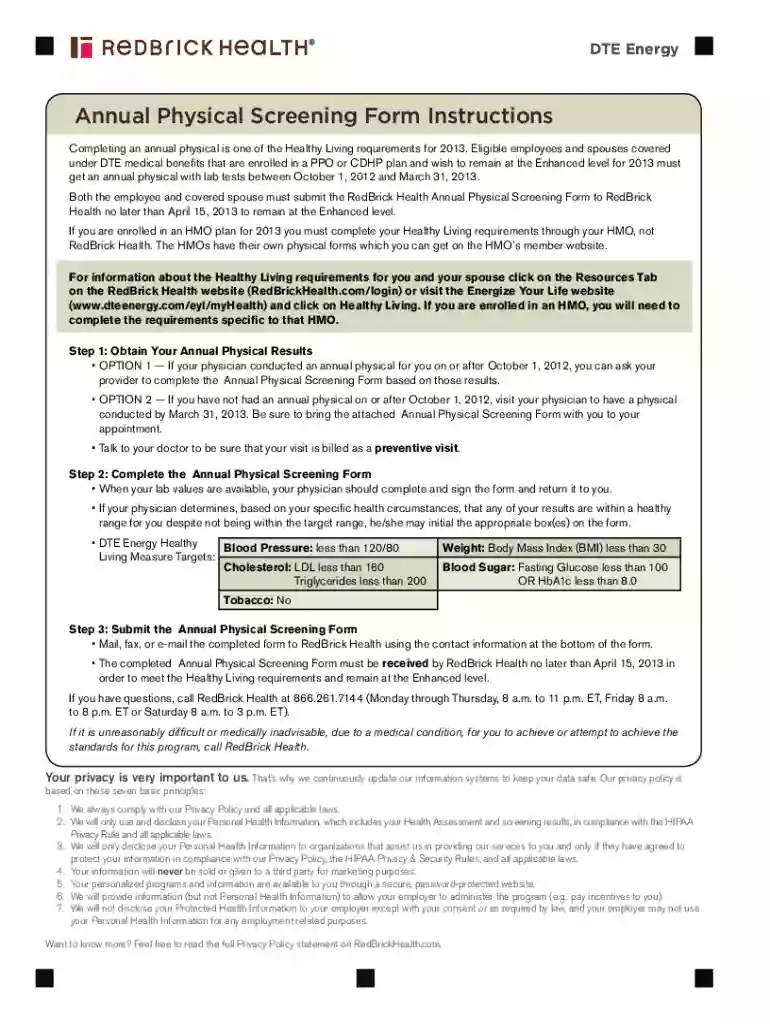
The "Annual Physical Screening Form Instructions" provide comprehensive guidance on how to accurately complete and submit the form required for annual physical screenings. This form is typically used within wellness programs to document and ensure that employees and their families have undergone necessary health check-ups. The instructions outline the detailed steps necessary to fill out each section of the form, ensuring all required health data is gathered accurately and securely. Users can expect to find explanations on how to document personal health metrics, such as blood pressure and cholesterol levels, obtained from their health care providers.
Schedule a Physical Examination: Participants must first book and complete a physical appointment with a qualified healthcare provider. The examination should include relevant lab tests to accurately fill the form.
Gather Health Information: Collect all necessary results and health metrics from the healthcare visit. This may include measurements like blood pressure, cholesterol levels, body mass index (BMI), and other relevant data.
Fill Out Personal Information: Start by entering personal details as specified on the form, such as name, contact information, and employee ID if applicable.
Complete Health Metrics Section: Input the health data obtained from the physician, ensuring accuracy and completeness in line with the results provided during the examination.
Secure Required Signatures: Once all information is filled in, obtain signatures from both the participant and the healthcare provider to validate the form.
Review for Accuracy: Double-check all sections for completeness and accuracy, ensuring no fields are left blank or incorrect information is entered.
Submit the Form: Follow the submission instructions, typically outlined in the instructions, which can include mailing, emailing, or uploading the form to a designated platform.
Participants can obtain the "Annual Physical Screening Form Instructions" through several channels:
Employer’s HR Department: Employees may receive the instructions directly from their human resources department, usually through email or physical handouts.
Wellness Program Portal: Many organizations offer these documents through an online wellness platform, where participants can log in and download the necessary forms and instructions.
Healthcare Providers: In some cases, healthcare providers involved in the employer's wellness program may offer these forms and instructions during medical visits.
Completing the "Annual Physical Screening Form" with the assistance of its instructions ensures compliance with wellness program requirements, which often link to company health insurance benefits. These instructions help participants avoid missing critical fields, thereby preventing delays or rejections in submission. Moreover, the guidance helps maintain data integrity, which is essential for accurate health assessments and tracking over time.
This form and its instructions are typically used by:
Employees: Workers who participate in company wellness programs that require regular health check-ups.
Spouses and Dependents: Family members covered under the employee's health insurance policy who are also eligible or required to participate in the screenings.
Human Resources Professionals: HR staff who manage employee wellness programs and benefits often facilitate form distribution and collecting completed forms.
Healthcare Providers: Physicians and nurses who provide required health screenings and document the results on the form.


The instructions typically include several key elements to assist users:
Detailed Field Explanations: Clarifies what information is required in each section of the form.
Common Mistakes to Avoid: Highlights frequent errors participants should be cautious of, such as mix-ups in units of measurement or leaving required fields blank.
Submission Guidelines: Provides information on how and where to submit the form, including deadlines and acceptable submission methods.
Privacy and Data Protection: Explains measures in place to protect personal health data according to relevant privacy laws.
Certain wellness programs specify important dates within the instructions. Participants should:
Complete Screenings by a Specific Date: Often set before the end of a benefits plan year.
Submit Forms by the Deadline: Ensures forms are processed in time to avoid disruption in benefits coverage.
Heed Reminder Notices: Instructions might also include dates when reminders for physical screenings and form submissions will be sent.
When submitting the "Annual Physical Screening Form," participants must include:
Completed Physical Screening Form: Ensures all relevant data is filled accurately.
Verification of Examination: Documentation from the healthcare provider confirming that the physical and any necessary tests have been completed.
Personal Identification: In some cases, proof of identity or employment may be needed to accompany the form submission.
We've got more versions of the Annual Physical Screening Form Instructions form. Select the right Annual Physical Screening Form Instructions version from the list and start editing it straight away!
At DocHub, your data security is our priority. We follow HIPAA, SOC2, GDPR, and other standards, so you can work on your documents with confidence.