



Definition and Meaning
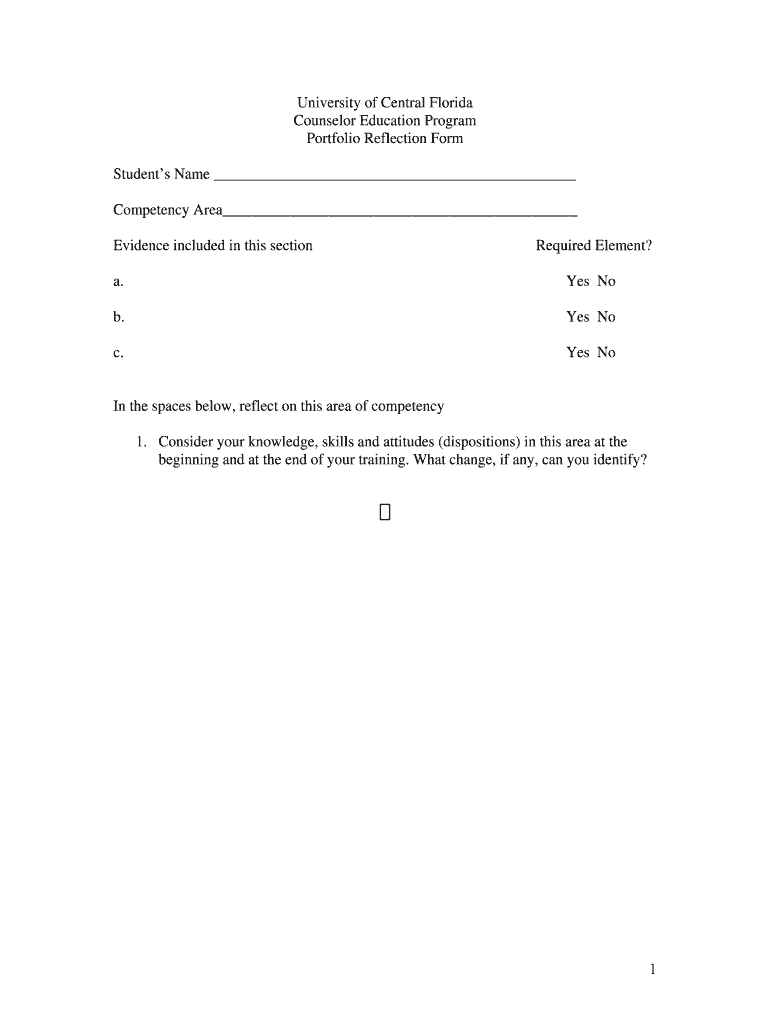
The Portfolio Reflection Form at the University of Central Florida (UCF) is an integral document for students in the Counselor Education Program. It serves as a comprehensive tool for self-assessment, allowing students to reflect on their competencies and evaluate their knowledge and skills both before and after their training. Through this process, students justify their proficiency levels and outline plans for further professional growth and development in their counseling abilities.
Importance of Self-Assessment
- Personal Growth: Encourages students to critically evaluate their progress and achievements, fostering a deeper understanding of personal and professional development.
- Skill Gap Identification: Helps identify areas needing improvement, guiding future learning and training efforts.
- Goal Setting: Assists in articulating realistic and actionable goals for continued education and skill enhancement.
How to Use the Portfolio Reflection Form
Step-by-Step Instructions
- Review Program Guidelines: Before filling out the form, ensure you understand the specific requirements and expectations set by the UCF Counselor Education Program.
- Gather Relevant Materials: Collect any supporting documents, such as transcripts, course syllabi, or previous portfolio entries, that can inform your reflections.
- Reflect on Experiences: Thoughtfully consider your academic experiences, clinical practice, and any professional feedback received during your training.
- Complete Each Section: Carefully read the prompts in the form and provide detailed responses that demonstrate your self-awareness and understanding of your competencies.
- Proofread and Edit: Review your entries for clarity and coherence before submission.
Practical Examples
- Consider your approach to dealing with challenging client cases and how your training informed these strategies.
- Reflect on feedback from mentors and how it has shaped your counseling style and approach.
Steps to Complete the Portfolio Reflection Form
Detailed Process Breakdown
- Introduction Section: Begin by outlining your current academic standing and any pertinent details about your enrollment in the Counselor Education Program.
- Competency Evaluation: Evaluate your competencies by comparing your initial self-assessment with your current skill level. Discuss areas of improvement and provide concrete examples.
- Skill Justification: Justify your proficiency levels by citing specific experiences, coursework, and feedback.
- Future Goals: Clearly outline your career aspirations and the steps you plan to take to achieve these goals.
Key Considerations
- Evidence-Based Responses: Ensure your reflections are supported with evidence from your academic journey.
- Specificity: Be specific in your responses to showcase a comprehensive understanding of your professional growth.
Key Elements of the Portfolio Reflection Form
Core Components
- Competency Assessment: Detailed appraisal of your skills and competencies.
- Reflection Narratives: Insights and narratives that provide depth to your learning experiences.
- Growth Plans: Strategic plans for ongoing professional development.
Essential Features
- Required Fields: Ensure all mandatory sections and fields in the form are thoughtfully completed.
- Signature Section: Include any necessary signatures to validate the form completion process.
Who Typically Uses the Portfolio Reflection Form

Primary Users
- Counselor Education Students: Primarily used by students enrolled in UCF's Counselor Education Program to assess their growth and readiness for professional practice.
- Program Evaluators: Faculty members and evaluators who review the forms to gauge student progress and program effectiveness.
Typical Scenarios
- End-of-Semester Reviews: Often utilized at the end of a semester when students are required to reflect on their competencies before advancing in the program.
- Practicum and Internship Sessions: Used throughout hands-on training sessions to track development in real-world environments.
Legal Use of the Portfolio Reflection Form
Compliance and Ethical Standards
- Data Privacy: Students must ensure that all personal data and sensitive information shared within the form comply with relevant privacy laws and institutional guidelines.
- Honesty and Integrity: Information provided should be truthful and reflective of the student's genuine experiences and competencies.
Institutional Use
- Assessment Tool: Used by UCF as an official tool for assessing the Counselor Education Program's effectiveness and student readiness for professional practice.
Important Terms Related to the Portfolio Reflection Form
Key Terminology
- Competency: Defined as the combination of skills and knowledge that students must acquire and demonstrate through their training.
- Reflective Practice: The ongoing ability to critically analyze one's own professional actions with the aim of improving and learning continuously.
Additional Concepts
- Proficiency Levels: Refers to the stages of competence that students must identify and justify throughout their educational journey.
- Growth Mindset: An essential perspective encouraging students to evolve through challenges by embracing learning opportunities.
Examples of Using the Portfolio Reflection Form
Real-World Applications
- Case Study Analysis: Students may examine a particularly difficult case in detail, reflecting on their decision-making process and any assistance or guidance received.
- Treatment Planning: Reflecting on a successful treatment plan developed during an internship and how it aligns with learned theories and practices.
Common Outcomes
- Enhanced Self-Awareness: Users often report a heightened sense of self-awareness and understanding of their professional abilities after completing the form.
- Actionable Feedback: Facilitates valuable feedback from educators, helping guide students towards constructive improvement.
Who Issues the Form
Issuing Authority
- University of Central Florida: The form is officially issued by the University of Central Florida, specifically within the Counselor Education Program, as part of their academic assessment tools.