






Definition & Meaning
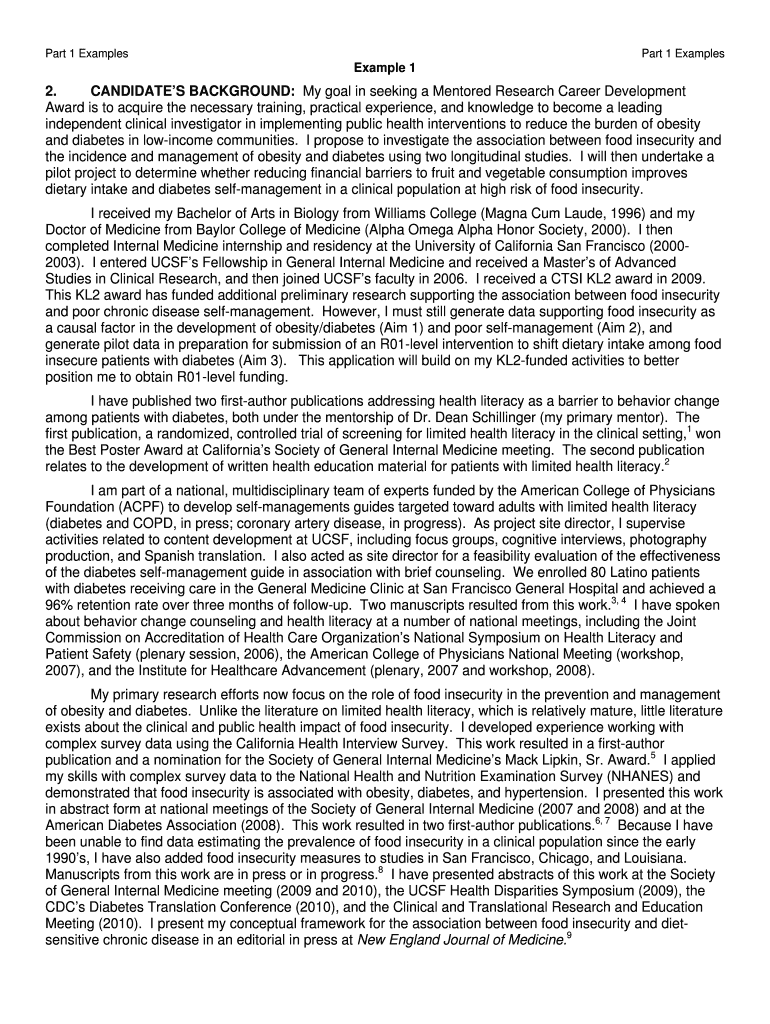
The "Part 1 Examples" refers to a segment or section of documentation or forms that provides illustrative examples to guide users through completing a specific part of a form or process. These examples are intended to clarify what is expected in terms of content, format, and detail, ensuring that users understand how to fill out the corresponding sections correctly. In the context of document management or applications, Part 1 Examples can serve as a template or benchmark that users can refer to for guidance.
- Part 1 Examples might be used in legal, educational, or professional documents to demonstrate proper completion methods.
- They often include sample data, formatting tips, and explanations tailored to the form or document in question.
- These examples aim to reduce errors, enhance comprehension, and ease the form-filling process for users.
Key Elements of the Part 1 Examples
Key elements in Part 1 Examples often include sections or fields that need user input, along with specific guidance on how to fill them. Each element is vital to ensuring that users provide accurate and complete information, adhering to the necessary standards required by the form.
- Standardized Sections: Clearly defined parts of the form that require completion, such as personal details or financial information.
- Sample Data: Fictitious yet realistic data that illustrates how to input information correctly.
- Annotations or Notes: Additional information explaining the rationale or reasoning behind certain inputs or fields.
Detailed Breakdown of Sections
- Identifying Information: Examples of how to input personal or organizational data correctly.
- Financial Details: Illustrations on how to properly report financial figures or numerical data.
- Signatures and Dates: Guidance on where and how signatures and dates should be placed within the form.
How to Use the Part 1 Examples
Using Part 1 Examples effectively involves understanding both the format of the examples and the methodology behind filling out applicable sections of a form. This process ensures that document preparation is efficient and error-free.
- Review the Entire Section: Understand the context and requirements before beginning the completion of your form.
- Follow Sample Data: Use examples as a guide for formatting and the type of information required.
- Make Adjustments: Customize the data based on your specific circumstances while maintaining the format.
- Validate Your Entries: Ensure that all entries are complete, accurate, and conform to the guidance provided in the examples.
Who Typically Uses the Part 1 Examples
Various groups and individuals often utilize Part 1 Examples to ensure accuracy and completeness in form completion. They are especially helpful for users who are unfamiliar with form requirements or are handling complex documentation.
- First-Time Users: Individuals completing a form for the first time benefit significantly from a visual guide.
- Administrative Staff: Office personnel who handle multiple forms and require consistency across documents.
- Legal and Financial Professionals: Professionals in law or finance who need to ensure that documents meet specific regulatory standards.


Steps to Complete the Part 1 Examples
Completing the form section represented by Part 1 Examples can follow a structured approach that provides clear guidance and instructions tailored to the specific needs of the document.
- Understand the Requirements: Familiarize yourself with the form’s purpose and the information being requested in Part 1 Examples.
- Use Examples as a Template: Align your responses with the examples provided, adapting the sample data to fit your individual situation.
- Input Information Carefully: Double-check entries for accuracy regarding numbers, dates, and other critical fields.
- Review and Validate: Cross-examine completed sections against the examples to ensure completeness and correctness.
- Seek Assistance if Needed: Reach out to knowledgeable individuals or resources if uncertain about certain sections.
Legal Use of the Part 1 Examples
The legal application of Part 1 Examples is essential, particularly in compliance-heavy environments where precision and adherence to regulations are paramount. These examples help ensure that users follow the correct procedures and maintain document integrity.
- Form examples often reflect regulatory requirements or standards necessary for legal compliance.
- Users must provide information truthfully and accurately in the framework provided by Part 1 Examples.
- Examples can serve as legal benchmarks, illustrating acceptable formats and content within document preparation.
Important Terms Related to Part 1 Examples
Understanding pertinent terminology related to Part 1 Examples bolsters the comprehension and correct application of these examples when completing forms.
- Form Field: The specific area within a form where data is entered.
- Compliance: Adhering to legal, regulatory, and procedural guidelines.
- Template: A pre-structured example used as a model for document preparation.
Software Compatibility (TurboTax, QuickBooks, etc.)
Part 1 Examples can be supplemented and used in conjunction with various software tools that provide additional support in document preparation and data input.
- Many document management systems integrate with platforms like TurboTax and QuickBooks for enhanced functionality.
- These tools can import and utilize example data to streamline form completion and ensure consistency.
- Software compatibility allows users to adapt examples into digital formats seamlessly, maintaining workflow efficiency.
Digital vs. Paper Version
Understanding the differences between digital and paper versions of Part 1 Examples is necessary for ensuring that users select the format that best suits their needs while maintaining document integrity.
- Digital Versions: Offer the convenience of easy edits, sharing, and access, particularly integrated with online management systems.
- Paper Versions: May be required in environments where electronic submission is not feasible, preserving the traditional approach to form completion.
In-depth understanding of these sections ensures a comprehensive grasp of how Part 1 Examples can assist in accurate form processing, enhancing operational efficiency, and minimizing errors.