






Definition and Meaning
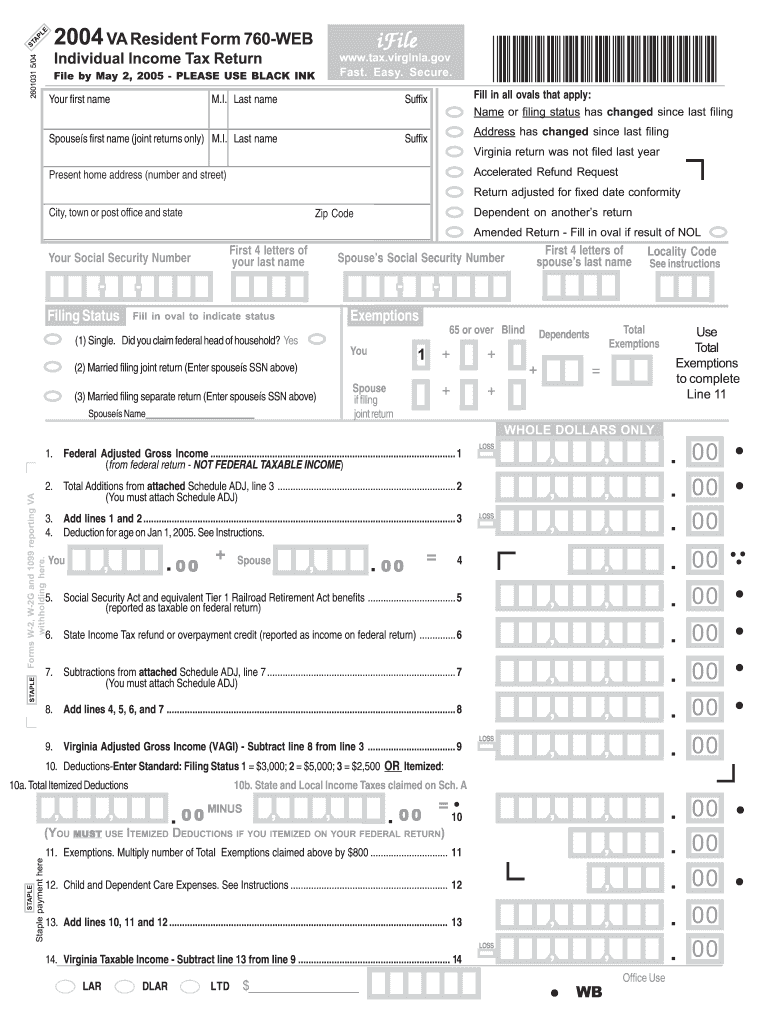
The 2004 VA Resident Form 760-WEB is an Individual Income Tax Return form unique to the state of Virginia. It allows residents to report their income, exemptions, and deductions to calculate their state tax liabilities. This form ensures compliance with Virginia's tax laws and facilitates the state government's collection of individual income taxes. It's essential for taxpayers to accurately report their financial information to avoid potential penalties or discrepancies with state tax regulations.
Steps to Complete the 2004 VA Resident Form 760-WEB
-
Gather Personal Information:
- Include your full name, address, and social security number.
- Determine your filing status (e.g., single, married filing jointly).
-
Report Income:
- List all sources of income, including wages, interest, dividends, and other taxable income.
- Accurately report total income to ascertain tax liability.
-
Apply Exemptions and Deductions:
- Identify eligible exemptions, such as personal or dependent exemptions.
- Calculate deductions, including standard deductions and itemized deductions if applicable.
-
Calculate Tax:
- Use the provided instructions to compute the state tax owed based on taxable income.
- Apply any tax credits, such as those for education or energy efficiency, to reduce the liability.
-
Verify and Submit:
- Review all entries for accuracy to prevent errors.
- Sign and date the form before submission.
Important Terms Related to the 2004 VA Resident Form 760-WEB
- Filing Status: Influences your tax rate and eligibility for certain deductions. Common statuses include single, married filing jointly, and head of household.
- Exemptions: Allowances that reduce taxable income, often based on the number of dependents.
- Deductions: Expenses subtracted from gross income to determine taxable income. Items like mortgage interest and charitable contributions may qualify.
- Tax Credits: Direct reductions of tax liability; unlike deductions, credits reduce the amount of tax owed.
Filing Deadlines and Important Dates
The 2004 VA Resident Form 760-WEB was due by May 2, 2005. Taxpayers needed to ensure that their returns were submitted by this date to avoid late fees or penalties. It's crucial to adhere to state deadlines to maintain compliance and avoid additional costs.
Who Typically Uses the 2004 VA Resident Form 760-WEB
Primarily, Virginia residents with income during the tax year use this form. They include:
- Employed individuals
- Self-employed residents
- Retirees with taxable income
- Students with income that meets state filing requirements


Required Documents for Filing
- W-2 Forms: Statements of wages and taxes withheld from employers.
- 1099 Forms: Reports of various income types, such as interest, dividends, or independent contractor earnings.
- Financial Statements: Documents showing income from dividends, interest, or rental property.
- Receipts for Deductions: Proof of eligible expenses for itemized deductions, such as medical bills or charitable contributions.
Legal Use of the 2004 VA Resident Form 760-WEB
The form is legally required for Virginia residents reporting income to establish their tax obligations. Failure to complete and file a tax return can result in financial penalties and legal actions by the state tax authority. Completing this form accurately ensures compliance and legal adherence to state tax laws.
Penalties for Non-Compliance
Failure to file or inaccuracies in the 2004 VA Resident Form 760-WEB can result in:
- Late Filing Penalties: Charged when returns are not submitted by the deadline.
- Underpayment Penalties: Imposed if taxes owed are not fully paid by the due date.
- Interest Charges: Accrued on any unpaid tax balances post-deadline.
Understanding and adhering to the specific requirements of this form helps taxpayers manage their financial responsibilities efficiently and legally.