






Definition & Meaning
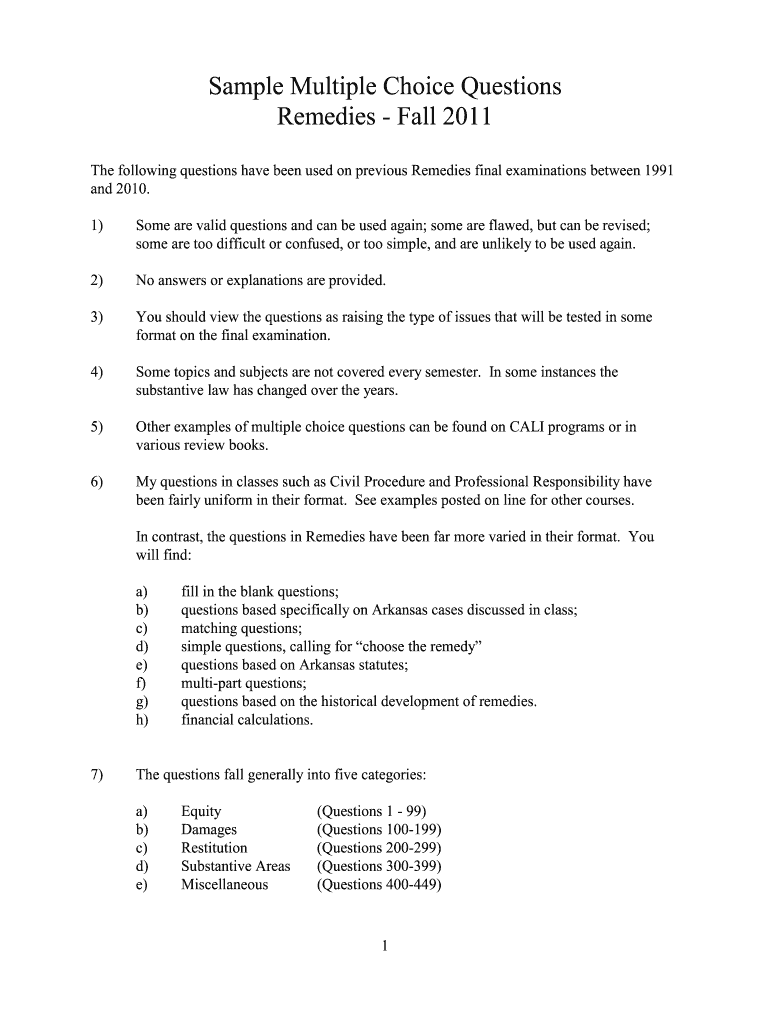
The "Sample Multiple Choice Questions Remedies Fall 2011 The following questions have been used on previo" is a document containing a set of practice multiple choice questions from past final exams, focused on the legal subject of Remedies. This document serves as a preparatory tool, helping students understand key legal concepts and principles regarding remedies, such as equity, damages, restitution, and their practical applications in various scenarios. By studying these examples, students can better prepare for exams and gain a deeper understanding of how legal remedies function.
How to Use the Sample Multiple Choice Questions
Using the sample multiple choice questions involves reviewing the content to familiarize oneself with the structure and style of exam questions in the subject of Remedies. Here are steps to effectively use these samples:
-
Read Each Question Thoroughly: Carefully read each question to understand the facts and legal issues being tested.
-
Identify Key Concepts: Highlight or note the key legal principles or doctrines mentioned, such as types of remedies like injunctions or specific performance.
-
Review Answer Explanations: If available, review any provided explanations for the correct answers to understand the reasoning and legal basis.
-
Practice Regularly: Regular practice with these questions will help reinforce knowledge and build confidence.
-
Discuss with Peers or Instructors: Engaging in discussions about the questions and answers with classmates or instructors can provide additional insights and clarify any misunderstandings.
Key Elements of the Sample Multiple Choice Questions
The questions are designed to test a variety of legal principles related to remedies. Key elements include:
- Various Types of Remedies: Questions on equitable remedies, compensatory damages, and restitution.
- Scenario-Based Questions: Each question typically presents a factual scenario requiring application of legal principles.
- Multiple Legal Concepts: Test comprehension of multiple laws and concepts simultaneously.
- Complex Fact Patterns: Provide realistic, intricate situations requiring deep understanding.
These elements ensure that students are tested on practical application of their legal knowledge in dynamic scenarios.
Examples of Using the Sample Multiple Choice Questions
The document offers several examples where it is particularly useful:
- Exam Preparation: Helps in gauging readiness for final exams by simulating real exam conditions.
- Knowledge Reinforcement: Aids in reinforcing classroom learning through practical application.
- Study Group Activities: Useful for group discussions, allowing students to debate and defend their answers.
- Legal Clinics or Workshops: Acts as a teaching tool during legal workshops or seminars to provide practical learning experiences.
Who Typically Uses the Sample Questions Document
This document is primarily utilized by:
- Law Students: Individuals preparing for exams in courses covering remedies.
- Legal Instructors: Professors or tutors may use it to provide students with study material.
- Bar Exam Candidates: Prospective attorneys looking to solidify their understanding of remedies in preparation for the bar exam.
- Legal Study Groups: Groups focusing on collective exam preparation.


Steps to Complete Sample Questions
Engaging effectively with the sample questions requires:
- Setting a Timer: Simulate exam conditions by answering questions within a set time frame.
- Attempting All Questions: Complete each question, even if unsure, to practice decision-making under pressure.
- Reviewing Answers: After completion, review correct answers and analyze mistakes.
- Analyzing Patterns: Look for patterns in mistakes to identify areas needing improvement.
- Seeking Feedback: Discuss difficult questions with peers or mentors for better understanding.
Important Terms Related to Remedies
To fully grasp the sample questions, understanding key legal terms is essential:
- Equitable Remedies: Solutions such as injunctions or specific performance, aimed at fairness.
- Compensatory Damages: Monetary rewards intended to cover actual losses.
- Restitution: Restoring parties to the position they were in before the wrongful act.
- Injunctions: Court orders requiring a party to do or refrain from doing specific acts.
Familiarity with these terms enhances comprehension of questions and application of relevant principles.
Legal Use of the Sample Questions
The document is used legally as an educational resource, aligning with academic and professional standards. It supports:
- Law Curriculum Requirements: Fulfills study topics outlined in law courses.
- Educational Fair Use: Utilized within academic settings for instructional purposes.
- Professional Development: Enhances ongoing education for law professionals.
Legal use ensures that the document serves its intended purpose of educational enrichment without infringing on intellectual property rights.
State-Specific Rules for Remedies
While the document provides a general overview, state-specific variations may affect how remedies are understood or applied. Important considerations include:
- State Laws Variations: Statutes and case law can differ significantly across jurisdictions.
- Local Precedents: Previous rulings in state courts may influence how certain remedies are granted or denied.
- Region-Specific Terminology: Legal terms might have specific interpretations based on local legal systems.
Understanding these state-specific nuances is crucial for accurate legal practice and comprehension.