01. Edit your form online
Type text, add images, blackout confidential details, add comments, highlights and more.

Type text, add images, blackout confidential details, add comments, highlights and more.

Draw your signature, type it, upload its image, or use your mobile device as a signature pad.

Send it via email, link, or fax. You can also download it, export it or print it out.
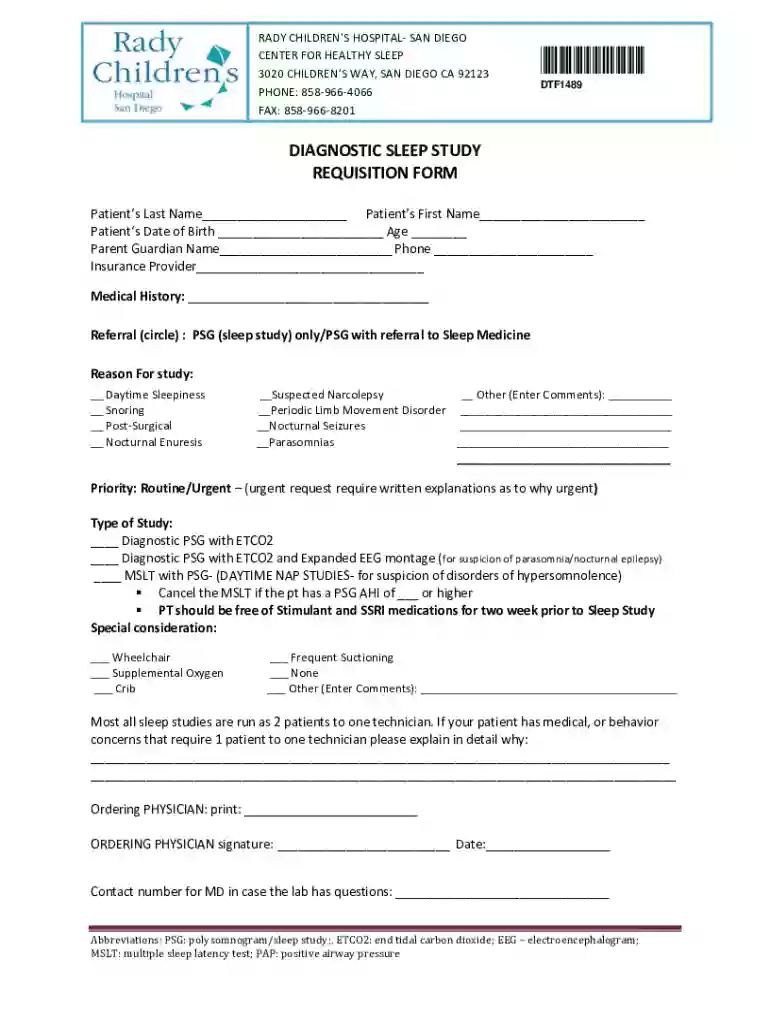
The Sleep Therapy Order Form - Apria HealthcareSleep Study Billing and Diagnostic Codes and GuidelinesCo is a specialized document used primarily within healthcare settings to request and organize sleep therapy services and studies. This form is crucial for documenting patient requirements and ensuring that all necessary preparations are adhered to, facilitating effective communication between healthcare providers, insurance companies, and patients. Its primary function is to streamline the process of diagnosing and treating sleep disorders by outlining the services needed, accompanied by relevant diagnostic codes and billing guidelines.
The form begins by capturing essential patient details, including full name, date of birth, and contact information. This foundational data is critical for accurate identification and communication. It ensures that the patient's history and current conditions are correctly matched to their healthcare records, avoiding any discrepancies during diagnosis or treatment.
A detailed section dedicated to the patient's medical history is included to capture any conditions or medications that could influence sleep study results. This information assists clinicians in understanding potential underlying health issues that could affect sleep. Medications, both prescribed and over-the-counter, are particularly pertinent as they might have side effects that alter sleep patterns and behaviors.
Before completing the form, gather all necessary patient information. This includes medical records, history of sleep issues, and prescribed treatments. Accurate data collection is pivotal to ensure that the prescribed therapy aligns with the patient's medical profile.
When specifying the type of study, select appropriate diagnostic codes. These codes are essential not just for clinical context but also for billing purposes, as they align with insurance requirements to confirm the medical necessity of the sleep therapy.
This form is designed to comply with healthcare regulations, including privacy laws such as HIPAA. It ensures that patient data is securely managed and only shared with authorized parties. The form also incorporates guidelines for billing and coding, essential for meeting insurance and reimbursement standards.
It is imperative that all data entered is accurate and completed by qualified personnel. Any oversights or inaccuracies could lead to misdiagnosis or delays in therapy. Legal compliance also requires that stored information is managed per state and federal laws regarding patient data protection.


Healthcare providers, including sleep specialists and general practitioners, utilize this form to request diagnostic studies tailored to their patients' needs. Medical facilities equipped with sleep study services or partnerships with third-party labs also rely on these forms to schedule and execute these studies effectively.
Insurance companies reference this form to verify the necessity of prescribed sleep therapies or studies. They utilize the form’s diagnostic codes to facilitate billing processes and determine coverage eligibility, ensuring that patient treatments align with their eligibility and benefits.
Understanding these terms is essential for both healthcare providers and patients to ensure that they are aligned on diagnostics and potential treatment avenues.
Digital versions of the Sleep Therapy Order Form offer enhanced convenience, allowing for easy edits, storage, and sharing without the hassle of printed paper. This digital convenience can streamline workflows significantly, particularly for large healthcare facilities that process numerous forms daily.
While digital forms are increasingly popular, some regions and specific use-cases may still require paper forms due to technical constraints or individual patient preferences. It is crucial to ensure that both digital and paper versions of the form provide the same level of detail and security.
Non-compliance in submitting or processing the Sleep Therapy Order Form can result in significant delays in patient care and potential financial penalties for healthcare providers. Incorrect submissions could lead to reimbursement issues and boil down to delayed or denied insurance claims.
To prevent non-compliance, it is vital to ensure all data on the form is accurate and complete before submission. Regular staff training and audits can help maintain high standards of compliance and improve accuracy in form completion.
This comprehensive coverage provides essential insights into using and understanding the Sleep Therapy Order Form effectively. Each section discussed helps streamline the form's purpose and utility, ultimately improving patient outcomes and workflow efficiencies within healthcare settings.
We've got more versions of the Sleep Therapy Order Form - Apria HealthcareSleep Study Billing and Diagnostic Codes and GuidelinesCo form. Select the right Sleep Therapy Order Form - Apria HealthcareSleep Study Billing and Diagnostic Codes and GuidelinesCo version from the list and start editing it straight away!
At DocHub, your data security is our priority. We follow HIPAA, SOC2, GDPR, and other standards, so you can work on your documents with confidence.