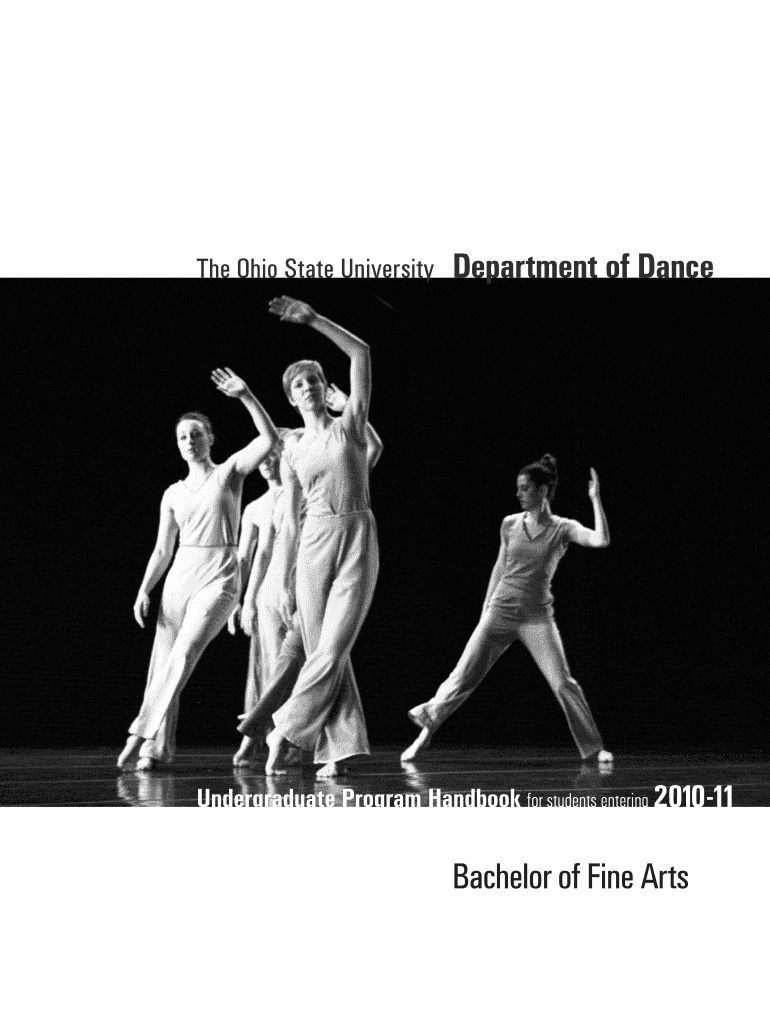







Definition and Purpose of the 2 Undergraduate Program Handbook
The 2 Undergraduate Program Handbook for the Department of Dance at The Ohio State University serves as an essential guide for students enrolled in the Bachelor of Fine Arts in Dance program during that academic year. This document outlines crucial information such as curriculum structures, course requirements, and academic policies, ensuring students have a comprehensive understanding of what is expected throughout their studies. The handbook not only defines the educational path but also provides support through advising and wellness resources.
How to Use the Handbook Effectively
To maximize the benefits of the Undergraduate Program Handbook, students should familiarize themselves with the following sections:
- Curriculum Structure: Understand the Foundation and Contract Curriculums, which dictate the course sequences and requirements.
- Advising Procedures: Regular consultation with advisors is crucial to ensure academic and personal progress.
- Attendance and Academic Policies: Familiarize yourself with the policies to avoid any unintended non-compliance.
By utilizing these sections effectively, students can stay on track and achieve academic success.
Steps to Navigate the Curriculum
- Review Course Requirements: Analyze the required courses for the semester to plan your schedule.
- Consult with Advisors: Regular meetings with academic advisors are recommended to discuss progress and any potential changes.
- Participate Actively: Engage in classes and extracurricular activities to enrich your educational experience.
This step-by-step approach can help students effectively manage their degree progress and meet graduation requirements.
Eligibility Criteria and Enrollment
Prospective students interested in the 2 dance program were required to go through an audition process. Eligibility was typically based on:
- Prior Dance Experience: Applicants needed demonstrable skills and prior training in dance.
- Academic Qualifications: High school transcripts and standardized test scores were essential for university admission.
Meeting these eligibility criteria was mandatory for enrollment in the dance program.


Key Elements of the Handbook
The handbook covers several critical components:
- Scholarship Opportunities: Details about available scholarships and application procedures.
- Health and Wellness Resources: Support structures offered to maintain physical and mental well-being.
- Policies on Academic Standing: Guidelines for maintaining good academic status.
These elements are integral for student success and should be reviewed thoroughly.
Importance of Compliance with Academic Policies
Compliance with academic policies outlined in the handbook is vital. Non-compliance could result in:
- Academic Probation: Failure to meet GPA requirements might lead to probationary status.
- Loss of Scholarships: Scholarships may be revoked if students fail to adhere to guidelines or maintain grades.
Understanding these implications encourages adherence to the policies and fosters a supportive academic environment.
Who Typically Uses the Handbook
The primary users of the handbook are:
- BFA Dance Students: Current students enrolled in the program refer to it for guidance and policy information.
- Academic Advisors: Advisors use the handbook to assist students in their academic journey.
- Faculty Members: Instructors and department staff reference the document when standardizing curricular and academic policies.
Understanding its users highlights the handbook's role in ensuring alignment and consistency across the department.

State and Department-Specific Differences
While the handbook is specific to the Department of Dance at Ohio State University, it can reflect broader regional educational norms. For instance, policies might align with state educational mandates in Ohio, allowing for consistency locally but potentially differing from other states’ institutions. Recognizing these state-specific nuances helps in comparing the handbook’s relevance and customary standards in different academic settings within the U.S.
Examples and Case Studies
Several practical scenarios highlight the handbook's utility:
- Example 1: A student uses the advising procedures detailed in the handbook to adjust their course load due to an unforeseen personal event, illustrating the handbook's role in facilitating academic flexibility.
- Example 2: Faculty utilize the scholarship section to guide students seeking financial aid, demonstrating the handbook's comprehensive nature.
These examples underscore how the handbook acts as a living document, adapting to the evolving needs of its users and the educational environment.