




01. Edit your form online
Type text, add images, blackout confidential details, add comments, highlights and more.

Type text, add images, blackout confidential details, add comments, highlights and more.

Draw your signature, type it, upload its image, or use your mobile device as a signature pad.

Send it via email, link, or fax. You can also download it, export it or print it out.
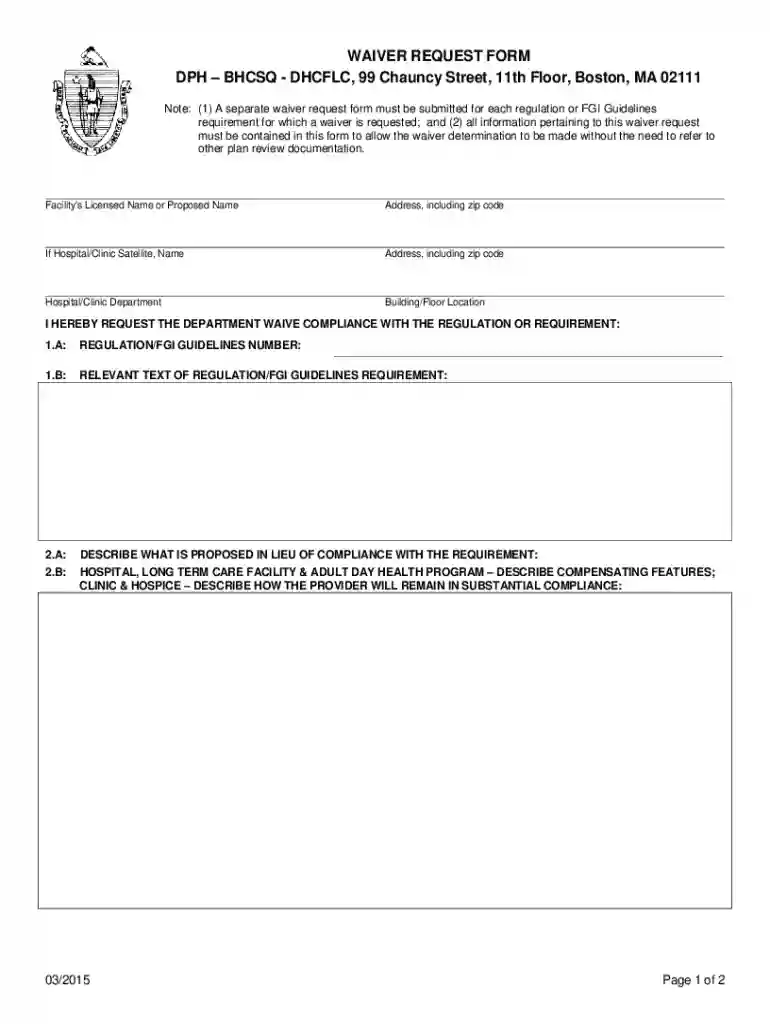
The physical-plant-waiver-form is a critical document used by healthcare facilities seeking exemption from specific regulations or FGI Guidelines. Typically, these guidelines pertain to the physical infrastructure requirements that facilities must adhere to for safety and operational standards. The form allows facilities to request a waiver when compliance presents an undue hardship, such as financial strain or when patient care considerations justify the need for an exception. Thorough completion of this form is necessary for the Department of Public Health to assess whether the waiver should be granted.
Gather Necessary Information: Begin by collecting detailed data regarding the facility. This includes the name, address, and information about the facility's operational scope.
Identify the Regulation in Question: Clearly outline the specific regulation or guideline from which you are seeking an exemption. This information is crucial for the authorities to understand the context of your request.
Propose Alternatives: Provide comprehensive details of any proposed alternatives to the regulations, demonstrating how these alternatives meet or exceed safety and quality standards.
Justify the Waiver Request: Articulate the reasons behind the waiver request. Include any undue hardship faced due to compliance and any potential impact on patient care.
Review and Submission: After completing all sections, review the form for accuracy. Submit as required, often through specified channels offered by the Department of Public Health.
Healthcare facilities can typically obtain the physical-plant-waiver-form from their state’s Department of Public Health or through official healthcare regulatory bodies. These forms might also be available online from the department’s website, providing an easy download option. Facilities should ensure they have the most current version of the form before proceeding.
Utilizing the physical-plant-waiver-form helps healthcare facilities manage regulatory compliance without compromising patient care. By formally requesting exemptions, facilities can continue operations while adhering to alternative safety measures or proving that imposed regulations would lead to undue hardship.
Each state in the U.S. might have variations in their health regulations and thus, differences in related waiver forms. State-specific guidelines dictate the form's requirements, expected alternatives to compliance, and the evaluation process. Facilities should consult their state health department for any distinct rules applicable within that jurisdiction.
The form serves a legal purpose, ensuring that a facility’s request for regulatory exemption is documented and reviewed by appropriate authorities. The legal framework ensures that decisions to grant waivers are made based on documented evidence and sound reasoning, consistent with patient safety and care standards.
Submission procedures for the physical-plant-waiver-form can vary:
Facilities experiencing infrastructural limitations that impede compliance can use this form. For instance, a rural clinic unable to immediately upgrade its facilities due to financial constraints might seek a waiver while implementing alternative safety measures. Examples like these highlight the form's role in maintaining operational functionality without sacrificing care quality.
We've got more versions of the physical-plant-waiver-form (2) form. Select the right physical-plant-waiver-form (2) version from the list and start editing it straight away!
At DocHub, your data security is our priority. We follow HIPAA, SOC2, GDPR, and other standards, so you can work on your documents with confidence.



Converting existing facilities can often cost less than installing the emissions control systems required to keep an antiquated coal plant running. Contents. 1Read more
(2) In consideration of a recommendation by the State survey agency or Accrediting Organization or at the discretion of the Secretary, may waive, for periodsRead more


