Definition and Meaning of the eAPIS Passenger Information Worksheet
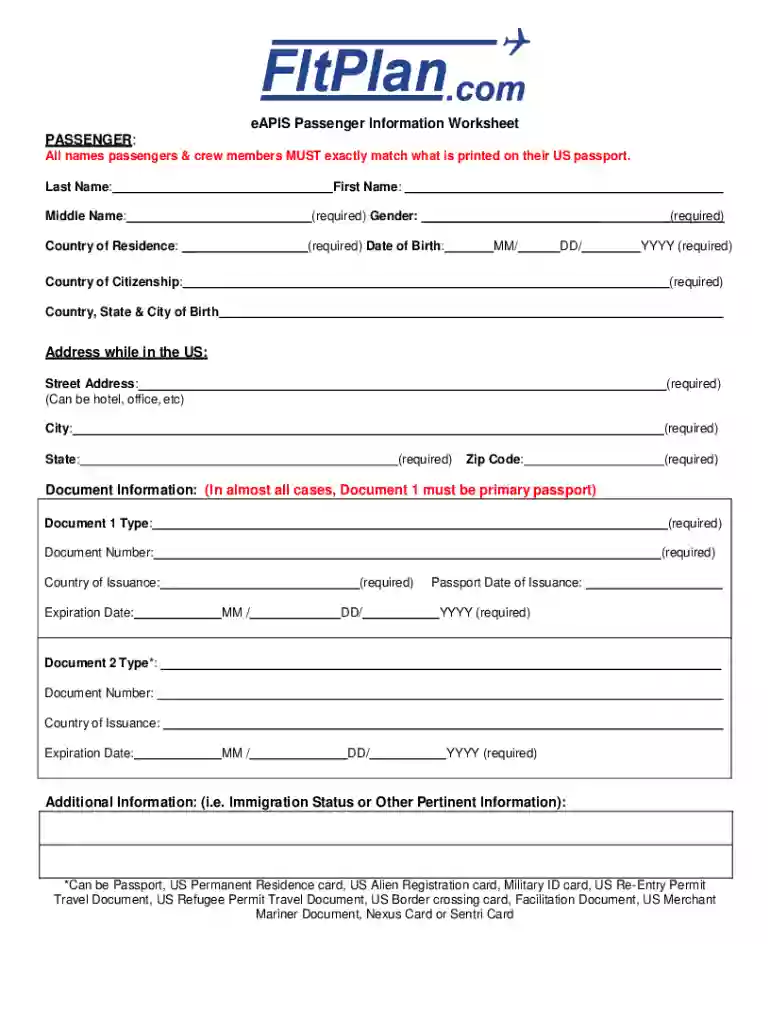
The eAPIS Passenger Information Worksheet is a standardized form used by pilots and aircraft operators to gather critical passenger and crew information required by the Electronic Advance Passenger Information System (eAPIS). This system, managed by U.S. Customs and Border Protection (CBP), mandates the submission of detailed travel data for inbound and outbound flights to and from the United States. The worksheet helps ensure that all necessary details, such as full names, genders, dates of birth, citizenship, and U.S. addresses, are accurately documented to comply with CBP's advance information requirements.
Purpose and Functionality
- Identification Accuracy: Ensures names match those on U.S. passports to avoid discrepancies that could lead to travel delays.
- Data Compilation: Acts as a preparatory tool to collect required information before it is entered into the eAPIS system.
- Compliance Assurance: Helps users comply with legal obligations for reporting passenger information to governmental authorities.
How to Use the Download eAPIS Passenger Information Worksheet
To effectively utilize the eAPIS Passenger Information Worksheet, users should follow a systematic approach for data collection and entry preparation.
- Gather Required Information: Before completing the worksheet, collect personal and travel details for all passengers and crew members.
- Fill Out Personal Details: Input names, gender, dates of birth, and citizenship information as specified on passports and other identification documents.
- Document Travel Itinerary: Ensure that complete travel details, such as the destination and address in the U.S., are included for each individual.
- Review and Verify: Thoroughly review all entries for accuracy to prevent errors during the final submission to eAPIS.
Step-by-Step Data Entry
- Entry Fields: Use text boxes for personal details and dropdown menus for selectable categories like gender.
- Checkboxes: Indicate completion of necessary sections using checkboxes.
Steps to Complete the eAPIS Passenger Information Worksheet
Completing the eAPIS Passenger Information Worksheet involves several steps to ensure compliance with CBP requirements.
- Start with Basic Information: Begin by inputting the aircraft identification number and flight date.
- Enter Passenger Data: Carefully input the required personal information for each passenger and crew.
- Input Flight Details: Add departure and arrival coordinates, including times and port of entry.
- Final Review: Verify that the information matches identification documents, checking for spelling and data accuracy.
- Submit to eAPIS: Compile the worksheet data into the eAPIS online platform for official submission.
Verification and Finalization
- Cross-Check Information: Reconcile any discrepancies between the worksheet and official documents to prevent submission errors.
- Utilize Automated Tools: Use platforms like DocHub to ensure the precision and electronic compatibility of the information.
Key Elements of the eAPIS Passenger Information Worksheet
The worksheet is structured to efficiently capture relevant data necessary for CBP compliance. Key elements include:
- Passenger Information: Names, birthdates, and nationality.
- Flight Information: Aircraft tail number and routing information.
- Identification Details: Passport numbers and additional identification as applicable.
Data Protection Measures
- Security Protocols: Ensure data entered on the worksheet is securely stored and shared in compliance with privacy standards.
- Encrypted Transfers: Use platforms offering secure data encryption to prevent unauthorized access during information submission.
Legal Use and Compliance with the eAPIS Passenger Information Worksheet
Adhering to legal guidelines is critical when using the eAPIS Passenger Information Worksheet.
- Legal Requirements: The worksheet must be used to record accurate and truthful passenger information as mandated by the CBP.
- Non-Compliance Consequences: Incorrect or incomplete submissions may lead to fines or entry denial for passengers if compliance is not maintained.
Penalties and Enforcement
- Fines: Significant monetary penalties may apply for failure to submit required information accurately and timely.
- Travel Interruptions: Discrepancies or non-compliance can result in flight delays or detentions at border entry points.
Important Terms Related to eAPIS
Several terms are essential for understanding the worksheet’s context, including:
- Advance Passenger Information: Data given to CBP in advance of the flight’s arrival or departure.
- Primary Identification Documents: Critical documents like passports that must match the information on the worksheet.
- CBP Compliance: Adhering to U.S. Customs and Border Protection regulations for data entry and submission.
Software Compatibility for Processing eAPIS Worksheets
Various software solutions can assist in processing the eAPIS worksheets for efficient data entry.
- DocHub Integration: Compatible with PDF and document processing to streamline data collection and verification.
- Cloud Services: Use cloud storage for secure sharing and collaboration with stakeholders involved in the flight operation.
Recommended Software Platforms
- Document Editing Tools: Tools like DocHub offer functionalities to annotate and edit the worksheet effectively.
- Secure Submission Platforms: Services that offer direct integration with eAPIS for seamless data transfer and submission.
Business and Individual Use Cases
- Charter Flights: Frequent users for managing passenger and crew information efficiently.
- Corporate Aviation Departments: Utilize the worksheet to ensure high compliance standards for their executives and staff.Executives and staff.