







Definition and Purpose of the Oklahoma Emergency Medical Services
Oklahoma Emergency Medical Services (EMS) refers to a framework within the state of Oklahoma dedicated to providing emergency medical care to individuals in need. This system includes the rapid response to accidents, medical emergencies, and disasters, effectively bridging the gap between the onset of an emergency and definitive health care. The primary aim is to deliver critical care and transportation to those experiencing acute health crises, ensuring timely intervention to improve patient outcomes.
How to Use the Oklahoma Emergency Medical Services
Engaging with Oklahoma EMS typically begins with a 911 call by a concerned individual or witness to an emergency. EMS personnel are trained to assess the situation, provide on-the-scene medical care, and if necessary, transport the patient to a healthcare facility. Users should communicate clearly about the nature of the emergency, the condition of the patient, and any known medical history. EMS teams will then navigate to the location using sirens and lights to expedite travel and ensure immediate attention.
Key Protocols Followed by EMS
- Assessment: Initial evaluation of the patient's condition.
- Treatment: Provision of necessary medical interventions, such as CPR or medication administration.
- Transport: Safe transfer of the patient to a hospital if required.
Obtaining Assistance from Oklahoma Emergency Medical Services
Obtaining assistance from Oklahoma EMS is straightforward. In moments of crisis, dial 911. Communication should include:
- The location of the incident.
- The nature of the emergency.
- Known medical conditions of the patient.
- Any immediate threats to safety.
Oklahoma EMS is designed for public access; thus, no special authorization is required to initiate a response.
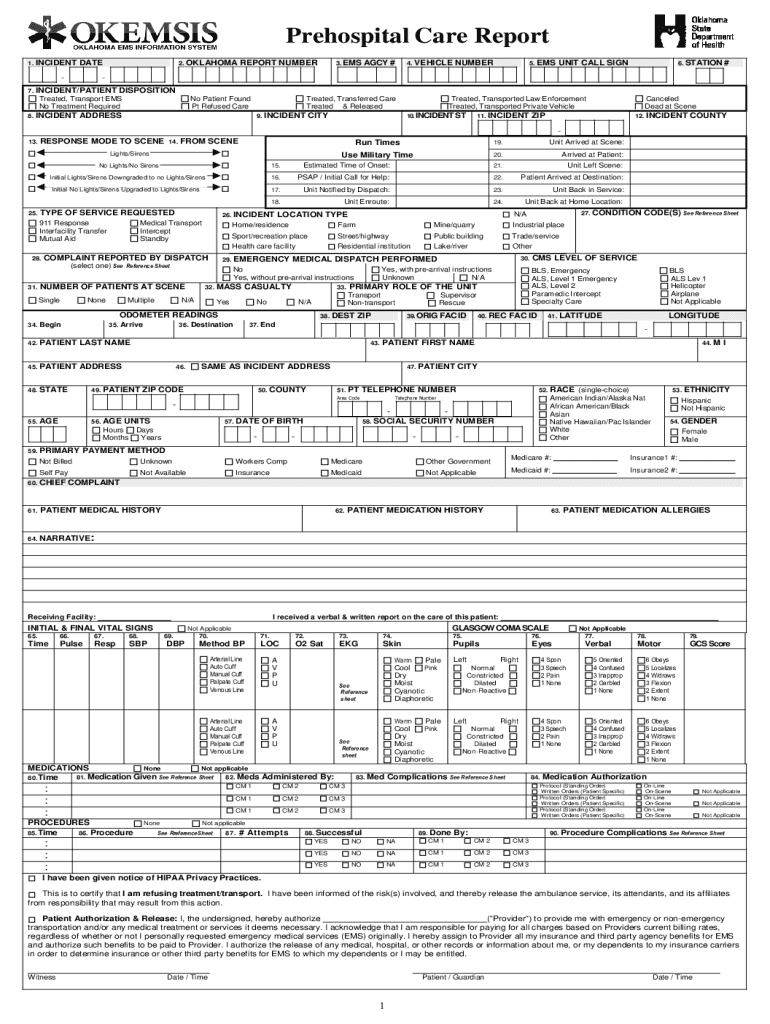
Steps to Complete an Oklahoma Prehospital Care Report
The Oklahoma Prehospital Care Report is crucial for documenting the specifics of EMS encounters. It is typically completed by field personnel and includes:
- Incident Information: Address and nature of the emergency.
- Patient Demographics: Age, gender, and relevant medical history.
- Treatment Provided: Details of medical interventions delivered onsite.
- Vital Signs: Recorded observations like blood pressure, heart rate.
- Medications Administered: Any drugs given during care.
- Transport Details: Information on where and how the patient was transported.
- Crew Member Details: Identification of EMS personnel involved.
Reasons to Utilize Oklahoma Emergency Medical Services
People rely on Oklahoma EMS for several reasons, including:
- Life-Threatening Emergencies: Such as heart attacks or severe injuries.
- Non-Life-Threatening Urgencies: Includes incidents like broken bones or moderate burns.
- Medical Advice: In certain situations where guidance is needed until a patient reaches a hospital.
Who Typically Uses the Oklahoma Emergency Medical Services?
Oklahoma EMS caters to a broad demographic range. Common users include:
- General Public: Individuals encountering sudden health emergencies.
- Healthcare Facilities: During inter-facility transfers.
- Event Organizers: Who may require standby medical support.


Special Populations Served
- Children: For pediatric emergencies.
- Elderly: Given their higher risk of falls and medical crises.
- Disabled Individuals: Ensuring specialized care and transport.
Important Terms and Definitions Related to EMS
Understanding EMS-specific terminology is vital for effective interaction and reporting. Important terms include:
- ALS (Advanced Life Support): Advanced medical care administered by certified paramedics.
- BLS (Basic Life Support): Fundamental emergency services typically offered by EMTs.
- Defibrillation: A technique to restore a regular heartbeat.
Legal Use and Compliance with Oklahoma Emergency Medical Services
Utilization of Oklahoma EMS is also subject to legal stipulations:
- HIPAA Compliance: Ensures patient confidentiality and data protection.
- Scope of Practice: Governs the types of medical procedures EMS personnel can perform.
- Mandatory Reporting: Certain cases require notifications to public health authorities.
State-Specific Rules and Regulations for EMS
Oklahoma's regulations regarding EMS are specific in ensuring quality and consistency. Key areas include:
- Certification Requirements: For EMTs and paramedics.
- Operational Protocols: Guidelines that EMS providers must follow.
- Training Standards: In-service education to maintain competency.
Understanding these guidelines is essential for EMS practitioners to remain compliant and deliver optimal care.




