






Overview of the PRI Form
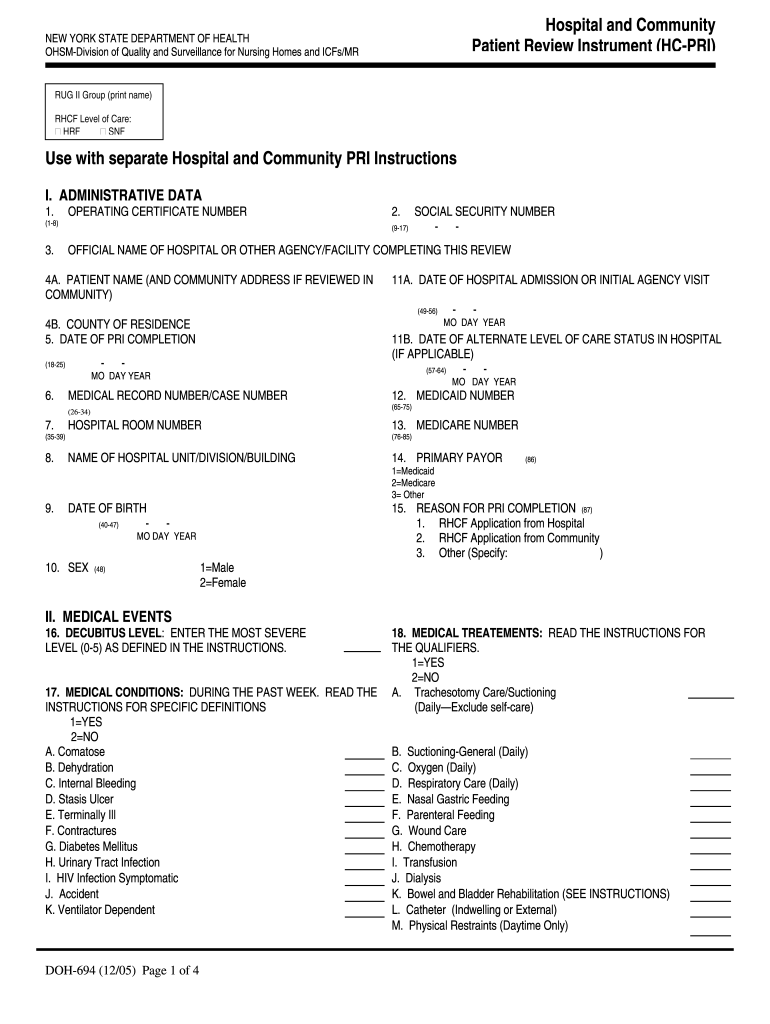
The Patient Review Instrument (PRI) form is an essential assessment tool developed by the New York State Department of Health. This form is significant for evaluating a patient's medical conditions, daily living activities, behaviors, and overall care plans within hospital or community settings. The creation and accurate completion of the PRI form ensure effective care planning, resource allocation, and compliance with state regulations.
Purpose of the PRI Form
The PRI form serves multiple critical functions:
- Patient Assessment: It collects detailed information about a patient's medical history, current health status, and specific needs. This comprehensive evaluation aids healthcare professionals in developing tailored care plans.
- Resource Allocation: By identifying a patient's requirements, the PRI assists healthcare facilities in allocating resources efficiently, ensuring that patients receive the appropriate level of care.
- Regulatory Compliance: Submitting the PRI form is often a requirement for Medicaid reimbursement in New York, thereby helping institutions adhere to state guidelines.
Structure of the PRI Form
The PRI form includes various sections that collect specific information. Key components include:
- Medical History: Details about past illnesses, surgeries, and hospitalizations that may affect current care.
- Activities of Daily Living (ADLs): Assessment of a patient’s capability to perform basic tasks like bathing, dressing, and feeding.
- Behavioral Observations: Insights into mental health or cognitive issues that may impact care requirements.
- Specialized Services Needed: Identification of any additional healthcare services needed to support the patient.
The structured format ensures that the critical information is easily understandable and accessible to healthcare providers.
Completing the PRI Form: Step-by-Step Instructions
- Gather Necessary Information: Before starting, collect relevant patient information, including medical history, current medications, and details regarding daily living activities.
- Fill Out the Form Thoroughly: Complete each section with accuracy. Ensure that you provide detailed responses, particularly in areas relating to the patient’s medical condition and daily functioning.
- Incorporate Collaboration from Other Providers: When necessary, involve other healthcare professionals who may provide insights into the patient's needs, especially in areas like behavioral health or rehabilitation.
- Review for Completeness: After filling out the PRI form, review all entries to ensure accuracy and completeness. Missing or incorrect information can lead to delays in care planning and reimbursement.
- Submit the Form in the Required Format: PRIs can be submitted in both digital and paper formats depending on the healthcare facility’s protocols. Make sure to follow any specific guidelines related to submission.
Legal Considerations and Compliance
Using the PRI form successfully involves meeting certain legal requirements to ensure compliance with health regulations. Notably:
- Use of the PRI for Medicaid Compliance: Submitting an accurately completed PRI is often necessary for securing Medicaid funding for long-term care.
- Confidentiality of Patient Information: It is critical to adhere to HIPAA regulations when collecting and storing patient data. Ensure that the information in the PRI form is handled with strict confidentiality.
- Continual Updates and Accuracy: Regularly update the PRI form as the patient’s condition evolves to maintain compliant and accurate records.
Examples of Situations Requiring PRI Form Completion
Here are scenarios where the PRI form would be necessary:
- Admission to a Nursing Facility: If a patient enters a nursing home, the PRI form is typically required to assess their needs and qualify them for Medicaid support.
- Transitioning Care Settings: When patients move from hospitals to rehabilitation facilities, a PRI may assist in determining their rehabilitation needs accurately.
- Periodic Reviews for Continuing Care: Patients receiving long-term care may undergo periodic assessments requiring an updated PRI to ensure ongoing support aligns with their needs.
Key Variants and Instructions Related to the PRI Form
- DOH 694 Form: Often referenced as a standardized version of the PRI form, this specific iteration is used for consistent data collection across various healthcare settings.
- NYS PRI Form Instructions: Familiarize yourself with the specific instructions that accompany the form, as they provide vital information on how to complete each section, especially when addressing complex medical histories and needs.
Conclusion
The PRI form is instrumental in healthcare settings across New York, helping healthcare professionals evaluate and address patient needs systematically and legally. Proper understanding and use of the PRI, including its requirements and variations, contribute significantly to patient care and regulatory compliance in the healthcare system.