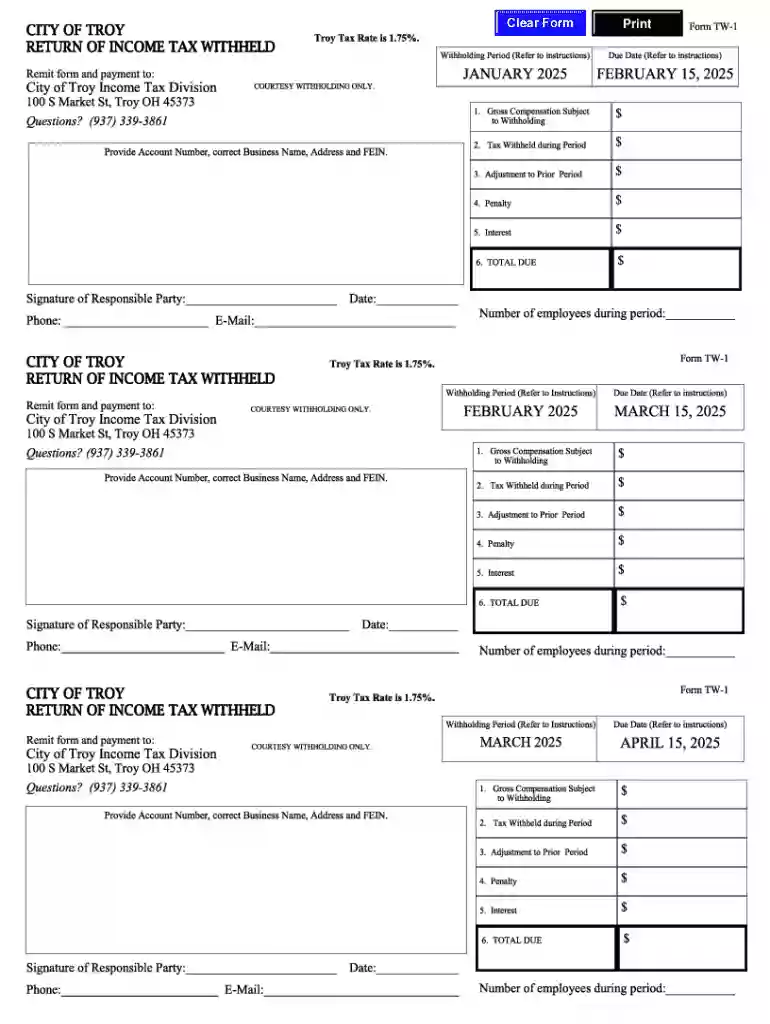
Definition & Meaning of the Troy WH Booklet LCK 25
The Troy WH Booklet LCK 25 serves as a structured document designed for specific procedural or reporting needs. It is often utilized in contexts where standardized information collection and presentation are crucial. The booklet typically contains sections or fields intended for filling out data, catering to a particular industry or legal requirement. The exact purpose and usage are determined by the governing rules or guidelines associated with the form, which helps ensure that the relevant data is captured accurately and comprehensively.
How to Use the Troy WH Booklet LCK 25
Using the Troy WH Booklet LCK 25 effectively involves understanding its intended purpose and structure. This booklet generally consists of various fields and sections that may require specific types of information. Users should:
- Identify Mandatory Fields: Determine which fields are required and prioritize completing those sections to avoid incomplete submissions.
- Follow Instructions Carefully: Read any accompanying instructions to ensure that each entry meets prescribed guidelines.
- Provide Accurate Information: Double-check all entries for accuracy to prevent any potential discrepancies.
- Use Appropriate Formats: Adhere to required formats for dates, numerical entries, or specific terminologies.
Steps to Complete the Troy WH Booklet LCK 25
Filling out the Troy WH Booklet LCK 25 requires a systematic approach to gather and document necessary information efficiently.
- Collect Required Documents: Before starting, ascertain which documents are necessary to complete the booklet accurately.
- Review Each Section: Familiarize yourself with the entire form, noting sections that are applicable to your situation.
- Write Legibly or Type: Ensure entries are clear and legible, or use electronic versions if typing is an option.
- Recheck Entries for Completeness: After completing all sections, review your entries to ensure no required fields are left blank.
Key Elements of the Troy WH Booklet LCK 25
The booklet consists of various key elements that contribute to its ability to capture detailed information accurately.
- Identifying Information: Typically includes details like names, addresses, and identification numbers.
- Data Fields: These may include checkboxes, decision trees, or areas for narrative responses.
- Instructions and Annotations: Provided to clarify how to complete each section and offer guidance on the type of information required.
Who Typically Uses the Troy WH Booklet LCK 25
The use of the Troy WH Booklet LCK 25 spans various user types, depending on its specific industry purpose.

- Business Professionals: Involved in compliance or regulatory reporting may utilize the booklet for formal submissions.
- Legal Practitioners: Might use the form to ensure specific legal requirements are adequately documented.
- Government Agencies: May require the booklet to facilitate standardized data collection from individuals or organizations.
Legal Use of the Troy WH Booklet LCK 25
The Troy WH Booklet LCK 25 must be used in accordance with its legally defined purposes.
- Compliance Assurance: The booklet ensures that all necessary fields are completed for regulatory compliance.
- Documentation Evidence: Acts as verifiable proof of compliance or adherence to specific procedures.
- Legal Reference: In cases of audits or review, the booklet can serve as a formal reference document.
Examples of Using the Troy WH Booklet LCK 25
Real-world scenarios illustrate the practical use of the Troy WH Booklet LCK 25 across various contexts.
- Regulatory Submissions: Businesses may complete the booklet as part of mandatory reporting to governing bodies.
- Record Keeping: Legal organizations might use the booklet to document activities or compliance measures co-ordinated with legal mandates.
- Internal Audits: Corporations might use the booklet to standardize internal audit processes and ensure consistent data capture.
Form Submission Methods for the Troy WH Booklet LCK 25
The method of submitting the Troy WH Booklet LCK 25 can vary based on the issuing authority's preference.
- Online Submission: Digital versions are often submitted through electronic platforms, ensuring a quicker and more efficient process.
- Mail: Some entities may require physical copies to be mailed, especially if original signatures are necessary.
- In-Person: Direct delivery might be necessary in scenarios requiring personal identification verification or when submitting sensitive information.