




01. Edit your form online
Type text, add images, blackout confidential details, add comments, highlights and more.

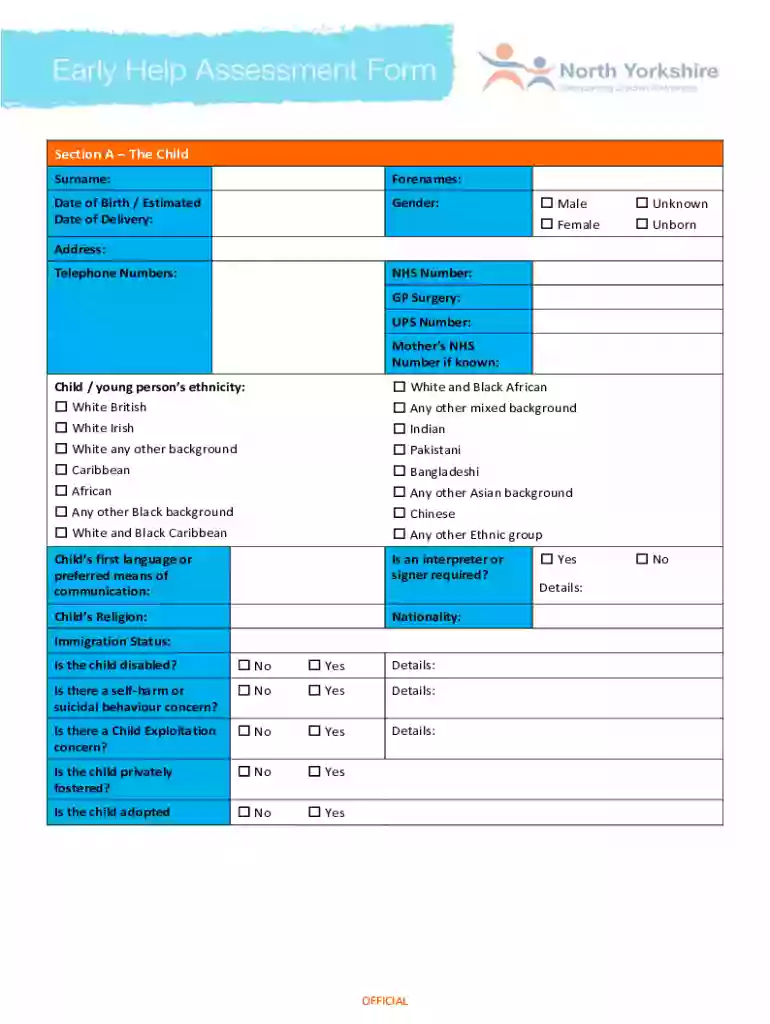
Type text, add images, blackout confidential details, add comments, highlights and more.

Draw your signature, type it, upload its image, or use your mobile device as a signature pad.

Send it via email, link, or fax. You can also download it, export it or print it out.
Understanding the purpose of the form related to NHS Numbers and changing gender markers is crucial for individuals seeking to update their gender identity in government records. This process involves legal and administrative steps to ensure that a person's gender marker is accurately reflected across various documents, aligning with their gender identity. This form provides guidance on how to make these changes effectively while adhering to regulatory requirements.
Using this form requires following a series of steps outlined to assist individuals through the process seamlessly. The document outlines essential instructions to update the gender marker associated with an NHS Number. Users are advised to carefully read through the instructions, ensuring that all personal information is correctly filled out before submitting it for processing. The guidance within the form assists in navigating through any potential complexities involved in the procedure.
Understanding these terms is fundamental for accurately completing and processing the form.
To be eligible for changing the gender marker on an NHS Number, individuals must satisfy specific criteria. Typically, this includes providing proof of gender transition, offering legal documentation to support the gender change, and meeting any age requirements established by governing bodies.


This document serves as an official guide for legally updating the gender marker on an NHS Number. It is vital to comprehend the legal implications and requirements for honesty and accuracy when submitting such forms. Individuals must ensure that all details are legally compliant to prevent potential legal consequences or delays in processing.
Compiling and submitting these required documents is a critical step to ensure the gender marker change is accepted without impediments.
Individuals have multiple options for submitting the form:
Selecting the optimal submission method depends on personal preference and urgency.
While this guidance provides a general framework, specific rules and processes may vary by state. Individuals are encouraged to check with local authorities to understand any regional nuances or additional requirements for processing the change in gender markers. Adjusting to these state-specific rules ensures legal compliance and expedites the administrative process effectively.
We've got more versions of the Advice on NHS Numbers - Changing Gender Marker form. Select the right Advice on NHS Numbers - Changing Gender Marker version from the list and start editing it straight away!
At DocHub, your data security is our priority. We follow HIPAA, SOC2, GDPR, and other standards, so you can work on your documents with confidence.


by A Rappole 2015 Cited by 16 some federal district courts are no longer changing gender marker statuses because the invalidated parts of the law have yet to be changedRead more
Aug 27, 2025 External beam radiotherapy for prostate cancer came of age with the introduction of high energy linear accelerators in the 1960-80s.


