01. Edit your form online
Type text, add images, blackout confidential details, add comments, highlights and more.

Type text, add images, blackout confidential details, add comments, highlights and more.

Draw your signature, type it, upload its image, or use your mobile device as a signature pad.

Send it via email, link, or fax. You can also download it, export it or print it out.
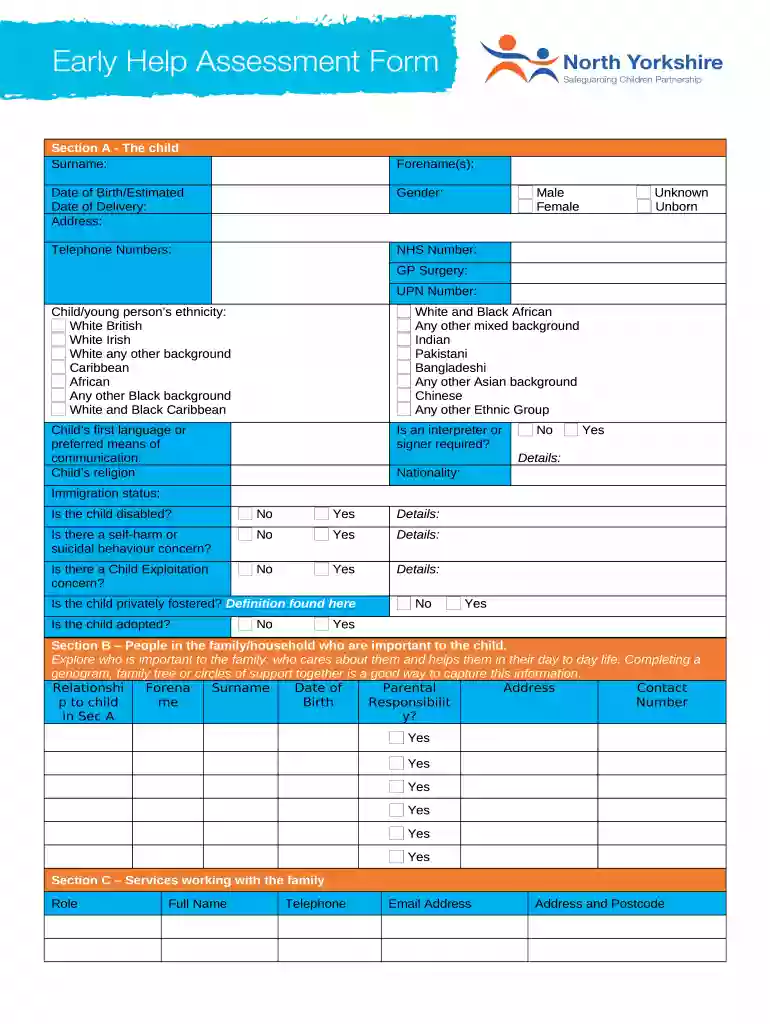
The Early Help Assessment Form DOC 875 32 KB is a comprehensive tool designed to evaluate the needs and circumstances of a child and their family. This form facilitates the identification of required interventions to support the child’s well-being. The assessment seeks to gather a holistic view by including personal details, family dynamics, and documented services. By evaluating strengths and concerns, it helps outline the next steps for improvement. Understanding its purpose can aid professionals in child services to better collaborate across various agencies while centering the child’s needs.
Accessing the Early Help Assessment Form is a straightforward process, typically available through government child welfare services or educational institutions. Many agencies provide downloadable versions of the form in PDF or DOC formats from their official websites. Should you require a physical copy, contact your local child services office. It is essential to use the official and most updated version to ensure compliance with current protocols. Some organizations may also offer the option to obtain these forms via cloud-based document management systems like DocHub for ease of use.
Gather Necessary Information: Collect all the relevant details about the child and family, including personal information, service involvement, and previous assessments.
Initial Assessment: Assess the child's needs, focusing on their education, health, emotional well-being, and family dynamics.
Documenting Strengths and Concerns: Clearly outline the child’s existing strengths and support structures, as well as any areas of concern that need addressing.
Strategize Interventions: Propose actionable steps and interventions that can help improve identified concerns while leveraging strengths.
Complete the Form Details: Fill out sections designated for parties involved, such as the assessment author, date of assessment, and any supporting documents attached.
Review and Sign: Ensure accuracy by reviewing all information filled in, followed by signing the form. If multiple professionals are involved, distribute for signatures accordingly.
This form is primarily used by professionals in the child welfare sector, including social workers, educators, and healthcare providers, who are involved in early childhood development stages. It serves as a collaborative tool among multidisciplinary teams that focus on offering tailored support services to children and their families. Parents and guardians also engage with the form to help illustrate their child's needs and facilitate service access.


Personal Details: Includes the child's name, age, and contact information.
Family Dynamics: Provides insights into the family structure, members involved, and dynamics that may affect the child.
Reason for Assessment: Identifies why the assessment is needed and what outcomes are expected.
Strengths and Concerns: Documents what is currently working well for the child and what issues need addressing.
Next Steps: Strategies and potential interventions for improving the child's safety and development.
Documentation and Signatures: Ensures all relevant data is certified by involved parties for authenticity and accountability.
Legal frameworks govern the use of the Early Help Assessment Form DOC 875 32 KB to protect families and children’s data. Compliance with privacy laws like the Family Educational Rights and Privacy Act (FERPA) in the U.S. is crucial for safeguarding information collected during assessment. Additionally, practitioners must ensure that everyone involved in the assessment process has given informed consent, particularly when sensitive data is concerned.
An example of using this form includes a school identifying a child showing signs of social withdrawal and academic struggle. By initiating the Early Help Assessment, the school’s social workers and teachers collaborate to assess the child’s needs from multiple perspectives—emotional, educational, and familial. Recommendations might include academic support, counseling, and family mediation services to create a supportive environment conducive to progress.
Variations in state regulations may influence how assessments are conducted and documented. For instance, states may have differing guidelines on data sharing and the engagement of specific local agencies. Although the core structure of the form remains consistent, practitioners should familiarize themselves with state-compliant frameworks that detail documentation nuances and specific intervention resources available in their locality.
We've got more versions of the Early Help Assessment Form DOC 875 32 KB form. Select the right Early Help Assessment Form DOC 875 32 KB version from the list and start editing it straight away!
At DocHub, your data security is our priority. We follow HIPAA, SOC2, GDPR, and other standards, so you can work on your documents with confidence.