




01. Edit your ak court system forms online
Type text, add images, blackout confidential details, add comments, highlights and more.

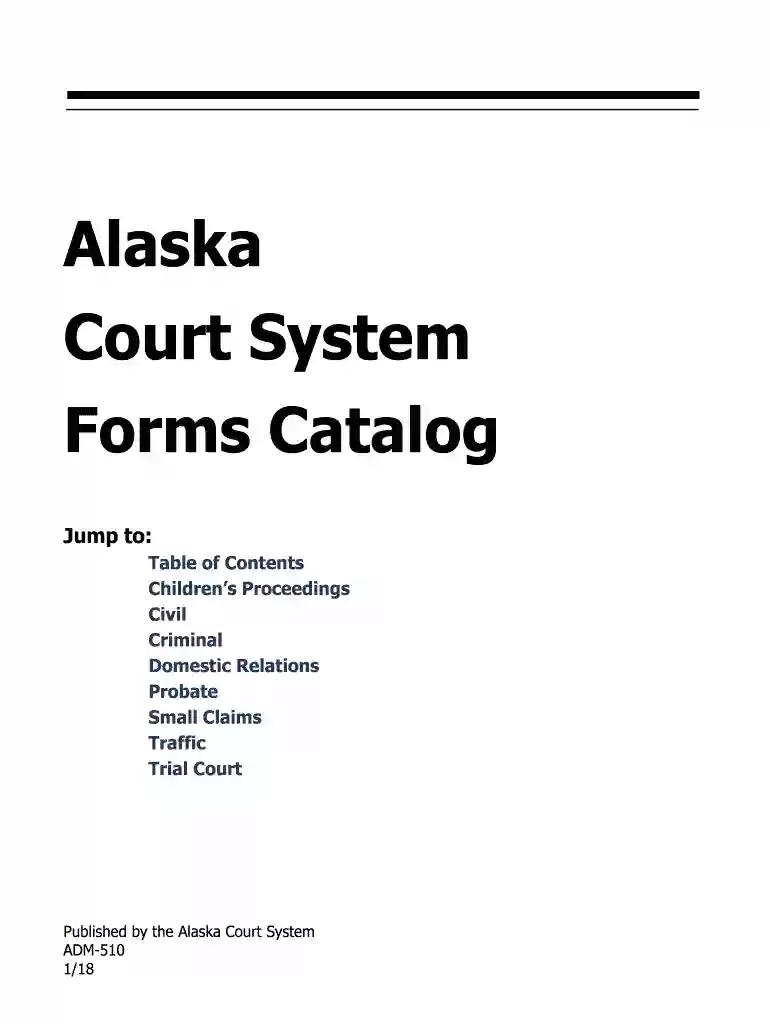
Type text, add images, blackout confidential details, add comments, highlights and more.

Draw your signature, type it, upload its image, or use your mobile device as a signature pad.

Send system forms catalog via email, link, or fax. You can also download it, export it or print it out.
AK court system forms are standardized documents utilized within the Alaska Court System to facilitate various legal processes. These forms encompass a broad range of legal proceedings, including civil, criminal, domestic relations, probate, and traffic matters. By providing structured formats, these forms ensure consistency and clarity in legal documentation, aiding not only legal professionals but also individuals representing themselves in court.
Each category is tailored to meet the specific procedural requirements of different types of cases.
Using AK court system forms involves several critical steps that ensure clarity and compliance with legal standards. Understanding the type of form required for specific legal actions is paramount.
Accessing AK court system forms is a straightforward process, designed to be user-friendly to facilitate efficient legal proceedings.
Always verify that you have the correct form number and version relevant to your legal matter. Updates to forms are frequent, reflecting changes in procedural requirements or legislative amendments.
Completing an AK court system form requires meticulous attention to detail to ensure that all legal criteria are met.
AK court system forms are extensively utilized by a wide array of individuals and entities involved in legal processes in Alaska.


Each user group leverages the forms in accordance with their specific legal needs and case types.
The legal use of AK court system forms is essential for ensuring procedural compliance and facilitating transparent legal processes.
Consulting with a legal professional is advisable to ensure correct form usage and full compliance with Alaska’s legal statutes.
Understanding the critical elements included in AK court system forms is vital for proper completion and submission.
Adherence to specific formatting guidelines, such as page layout and margin sizes, is crucial for acceptance by the court.
Specific documentation is often required to accompany AK court system forms to substantiate the claims or defenses made.
Double-check the specific form requirements to ensure all necessary documents are included. Failure to provide complete documentation can delay or negatively impact case proceedings.
We've got more versions of the ak court system forms form. Select the right ak court system forms version from the list and start editing it straight away!
At DocHub, your data security is our priority. We follow HIPAA, SOC2, GDPR, and other standards, so you can work on your documents with confidence.
Contact forms@akcourts.gov to ask for a paper copy of a form to be mailed to you. Some forms have the option to use a web-based tool to walk you through and
Aug 29, 2025 Conduct a web search for the courts web site, e-filing, and/or docket search system. Court Records Documents. CourtLink and Briefs, Pleadings
by M Dunleavy THE REGULATIONS REPRODUCED HERE HAVE BEEN PROVIDED BY THE. DEPARTMENT OF ENVIRONMENTAL CONSERVATION AS A PUBLIC COURTESY.


