







Definition & Meaning
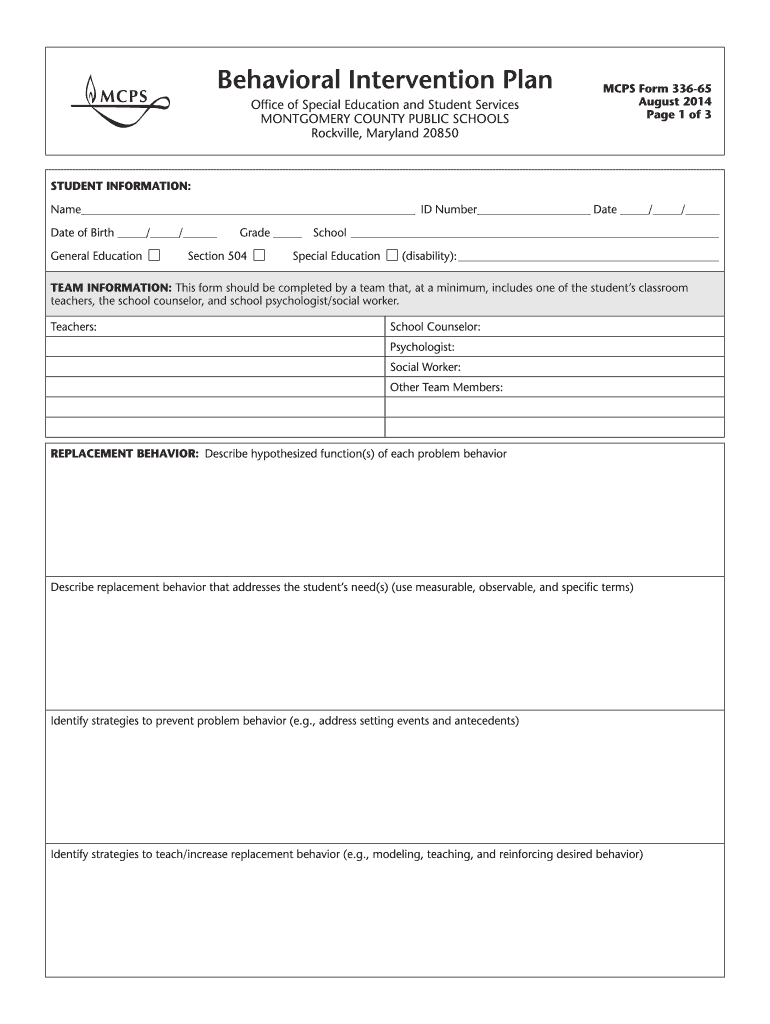
The MCPS Form 336-65, Behavioral Intervention Plan, is a critical document utilized within Montgomery County Public Schools (MCPS) to systematically address and manage student behavioral issues. This form is part of the broader framework designed by the Office of Special Education and Student Services, aimed at promoting positive behavioral change through structured, supportive interventions. The form identifies problematic behaviors, outlines prevention strategies, and includes intervention plans targeting specific student needs.
Key Elements of the MCPS Form 336-65
The Behavioral Intervention Plan form contains several essential components that guide the intervention process. Key elements include:
- Student Information: Personal and academic details about the student to provide context.
- Problem Behavior Identification: Clear description of the behavior needing intervention.
- Replacement Behaviors: Potential positive behaviors suggested to replace negative actions.
- Prevention Strategies: Techniques and approaches designed to prevent the reoccurrence of undesirable behaviors.
- Intervention Plans: Detailed steps and methods tailored to mitigate and correct behavioral issues.
- Team Collaboration: A section allowing input from various stakeholders, including teachers, counselors, and parents, to ensure a comprehensive approach to intervention.
- Measurable Goals: Specific, achievable targets set for the student to track progress over time.
- Data Collection Methods: Techniques for gathering data to analyze the effectiveness of the intervention.
- Review and Assessment: Processes to regularly evaluate the intervention plan’s success and make necessary adjustments.
Steps to Complete the MCPS Form 336-65
- Gather Student Information: Begin by filling in the student's personal and educational details.
- Define the Behavior: Clearly describe the behavior that requires intervention, ensuring specificity for accurate tracking and assessment.
- Identify Replacement Behaviors: Suggest positive behavior alternatives that align with the student's capabilities and environment.
- Develop Prevention Strategies: List strategies to prevent the onset of the problematic behavior, tailoring them to the student's unique context.
- Detail the Intervention Plan: Outline the steps, resources, and personnel involved in implementing the interventions.
- Set Measurable Goals: Establish clear, quantifiable goals for the student, ensuring they are realistic and achievable.
- Specify Data Collection Methods: Choose appropriate techniques to monitor and evaluate the student's progress.
- Schedule Review Dates: Plan regular reviews to assess the effectiveness of the intervention and make adjustments as needed.
How to Obtain the MCPS Form 336-65
The MCPS Form 336-65 can be obtained through various channels:
- MCPS Website: Forms may be available for download directly from the Montgomery County Public Schools' official website.
- School Offices: Contact the administration office of the school the student attends to request a physical or digital copy.
- Educational Support Staff: School counselors or special education coordinators can provide access to the form and assist with completion guidance.
Who Typically Uses the MCPS Form 336-65
This form is primarily used by educational professionals within Montgomery County Public Schools, including:
- Special Education Teachers: To design and implement behavioral interventions for students with special needs.
- School Counselors: To provide support and contribute to the formulation of strategies and goals.
- Administrative Staff: To ensure the form complies with educational policies and procedures.
- Parents and Guardians: To collaborate and provide insight into the student's behavior and progress at home.


Legal Use of the MCPS Form 336-65
The Behavioral Intervention Plan using MCPS Form 336-65 is legally used for drafting and implementing behavior management strategies in school settings, ensuring compliance with educational standards and privacy laws such as the Family Educational Rights and Privacy Act (FERPA). This form facilitates lawful collaboration by delineating roles and responsibilities among educators and guardians.
State-Specific Rules for the MCPS Form 336-65
While specific to Montgomery County, Maryland, the form adheres to state guidelines concerning educational interventions for students with behavioral needs. These include compliance with Maryland state education laws and mandates, ensuring interventions are ethical, inclusive, and supportive of student development.
Examples of Using the MCPS Form 336-65
In practice, the MCPS Form 336-65 is applied in scenarios such as:
- Elementary School Setting: An elementary student displaying disruptive behavior may have a plan indicating rewards for staying on task.
- Middle School Application: For a middle school student struggling with attendance, the plan might include strategies for increasing engagement.
- High School Intervention: A high school student's plan could focus on reducing instances of tardiness with strategic time management support.
By understanding and utilizing the MCPS Form 336-65 effectively, educators and related stakeholders can foster an environment conducive to positive behavioral changes, ultimately supporting the academic and personal growth of students within the district.


