







Definition and Meaning
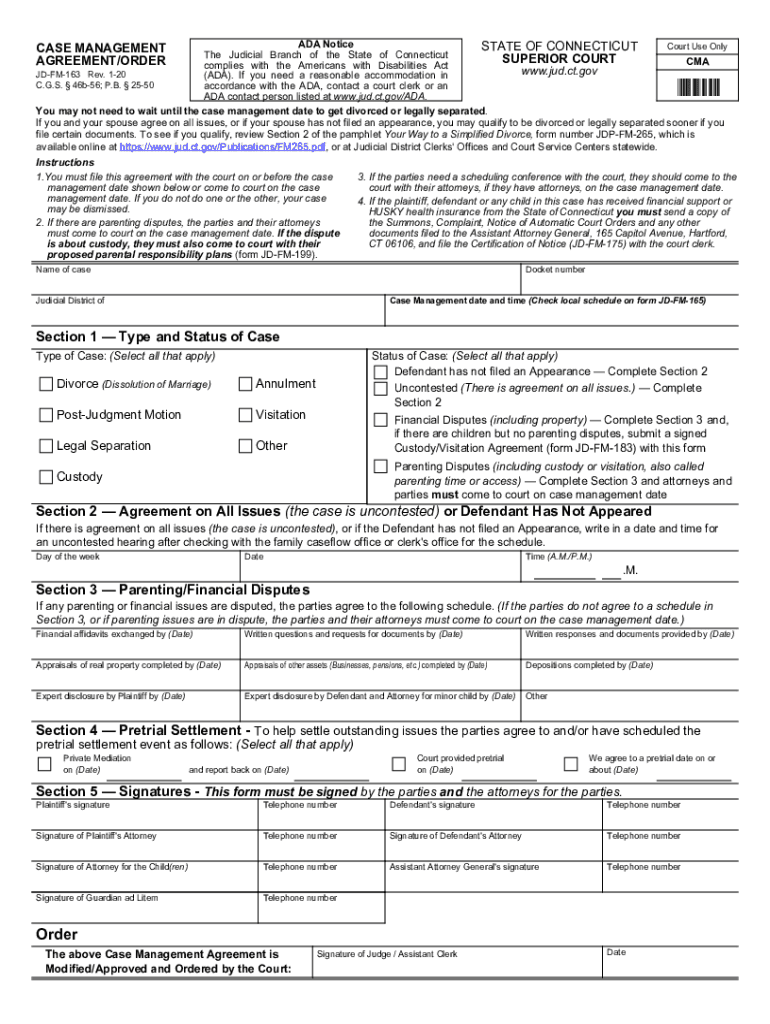
The Case Management Agreement Order is a legal document used to streamline divorce and legal separation procedures. This form helps outline agreements on specific issues such as custody arrangements and financial divisions. It plays a crucial role in ensuring that all parties involved understand the requirements and timelines set by the court. By formalizing agreements on these matters, the order prevents unnecessary disputes that might otherwise prolong the legal process.
Importance in Legal Proceedings
The Case Management Agreement Order acts as a foundational document in U.S. legal separation and divorce cases. It sets the groundwork for how aspects like asset division and child custody will be approached, ensuring there's a clear plan agreed upon by the parties involved. Understanding its components and terms is vital, as any misinterpretations can lead to further complications in judicial proceedings.
Components of the Form
- Basic party information: Names of spouses, attorneys, and involved persons.
- Case details: Specifics such as case number and type of case (divorce or separation).
- Agreements: Detailed sections for custody, visitation, and financial arrangements.
- Signatures: Space for the involved parties to acknowledge and agree to terms.
How to Use the Case Management Agreement Order
Using the Case Management Agreement Order requires careful completion and understanding of the fields and terms. It's critical to fill out each section accurately, reflecting the agreed-upon terms between the parties involved. The process entails multiple stakeholders ensuring that all data is correct before submission.
Completing the Form
- Collect Necessary Information: Ensure legal names, case numbers, and contact details are available.
- Define Agreements: Clearly outline custody, financial, and parenting time agreements.
- Review the Form: Verify that all information matches the terms agreed upon by the parties.
- Sign the Form: Get signatures from all parties involved to validate the agreements.
Common Challenges
- Misunderstandings in financial or custody agreements.
- Missing or incorrect information that may affect the legal process.
- Ensuring all signatories are present and accurate.
How to Obtain the Case Management Agreement Order
Obtaining the Case Management Agreement Order is a streamlined process available through multiple channels. While the specific processes may vary depending on the jurisdiction, most courts provide straightforward access to necessary legal forms.
Steps to Acquire the Form
- Visit the Local Courthouse: Directly obtain the form from the family law self-help center.
- Online Resources: Most judicial websites offer downloadable versions of the form for convenience.
- Consult an Attorney: Legal professionals can provide printed copies and assistance in understanding the form’s nuances.
Useful Tips
- Ensure the form version corresponds to your state-specific requirements.
- Confirm the completeness of all sections before finalizing the form for submission.
Steps to Complete the Case Management Agreement Order
Successfully completing the Case Management Agreement Order involves understanding the core components and steps required to fill out the documentation correctly.
Detailed Process for Completion
- Initial Preparations: Gather all relevant case information and necessary documentation.
- Filling Out the Form: Enter details such as party information, case type, and agreed terms.
- Verification: Double-check each section for accuracy and completeness.
- Official Submission: Submit the signed and completed form to the appropriate court.
Importance of Accuracy
- Ensures there are no delays in processing the case.
- Minimizes the likelihood of disputes arising from misinterpreted agreements.
Who Typically Uses the Case Management Agreement Order
The Case Management Agreement Order is primarily used by individuals undergoing divorce or separation but can also include the following parties:


Key Users
- Spouses: Direct parties involved in the divorce or separation.
- Attorneys and Legal Advisors: Provides guidance to ensure the correct completion and submission.
- Mediators: Assist in negotiating agreements that are incorporated into the order.
Scenarios for Use
- Resolving custody arrangements involving minors.
- Detailing asset divisions amongst parties.
- Formalizing visitation schedules and support agreements.
Key Elements of the Case Management Agreement Order
Understanding the critical elements of the Case Management Agreement Order aids in ensuring comprehensive preparation and execution of agreement terms.
Major Components
- Custody Arrangements: Details on physical and legal custody agreements.
- Financial Agreements: Terms regarding spousal support and division of assets.
- Scheduling: Court date scheduling and deadlines for agreement submission.
Simplifying Complex Scenarios
- Use clear, straightforward language to reduce misunderstandings.
- Employ professional assistance if terms become too intricate.
State-Specific Rules for the Case Management Agreement Order
Each state may have unique variations and requirements for the Case Management Agreement Order. Carefully aligning with these regional differences is crucial for maintaining legal compliance.
State-Variations
- Document Format and Submission: Different states may prefer varying formats for submission (e.g., electronic vs. paper submissions).
- Specific Legal Provisions: Particular regional laws may dictate distinct sections on spousal support or parenting plans.
Ensuring Compliance
- Check with state judicial branches for updates or changes in filing requirements.
- Consult local legal counsel for insights into adhering to state-specific regulations.
Examples of Using the Case Management Agreement Order
Using practical examples helps provide clarity on how the Case Management Agreement Order operates within different scenarios.
Highlighted Scenarios
- Custody Negotiation: How agreements on shared parenting time are structured in the order.
- Asset Division: Examples of how properties and finances are split equitably.
Real-World Application
- Demonstrates resolution process when disagreements arise.
- Offers insight into how typical orders are accepted in courts.




