







Definition & Meaning
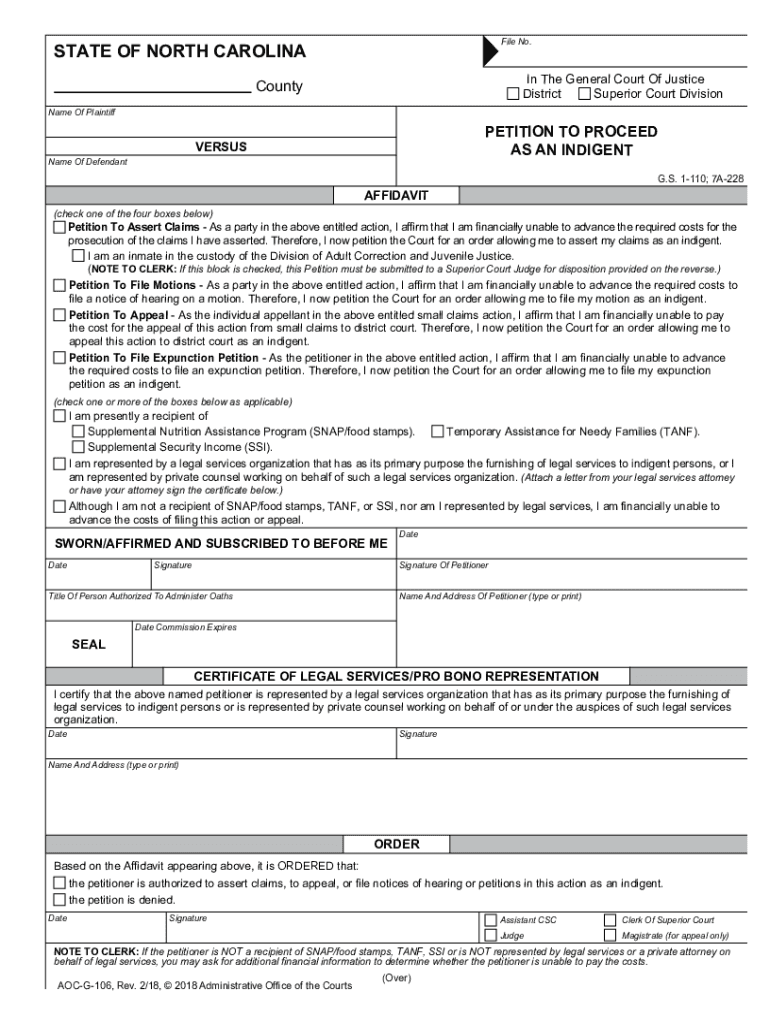
The "Petition to Sue Appeal File Motions As an Indigent" is a legal document that allows individuals with limited financial resources to pursue legal actions without bearing the standard court costs. This form is essential for those who wish to assert claims, challenge decisions, or file motions and expunctions when unable to afford the associated fees. By submitting this form, petitioners declare their financial status and request the court's approval to proceed as indigents.
Key Features
- Financial Declaration: Petitioners must provide a detailed account of their financial situation to demonstrate eligibility for indigent status.
- Legal Permissions: The form is structured to facilitate a range of legal processes, such as appeals, motions, and expunction petitions.
- Court's Decision Section: Includes a part for the court to indicate its approval or denial of the petition based on the information provided.
How to Use the Petition to Sue Appeal File Motions As an Indigent
Utilizing the "Petition to Sue Appeal File Motions As an Indigent" involves several steps designed to establish your eligibility for legal aid.
Step-by-Step Instructions
- Collect Required Information: Gather all necessary documentation that details your financial status, such as income records, tax returns, and expense declarations.
- Fill Out the Petition: Complete each section of the form thoroughly, ensuring all fields are accurate and reflect your current financial circumstances.
- Affirm Financial Status: Clearly articulate your inability to cover court costs, supported by the collected documentation.
- Submit the Form: Depending on your jurisdiction, submit the petition either online, by mail, or in person at the designated court office.
- Await Court Decision: Monitor the progress of your submission, as the court will review your petition and communicate its decision.
Steps to Complete the Petition to Sue Appeal File Motions As an Indigent
Completing the form involves several detailed steps aimed at ensuring completeness and accuracy.
Detailed Instructions
-
Personal Information Section:
- Enter your full legal name, contact details, and any identifiers required by the form.
-
Financial Disclosure:
- Provide comprehensive details of income sources, assets, liabilities, and any other financial obligations.
- Use precise figures to avoid discrepancies that might affect your petition's outcome.
-
Narrative Statement:
- Write a clear and concise narrative that outlines the reasons for your financial status and your need for legal action.
-
Review and Sign:
- Double-check all entries for accuracy.
- Sign the form to affirm the truthfulness of the provided information.
Final Checks
- Documentation: Ensure all supporting documents are attached.
- Submission Method: Verify whether the form needs to be submitted online, in-person, or via mail.
Legal Use of the Petition to Sue Appeal File Motions As an Indigent
This petition plays a critical legal role by enabling financially disadvantaged individuals to access the judicial system.
Practical Applications
- Access to Justice: Individuals who qualify as indigent can participate fully in legal proceedings without the burden of costs.
- Diverse Legal Actions: The form supports a variety of legal processes, from disputing court rulings to initiating new claims.
Example Scenarios
- Appeals: Assisting someone in challenging a court decision without incurring prohibitive costs.
- Motions: Allowing a petitioner to request changes or clarification within ongoing cases.
Eligibility Criteria
Eligibility to file this petition is pivotal and determined by specific financial benchmarks.


Determinants
- Income Thresholds: The applicant's income level must fall below a specified threshold relative to the federal poverty line.
- Asset Evaluation: Consideration of personal and real property to assess overall financial standing.
- Dependent Factor: The number of dependents can influence the eligibility assessment.
Examples
- An individual with no steady income and multiple dependents might qualify.
- A small business owner with significant liabilities but minimal earnings is also a potential candidate.
State-Specific Rules for the Petition to Sue Appeal File Motions As an Indigent
Each state may have unique nuances and variations in how this petition is processed.
Notable Differences
- Documentation Requirements: Some states might demand additional proof of income or statutory declarations.
- Review Process: The time taken to review and decide on such petitions can vary widely across jurisdictions.
Case Study
- California vs. Texas: California might require extensive financial declarations and faster processing, whereas Texas could have a simpler form with a lengthier review period.
Important Terms Related to Petition to Sue Appeal File Motions As an Indigent
Understanding the key terms associated with this form helps in accurate completion and submission.
Glossary
- Indigent: A legal term for individuals lacking sufficient resources to afford court fees.
- Motion: A formal request made to the court for a specific order or ruling.
- Expunction: The process of legally erasing or removing records.
Required Documents
Several documents are essential to support your petition.
Essential Documentation
- Proof of Income: Latest pay stubs, social security benefits, or unemployment statements.
- Asset Statements: Details of owned property and savings accounts.
- Expense Reports: Outlays such as housing, utilities, and medical bills.
Checklist
- Gather all financial documentation.
- Ensure documents are current and accurately reflect your financial situation.


