







Definition and Purpose of the Compas House - Connecticut Mental Health Services
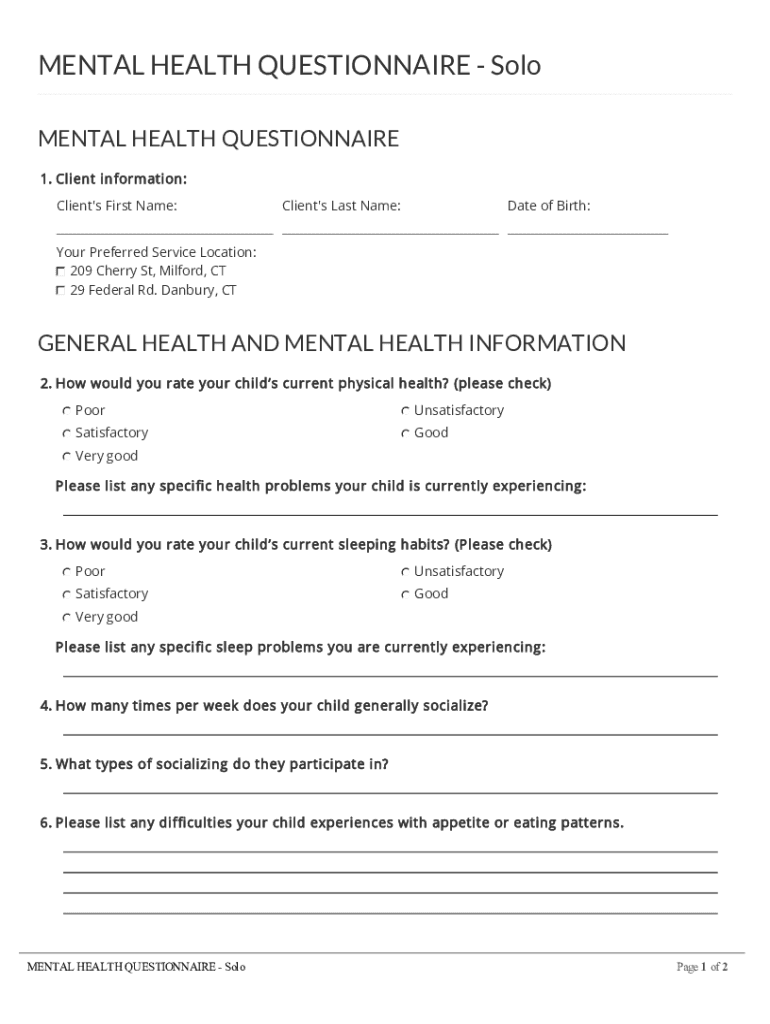
The "Compas House - Connecticut Mental Health Services" form is a specialized document used to gather comprehensive information about a child's mental health. It serves as a crucial tool for mental health professionals to assess various aspects, including a child's general health, familial mental health history, and personal strengths. This form aims to provide a clear picture that helps in identifying potential mental health challenges and devising appropriate interventions. The information collected is crucial for tailoring mental health services that are sensitive to the individual needs of children in Connecticut.
Components of the Form
Key sections of the form encompass:
- General Health Assessment: Evaluates the child's overall physical and mental well-being.
- Mental Health Status: Gathers information on emotional well-being, including any feelings of anxiety or sadness.
- Family Mental Health History: Explores any relevant mental health issues within the family to identify patterns or genetic predispositions.
- Personal Strengths and Weaknesses: Offers insights into the child's abilities as well as areas that may require support.
How to Use the Compas House - Connecticut Mental Health Services Form
Using this form involves a comprehensive understanding of the sections outlined within. It is typically used by mental health practitioners to systematically collate information from guardians or parents.
- Review Each Section: Begin by thoroughly reviewing each section to understand the information required.
- Gather Relevant Data: Collect information from various sources that reflect the child's mental and physical health history.
- Accurate Completion: Fill out the form accurately, ensuring that all fields are completed with as much detail as possible.
- Regular Updates: Keep the document updated to reflect any changes in the child's health or family circumstances.
Practical Tips
- Consult Professionals: Seek advice from mental health professionals if there is any uncertainty about the information required.
- Confidentiality: Handle all personal data with confidentiality as the form contains sensitive information.
Steps to Complete the Compas House - Connecticut Mental Health Services Form
Filling out the form requires careful attention to detail and a methodical approach.
- Personal Information: Start with the child's and the guardian's personal information.
- General Health Evaluation: Provide details about the child's physical health, including any current medical conditions.
- Mental Health Status: Record observations of the child’s emotional well-being, noting any patterns of sadness, anxiety, or behavioral issues.
- Family History: Accurately document any family history of mental health issues.
- Personal Strengths and Weaknesses: Identify and list the child's capabilities, as well as areas needing improvement.
Important Considerations
- Objective Answers: Use objective, unbiased language when describing the child's mental health status.
- Supportive Documentation: Attach any relevant medical records or previous assessments if available.
Key Elements of the Compas House - Connecticut Mental Health Services Form
Understanding the vital components of this form is essential for its effective completion.
- Comprehensive Health Overview: A holistic assessment of physical and mental health.
- Emotional and Behavioral Insights: Detailed observations of emotional responses and social interactions.
- Family Mental Health Context: Examination of genetic or familial patterns that contribute to mental health status.
- Developmental Milestones: Insight into the child’s developmental progress and any related challenges.
Detailed Analysis
- Health Professionals’ Input: Insights from healthcare providers enrich the information provided.
- Continuous Monitoring: Regular updates to the form ensure that it remains a relevant and useful tool for ongoing assessment.
Who Typically Uses the Compas House - Connecticut Mental Health Services Form
This form is primarily used by:
- Mental Health Professionals: Psychiatrists, psychologists, and therapists utilize the form to build treatment plans.
- Healthcare Providers: Doctors and pediatricians may use it for a comprehensive understanding of a child's health.
- Educational Institutions: School counselors can use it to support children within the educational environment.


User Profiles
- Parents and Guardians: Provide the initial information and updates as necessary.
- Social Workers: Use the detailed data to assist in family support services.
Legal Use of the Compas House - Connecticut Mental Health Services Form
The form is governed by privacy laws and regulations designed to protect sensitive information.
- Confidentiality Requirements: Ensure all information is handled in compliance with HIPAA standards.
- Secure Storage: Safeguard completed forms to prevent unauthorized access.
Practical Application
- Data Sharing: Share only with authorized personnel involved in the child's care.
- Consent: Obtain explicit consent from guardians before collecting or sharing information.
Examples of Using the Compas House - Connecticut Mental Health Services
Real-world applications include:
- Case Studies: Assessments that have led to early intervention for developmental disorders.
- Therapeutic Uses: Guides treatment plans and tracks progress over time.
Scenario Analysis
- Intervention Strategies: Detailed insights from the form have informed effective therapeutic strategies and interventions.
- Educational Support: Data used to tailor learning plans to accommodate specific mental health challenges.
Required Documents for the Compas House - Connecticut Mental Health Services Form
As part of the completion process, certain documents may be needed to supplement the information.
- Medical Records: Previous medical history that relates to mental health.
- Family Health Documentation: Records indicating any familial mental health history.
- Educational Reports: Reports from schools that may highlight notable behaviors or accomplishments.
Gathering Documentation
- Collaboration with Professionals: Work with healthcare providers to obtain necessary medical records.
- Organized Filing: Maintain an organized system for collecting and storing all relevant documents.




