







Definition & Meaning of Field Service Report Format in Word
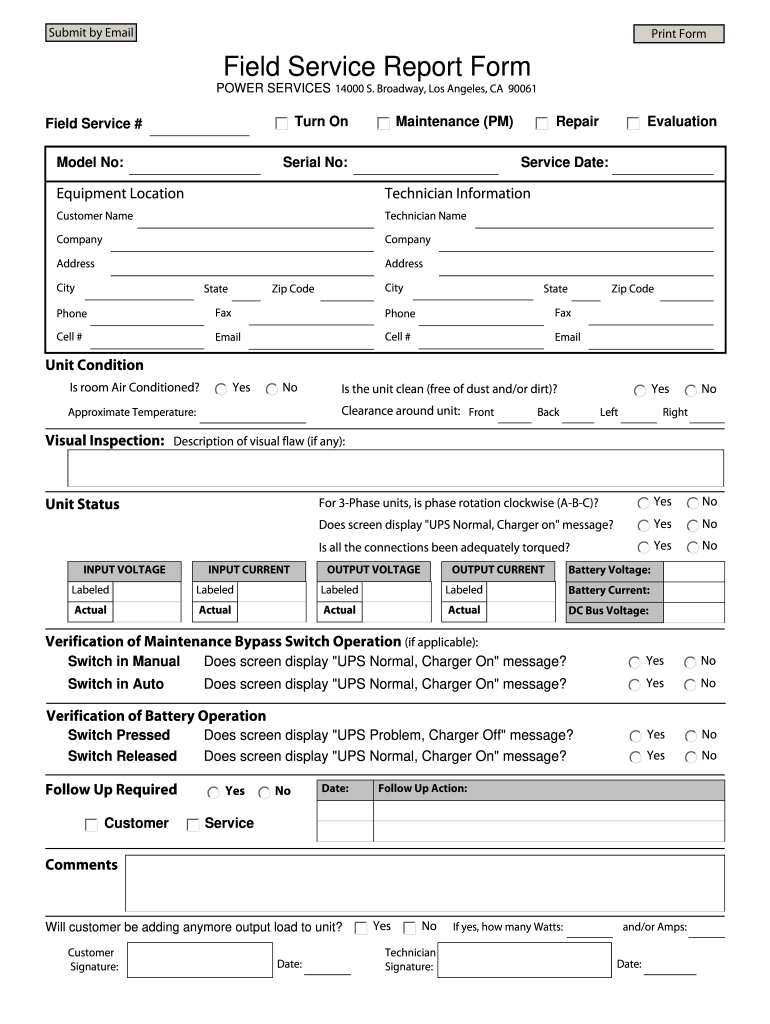
A field service report is a structured document used by technicians and service providers to detail the services rendered during a visit to a client site. This report format in Word is specifically designed to ensure that all necessary information is captured clearly and concisely. It includes sections that may encompass technician information, client details, a description of services performed, equipment condition evaluations, and any follow-up actions required.
The primary purpose of using this standardized format is to create a reliable historical record of the service interaction. This can aid in customer satisfaction, quality assurance, and compliance with company protocols. Employing a format in Word allows for easy customization, making it adaptable to meet various business needs.
Key Elements of the Field Service Report Format in Word
When utilizing the field service report format in Word, several critical sections should be included to ensure comprehensive documentation:
- Technician Information: This includes the technician's name, contact information, and any certification details relevant to the service performed.
- Client Information: Capture the client's name, address, contact details, and relevant account information for easy reference.
- Service Description: A detailed account of the services performed, including tasks completed, tools used, and any parts replaced or repaired.
- Equipment Condition Evaluation: Assess the status of equipment before and after service, highlighting any issues identified during the inspection.
- Measurements and Verifications: Document technical specifications, such as input/output voltage and current measurements necessary for the service.
- Follow-Up Actions: Outline any recommendations for further actions, future services, or maintenance needed to ensure optimal equipment performance.
- Signatures: Spaces for the technician and the client to sign, providing evidence of service completion and client acceptance of the work performed.
How to Use the Field Service Report Format in Word
Using the field service report format in Word is a straightforward process, enhancing the ease with which technicians can document their work. Follow these steps to effectively utilize the format:
- Open the Template: Start by opening the field service report template within Microsoft Word. This template may be obtained from various sources or designed based on your company's needs.
- Fill in Technician and Client Information: Enter the technician's and client's details in the respective fields, ensuring accuracy for future reference.
- Document Services Rendered: Clearly describe the tasks performed during the service visit. Include any problems encountered and solutions provided.
- Conduct an Equipment Assessment: Evaluate the equipment's condition and note any critical findings. Provide before-and-after comparisons where applicable.
- Record Technical Measurements: Fill in any technical details, such as voltage and current readings, that need to be formally documented.
- Add Follow-Up Recommendations: Specify any recommended actions to be taken following the service visit, such as scheduling future maintenance.
- Obtain Signatures: Have both the technician and the client sign the report to confirm that the services rendered were satisfactory.
- Save and Distribute the Report: Convert the completed report into PDF format for stable sharing and storage while retaining the Word document for future use.
Steps to Complete the Field Service Report Format in Word
Completing the field service report format in Word involves a systematic approach to ensure all necessary information is captured. The following steps can guide technicians in executing this task efficiently:
- Initialize the Document: Start with a blank document or a pre-existing template tailored to your business specifications.
- Input Identification Details: Enter the technician's and client’s identification information, inclusive of contact numbers and email addresses.
- Detail the Service Performed: Write a thorough description of the service provided, noting any specific problems that were addressed.
- Evaluate Equipment Condition: Record observations about the equipment's performance both before and after the service, highlighting any discrepancies.
- Document Measurement Data: Incorporate any relevant technical data, ensuring that all units are clearly labeled and reported accurately.
- Indicate Future Steps: Provide a clear outline of any recommended preventative maintenance or future visits necessary for sustained equipment longevity.
- Finalize with Signatures: Make provisions for both technician and client signatures before completing the report to guarantee that all parties acknowledge the service rendered accurately.
Important Terms Related to Field Service Report Format in Word
Understanding key terms related to the field service report format in Word is essential for effective implementation and usage. Here are some crucial terminology:
- Field Service Management: A systematic approach that organizations use to manage their field service operations, optimizing service delivery and client satisfaction.
- Service Level Agreement (SLA): A documented agreement between a service provider and a client that outlines expected service performance standards.
- Work Order: A formal document that outlines tasks to be completed by a field service technician, often linked to the service report for continuity.
- Customer Relationship Management (CRM): Software systems designed to manage a company’s interactions with current and potential clients, often integrated with service reporting tools.
- Maintenance Log: A record of all maintenance activities performed on equipment over time, which can be referenced in conjunction with field service reports.
- Service Metrics: Quantitative measurements used to assess performance, such as response time or resolution time, often recorded in service reports.
These terms enhance clarity and provide a common language for all stakeholders involved in the field service process.




