Definition & Meaning of a Room Rental Agreement in Ontario
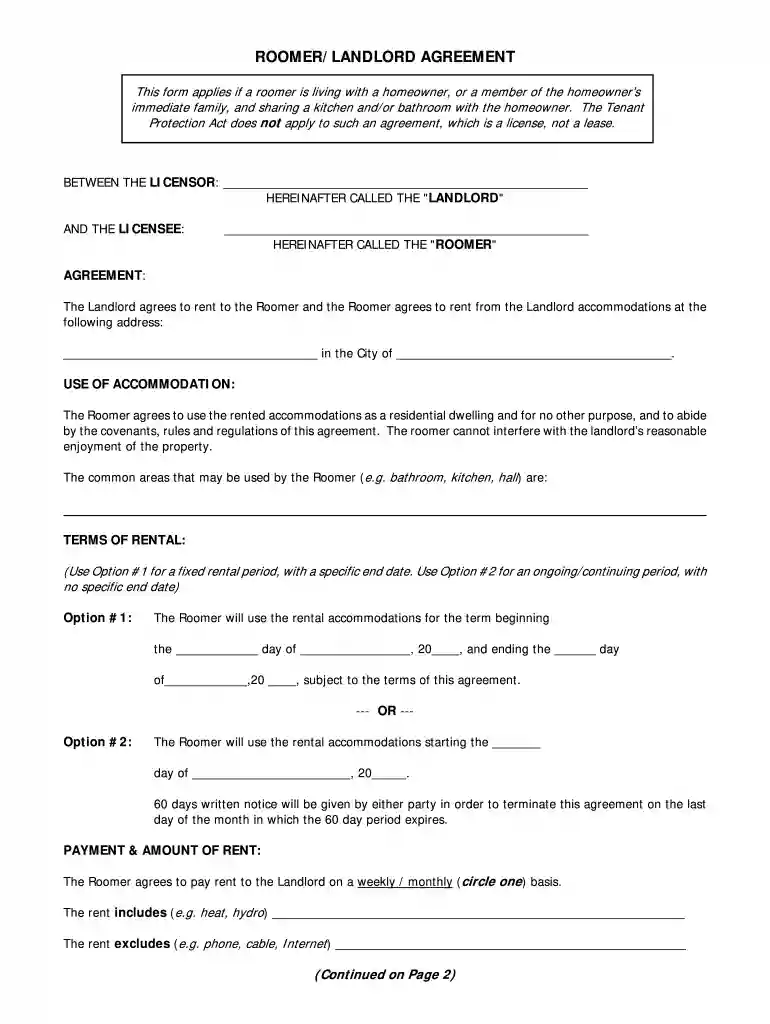
A room rental agreement in Ontario is a legally binding document that establishes the relationship between a landlord and a tenant sharing living spaces. Unlike a traditional lease, which covers the entire property, a room rental agreement specifically pertains to one room within a residence. It outlines the rights and responsibilities of both parties, including rental terms, payment schedules, and house rules. The emphasis on sharing common areas such as kitchens and bathrooms highlights the unique aspects of living arrangements typical in shared accommodations.
Key components of a room rental agreement typically include:
- Rental Rate: The amount due monthly or weekly and any conditions for payment.
- Duration: The start and end dates of the agreement, or terms regarding ongoing tenancy.
- Deposits: Any security deposits required and the conditions for their return.
- Responsibilities: Duties of both the landlord and the tenant, covering maintenance, cleaning, and repairs.
- House Rules: Regulations governing behavior within the shared property, such as noise levels and guest policies.
Understanding the specific elements and terminology is essential for both landlords and tenants to ensure a clear and mutual agreement.
Important Terms Related to Room Rental Agreement in Ontario
Familiarity with specific terminology can enhance understanding and compliance with the room rental agreement in Ontario. Here are key terms often encountered:
- License Agreement: This defines the nature of the room rental as a license, which provides less security of tenure compared to a lease.
- Common Areas: Shared spaces within the property, such as kitchens, bathrooms, and living rooms, that all tenants can access.
- Roommate: An individual renting a room in a property owned by another party, typically sharing common spaces.
- Landlord Rights: The authority and responsibilities landlords have to ensure property maintenance and enforce house rules.
- Tenant Obligations: The duties a tenant must follow, including timely rent payments and adherence to property rules.
Understanding these terms helps foster a better rental experience, minimizing conflicts and misunderstandings between roommates and landlords.
Steps to Complete the Room Rental Agreement in Ontario
Completing a room rental agreement involves several straightforward steps to ensure that both parties clearly understand their obligations:
- Draft the Agreement: Utilize a template for a room rental agreement. Customize it to include specific details related to the property, rental price, and conditions.
- Discuss Terms: Both landlord and tenant should go over the agreement together, discussing all terms, including payment, responsibilities, and house rules.
- Sign the Agreement: Once both parties are satisfied with the terms, the document must be signed. Digital signatures can be used if both parties are agreeable.
- Provide Copies: Ensure that both the landlord and tenant retain signed copies of the agreement for their records. This is vital for any future disputes or clarifications.
- Initial Payment: Collect the first month's rent and any applicable security deposits as outlined in the agreement.
Following these steps promotes transparency and ensures that both the landlord and tenant have a reference to their agreed-upon terms.
How to Obtain a Room Rental Agreement Template in Ontario
Obtaining a room rental agreement template in Ontario can simplify the drafting process for both landlords and tenants. Here are steps to acquire a reliable template:
- Online Resources: Utilize reputable legal websites that provide free templates for various agreements, including room rental agreements specific to Ontario. Many offer customizable options.
- Law Firms: Consult with a local law firm that provides templates or legal services related to rental agreements. This ensures compliance with provincial laws.
- Real Estate Associations: Explore materials provided by local real estate associations that often include standard forms and agreements for landlords and tenants.
- Software Solutions: Consider using document management platforms like DocHub, which offer tools for creating, editing, and managing rental agreements efficiently. Accessing templates and customizing them within these platforms adds convenience.
Acquiring a well-structured template is an important first step in establishing a clear rental relationship.
Legal Use of the Room Rental Agreement in Ontario
The legal framework governing a room rental agreement in Ontario ensures both parties are protected under the law. Understanding how to implement these agreements is crucial:
- Compliance with the Residential Tenancies Act: Room rental agreements must align with Ontario's Residential Tenancies Act, which governs tenant rights and landlord responsibilities.
- Written vs. Verbal Agreements: Though verbal agreements exist legally, written contracts provide clarity and serve as essential evidence in disputes.
- Important Clauses: Specific clauses related to termination, notice periods, and dispute resolution methods should be included to safeguard both parties' interests.
- Disclosures Required: Landlords must disclose certain information to tenants, such as property details and any existing issues that may affect their tenancy.
- Enforcement of Agreement: Legal recourse is available for breaches of the contract, reinforcing the importance of having a well-defined agreement.
This legal context ensures both the landlord and the tenant enter into a relationship with clear expectations and recourse should issues arise.
Examples of Using a Room Rental Agreement in Ontario
Understanding practical scenarios can enhance insight into how room rental agreements function. Here are a few examples:
- Student Housing: A landlord rents a room in a shared house to a university student. The agreement specifies term lengths aligned with academic semesters, addresses roommates, and outlines common area usage policies.
- Professional Shared Living: Two young professionals who work in the same city share a three-bedroom home. Their rental agreement details the split of common bills and household responsibilities while setting quiet hours for work-from-home days.
- Temporary Rentals: A property owner offers a furnished room for temporary rental during peak seasons. A short-term rental agreement clarifies the stay duration, payment structure, and house rules applicable for visitors during this period.
These examples not only illustrate the flexibility of room rental agreements but also highlight the importance of customizing terms based on individual living situations.
Who Typically Uses a Room Rental Agreement in Ontario
A diversity of individuals and entities utilize a room rental agreement in Ontario, reflecting various living scenarios:
- Landlords: Individuals or companies renting out a room in a residential setting generally draft these agreements to define clear terms with tenants.
- Roommates: People sharing a living space, whether friends or acquaintances, often enter into agreements to ensure responsibilities and expectations are clearly outlined.
- Real Estate Investors: Property owners looking to maximize their rental income by renting individual rooms within multi-bedroom properties frequently use these agreements.
- Students: University students looking for affordable housing often rely on room rentals, necessitating agreements that address the unique accommodation needs of shared living.
- Short-term Renters: Individuals seeking temporary housing arrangements, such as internships or traveling professionals, benefit from having a structured agreement for short-duration stays.
These users highlight the variety of contexts in which a room rental agreement can be beneficial and underscore its role in facilitating smooth living arrangements.