







Definition & Meaning
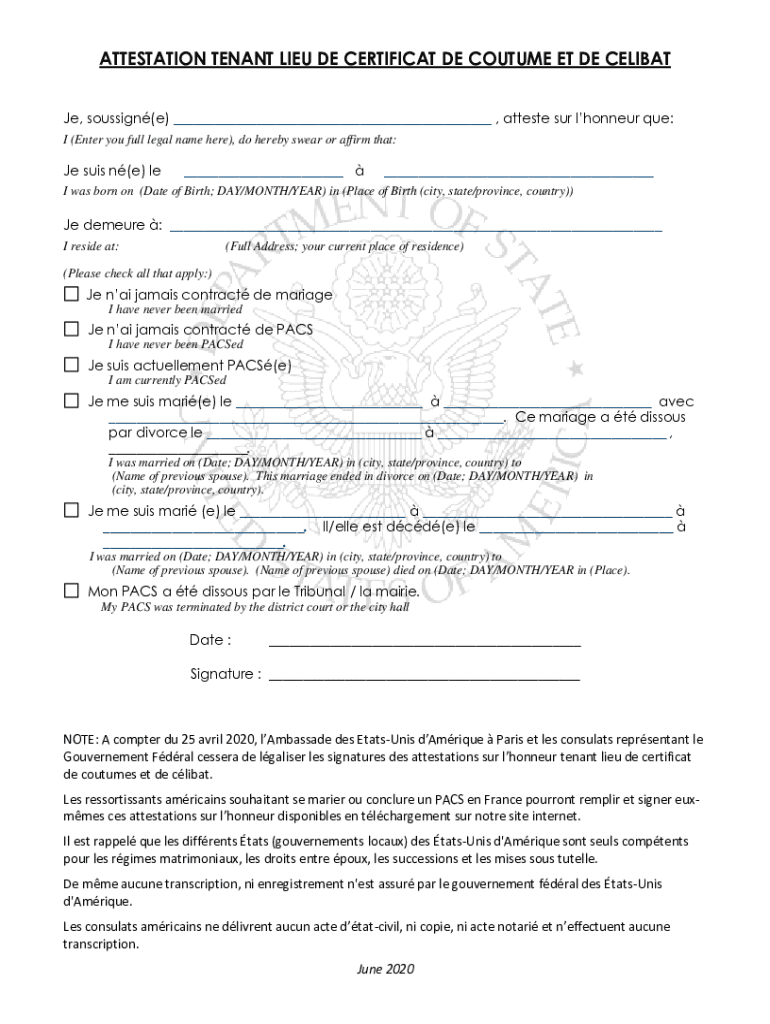
"Je, soussign(e) , atteste sur l'honneur que:" is a French phrase used primarily in legal and administrative documents, signifying a sworn statement or declaration by the undersigned. This phrase translates to "I, the undersigned, solemnly attest that:" and is typically followed by specific personal affirmations or declarations relevant to the form’s context, such as marital status, residency, financial assertions, or identification details. This document serves as a legal attestation, carrying the same weight as a notarized statement, particularly where the subject matter does not require official notarization but still necessitates formality and legal responsibility.
How to Use the Je, soussign(e), atteste sur l'honneur que:
To effectively utilize the "Je, soussign(e), atteste sur l'honneur que:" form, the individual must first understand its role in documenting a truthful statement or verifying particular information. Complete each field accurately, using your full legal name where prompted by the "soussign(e)" term. As this form carries legal implications, ensure all declarations are truthful to the best of your knowledge. Common uses include affirming marital status for legal purposes, verifying previous marriages or civil partnerships, or asserting lack of criminal record in some scenarios. Be precise in detailing the necessary information to avoid legal repercussions for false statements.
How to Obtain the Je, soussign(e), atteste sur l'honneur que:
The form can be obtained from various sources depending on its specific use. For marriage or residency declarations, it often requires an official template accessible through local administrative offices or governmental websites in regions where these declarations must be formally made. Certain legal offices or municipal authorities might offer downloadable PDFs or online forms for convenience. When intended for a specific use, such as a civil partnership or expatriate residency application, check with relevant authorities for any additional requirements or specific versions of the form.
Steps to Complete the Je, soussign(e), atteste sur l'honneur que:
-
Gather Necessary Information:
- Ensure all relevant personal data, dates, or specific declarations your form requires are accessible.
- Verify identification details like names and addresses.
-
Fill Out Personal Information:
- Provide your full legal name as it appears on official identification.
- Complete all personal sections carefully, avoiding any contradictory entries.
-
Declare Specifics Clearly:
- Make clear, concise statements following the "atteste sur l'honneur" prompt.
- If needed, add any legally pertinent details like marital status or citizenship information.
-
Review and Sign:
- Double-check all entries for correctness and legibility.
- Sign the form in the designated space, confirming the truthfulness of the statement.
-
Submit as Required:
- Depending on its purpose, submit via mail, in-person, or to a designated authority or institution.
Why Should You Use the Je, soussign(e), atteste sur l'honneur que:
Using this form is essential in contexts where an honorable declaration is more economical or logistically fitting than notarized affidavits. In many legal or bureaucratic circumstances, particularly in France and some French-speaking contexts, this form provides an efficient method for individuals to affirm various statements. It serves responsibilities such as confirming personal data accuracy during agreements or applications and assists processes like marriage formalities without requiring in-depth legal intervention.
Who Typically Uses the Je, soussign(e), atteste sur l'honneur que:
This document is widely used by individuals engaging in personal or legal proceedings where a sworn declaration is needed. Typical users are those involved in marital, residential, or identity verification processes, such as individuals seeking to marry, expatriates in need of residency confirmation, or applicants to specific municipal services. Institutions often mandate this form to streamline administrative processes while upholding certain legal assurances without burdening the user with external notarization processes.


Key Elements of the Je, soussign(e), atteste sur l'honneur que:
-
Identification Information:
- Full legal name, current address, nationality, and other identity markers.
-
Purpose of Declaration:
- Explanation of the context and scope of the affirmation, such as marital status verification or residency declaration.
-
Statement of Truth:
- Clause emphasizing the legal responsibility and truthfulness of the provided information, often ending with a place for signature.
-
Signature Section:
- Designated area for personal and date signatures, validating the document's contents as true.
Legal Use of the Je, soussign(e), atteste sur l'honneur que:
The form serves a unique role in legal settings where formal affirmation of personal details or circumstances is required without notarization. Recognized within French legal contexts, it holds equivalent significance to legally attested statements and demands careful regard to truth and accuracy due to potential legal liabilities. Non-compliance or false declarations on these forms can incur penalties under applicable laws, emphasizing the necessity for diligence and sincerity in their completion.
Important Terms Related to Je, soussign(e), atteste sur l'honneur que:
- Soussigné(e): Refers to the undersigned individual attesting to the document with legal responsibility.
- Atteste: Denotes the act of affirming truthfully in a written statement.
- Honneur: Indicates the honorable nature of the affirmation, underscoring the importance of truthfulness.
Required Documents
For completing the "Je, soussign(e), atteste sur l'honneur que," prepare any supporting documents that validate your declarations. This may include identification documents like passports or identification cards, proof of residency, or previous marriage certificates. Ensure that all supplementary documents align with the statements made within the form. Having these ready helps in cases where verification from authoritative bodies is required, ensuring a smooth processing experience.




