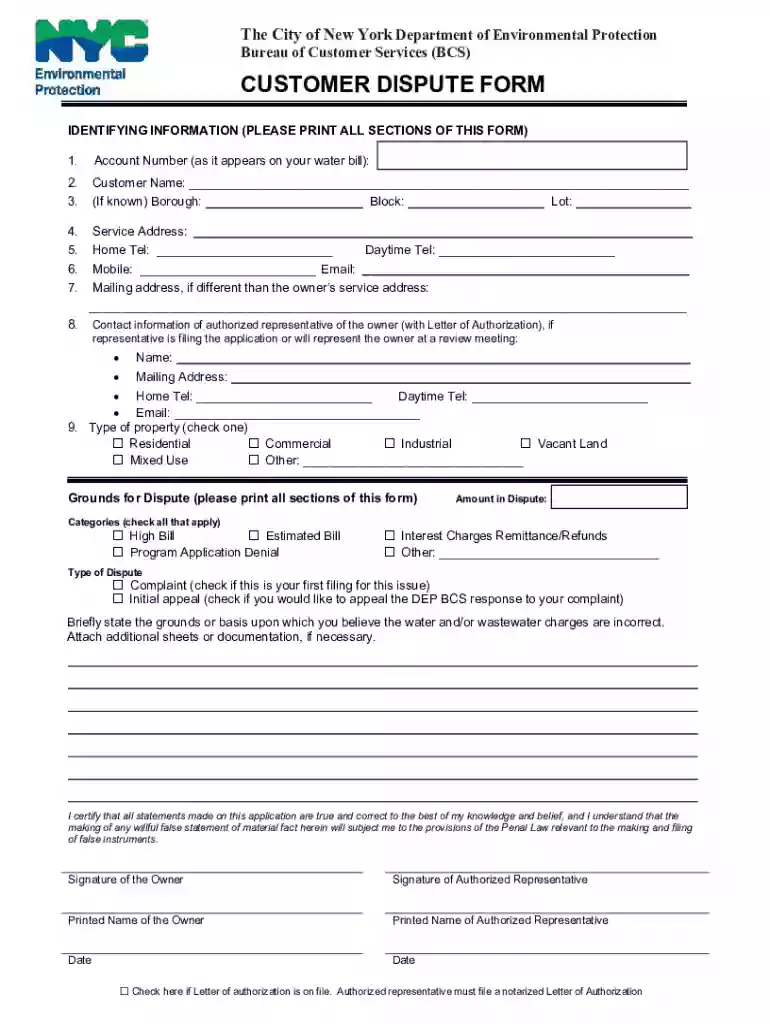
NYC Department of Environmental Protection taps Dynamics ... 2026

Get Form
NYC Department of Environmental Protection taps Dynamics ... Preview on Page 1

Here's how it works

01. Edit your form online
Type text, add images, blackout confidential details, add comments, highlights and more.

02. Sign it in a few clicks
Draw your signature, type it, upload its image, or use your mobile device as a signature pad.

03. Share your form with others
Send it via email, link, or fax. You can also download it, export it or print it out.

Definition & Meaning

Understanding the title "NYC Department of Environmental Protection taps Dynamics" involves exploring its intended use within the context of environmental management in New York City. The term "taps Dynamics" likely signifies the adoption of Microsoft's Dynamics software suite by the NYC Department of Environmental Protection (DEP) to enhance or streamline its operational processes, such as managing water resources or handling customer disputes. Dynamics is commonly utilized for customer relationship management (CRM) and enterprise resource planning (ERP), helping organizations to automate workflows, improve data management, and foster better stakeholder engagement.

How to Use the NYC Department of Environmental Protection Taps Dynamics

To effectively utilize the Dynamics system within the NYC Department of Environmental Protection, personnel must be trained in integrating its capabilities with ongoing projects. Dynamics can be leveraged to streamline document management, facilitate collaborative efforts, and provide insights through data analytics. Users might engage with the platform to manage customer disputes regarding water and wastewater charges, coordinate field operations for environmental protection projects, or track compliance with regulatory mandates.

Integration with Existing Systems

  • Seamless Data Migration: Ensure all legacy data is accurately transferred to the Dynamics platform to maintain continuity.
  • Custom Workflow Configurations: Tailor Dynamics workflows to fit specific departmental needs, like billing dispute management.

Accessibility

  • Mobile Access: Train staff on accessing Dynamics via mobile devices to enable remote work.
  • Cross-Platform Compatibility: Educate employees on how Dynamics integrates with existing applications like email and document management systems.

Steps to Complete the NYC Department of Environmental Protection Taps Dynamics

Integrating Dynamics into department workflows involves several key steps.

  1. Needs Assessment: Evaluate current processes to determine which areas would benefit most from automation or better data integration.
  2. System Configuration: Set up Dynamics to align with specific departmental workflows and ensure all necessary functionalities are incorporated.
  3. Staff Training: Conduct comprehensive training sessions to familiarize employees with all aspects of Dynamics relevant to their roles.
  4. Pilot Testing: Run a pilot program to test the system in a controlled environment, ensuring all issues are resolved before full deployment.
  5. Implementation: Roll out the system department-wide, while continuously monitoring for areas of improvement and optimization.

Monitoring and Feedback

  • Continual Feedback Loops: Set up mechanisms for ongoing feedback from users to facilitate continuous improvement.
  • Performance Metrics: Utilize Dynamics’ reporting capabilities to monitor system performance and user engagement.

Important Terms Related to NYC Department of Environmental Protection Taps Dynamics

Understanding the NYC DEP’s usage of Dynamics requires knowledge of certain key terms:

  • Enterprise Resource Planning (ERP): A type of software that organizations use to manage day-to-day business activities such as accounting, procurement, project management, and compliance.
  • Customer Relationship Management (CRM): A system for managing an organization’s interactions with current and potential customers.
  • Data Analytics: The process of inspecting, cleansing, transforming, and modeling data to discover useful information and support decision-making.

Commonly Used Terms

  • Workflow Automation: The use of technology to automate repetitive business processes.
  • Integration: The process of combining or coordinating different systems and software to function as a unified entity.

Legal Use of the NYC Department of Environmental Protection Taps Dynamics

Legal considerations must be assessed when employing Dynamics within the NYC DEP, especially concerning data privacy and compliance with local, state, and federal regulations.

  • Data Privacy Compliance: Ensure the system complies with New York state data protection laws, as well as federal mandates like the Federal Water Pollution Control Act.
  • Record Keeping: Dynamics needs to maintain thorough records to support transparency and accountability in environmental protection efforts.

Security and Confidentiality

  • SSL Encryption: All data transferred within Dynamics should be secured with industry-standard SSL encryption to protect sensitive information.
  • Auth Access Levels: Proper authorization protocols should be implemented to ensure that only authorized departmental personnel have access to sensitive data.

Key Elements of the NYC Department of Environmental Protection Taps Dynamics

Certain features of Dynamics are particularly vital to the NYC DEP’s operational model. These features include:

  • Document Management: Effective handling of electronic documents, like dispute forms, to streamline processes.
  • Workflow Optimization: Streamlining workflows to enhance efficiency, particularly in customer service and field operations.
  • Analytical Tools: Advanced tools for analyzing water usage data and predicting resource needs.

Collaboration Features

  • Real-Time Updates: Ensure all team members are accessing the most current data.
  • Role-Based Permissions: Implement role-specific access to safeguard sensitive information and streamline approval processes.

State-Specific Rules for the NYC Department of Environmental Protection Taps Dynamics

Incorporating Dynamics requires adhering to regulations specific to New York State. The DEP must ensure that its use of Dynamics complies with local mandates and standards for environmental reporting and resource management.

  • Local Ordinance Adherence: Ensure compliance with city ordinances regarding environmental protection.
  • State Reporting Requirements: Use Dynamics to streamline the preparation and submission of required environmental impact reports.

Regulatory Compliance

  • Statutory Requirements: Dynamics must support compliance with statutory requirements for monitoring pollutants and facilitating public engagement.
  • Submission Deadlines: Utilize built-in reminders and scheduling within Dynamics to avoid missing regulatory deadlines.

Required Documents for the NYC Department of Environmental Protection Taps Dynamics

Utilizing Dynamics for the NYC DEP involves managing various essential documents:

  • Customer Dispute Forms: Critical for managing billing or service-related disputes.
  • Environmental Impact Reports: Used for compliance with state and federal environmental regulations.
  • Operational Templates: Standardized templates for routine departmental processes, like water resource allocation.

Supporting Documentation

  • Usage Logs: Maintain detailed logs of water usage and resource allocations for audit purposes.
  • Compliance Checklists: Ensure all required documents are completed before submission to relevant authorities.

In-depth familiarity with these components is crucial for maximizing the platform's effectiveness within the NYC Department of Environmental Protection's dynamics.

See more NYC Department of Environmental Protection taps Dynamics ... versions

We've got more versions of the NYC Department of Environmental Protection taps Dynamics ... form. Select the right NYC Department of Environmental Protection taps Dynamics ... version from the list and start editing it straight away!
Versions Form popularity Fillable & printable
2022 4.5 Satisfied (51 Votes)
2019 4.7 Satisfied (60 Votes)
2014 4.8 Satisfied (52 Votes)
be ready to get more

Complete this form in 5 minutes or less

Get form

Got questions?

We have answers to the most popular questions from our customers. If you can't find an answer to your question, please contact us.
Contact us
The EPAs purpose is to protect, improve and restore our environment through regulation, scientific knowledge and working with others.
The agency conducts environmental assessment, research, and education. It has the responsibility of maintaining and enforcing national standards under a variety of environmental laws, in consultation with state, tribal, and local governments. EPA enforcement powers include fines, sanctions, and other measures.
In New York City, Automated Meter Reading (AMR) devices connect to your individual water meter. These devices transmit readings to a computerized billing system up to four times a day.
The U.S. Environmental Protection Agency (EPA) is responsible for the protection of human health and the environment. EPA: Provides technical assistance to support recovery planning of public health and infrastructure, such as waste water treatment plants.
New York Citys utility page in the Tap Water Database shows that seven of the eight contaminants that exceed EWGs health guidelines are disinfectant byproducts, an umbrella term that includes bromodichloromethane, chloroform, dichloroacetic acid, the haloacetic acids HAA5 and HAA9, total trihalomethanes and

Security and compliance

At DocHub, your data security is our priority. We follow HIPAA, SOC2, GDPR, and other standards, so you can work on your documents with confidence.

Learn more
ccpa2
pci-dss
gdpr-compliance
hipaa
soc-compliance

People also ask

The New York City Department of Environmental Protection (DEP) protects public health, critical quality of life issues, and the environment by supplying clean drinking water, collecting and treating wastewater, and reducing air, noise, and hazardous materials pollution.

Related links