
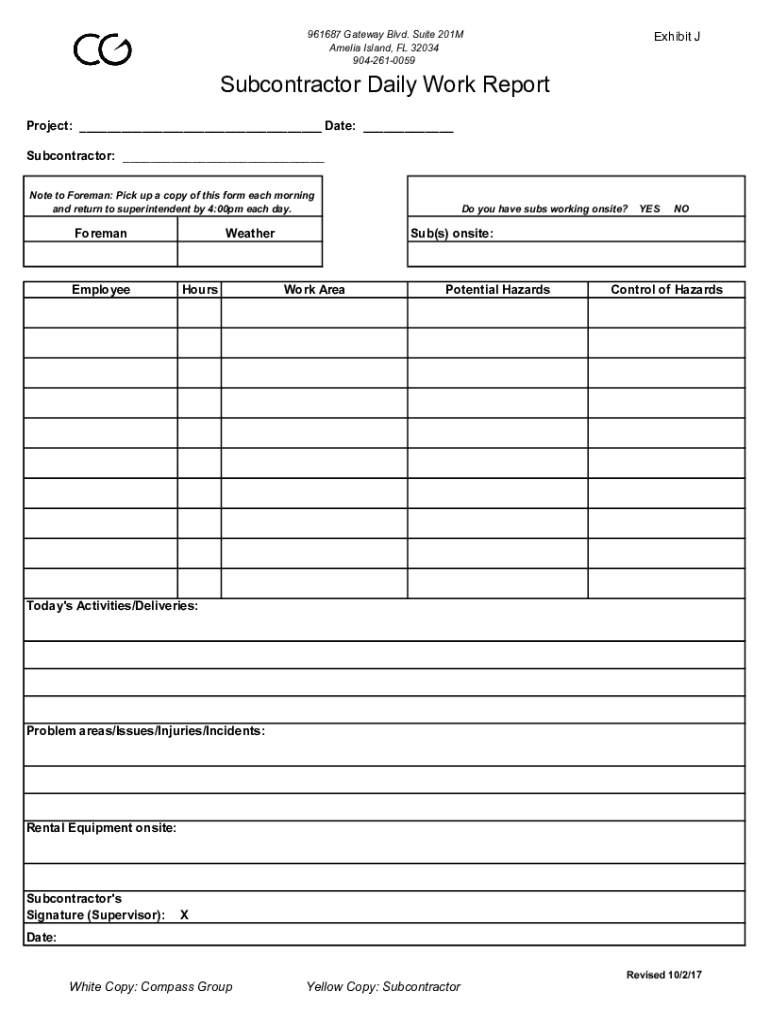







Definition and Purpose of Exhibit J - Subcontractor Daily Report
The Exhibit J - Subcontractor Daily Report is a pivotal document in construction and project management, utilized for tracking and documenting daily operations on specific job sites. This report serves multiple purposes, including:
-
Activity Tracking: It logs the daily activities performed by subcontractors, ensuring accountability and transparency in project execution. Foremen or site supervisors fill out essential details regarding labor hours, tasks completed, and the general progress of work.
-
Weather and Conditions Documentation: By noting weather conditions and potential hazards, the report aids in assessing how external factors may affect project timelines and safety protocols.
-
Resource Management: Detailed entries related to equipment and materials used on-site help project managers analyze resource allocation and anticipate future needs.
-
Communication Tool: The report serves as a communication bridge between subcontractors and project managers. By submitting this document daily, it helps highlight issues requiring immediate attention, facilitating quicker resolution.
The importance of a well-maintained Exhibit J cannot be understated. It provides an organized method to collect necessary data that can be referenced in project audits, disputes, or progress evaluations.
How to Use the Exhibit J - Subcontractor Daily Report
Using the Exhibit J - Subcontractor Daily Report involves a systematic approach. Here are the key steps to effectively utilize this form:
-
Filling Out the Form:
- Input basic project details such as project name, date, and location at the top of the form.
- Record daily weather conditions and their potential impact on project work. Note any unique situations, like high winds or rain that might have hindered progress.
-
Labor Documentation:
- List subcontractors present on-site along with their respective work hours. This can include information on the number of employees each subcontractor has working that day.
-
Activity Reporting:
- Document specific tasks completed by each subcontractor. This might include phases of construction, inspections passed, or any other significant accomplishments.
-
Note Equipment and Materials:
- Log any equipment used on that day. An accurate record helps in analyzing wear and tear, as well as the scheduling of future repairs or replacements.
-
Identify Issues:
- Clearly state any issues or concerns encountered during the day. This may encompass safety hazards, material shortages, or delays caused by weather.
-
Submission Process:
- Ensure the completed report is submitted to the project superintendent or manager by the designated time, typically 4:00 PM. Timely submissions help maintain project schedules and communication flow.
Steps to Complete the Exhibit J - Subcontractor Daily Report
Completing the Exhibit J - Subcontractor Daily Report requires careful attention to detail. Follow these steps for accurate reporting:
-
Header Information:
- Write the project name, date, location, and the name of the individual filling out the report.
-
Weather Conditions:
- Document current weather conditions in detail. Use specific terms like “clear,” “cloudy,” or “rainy,” along with temperature if relevant.
-
Labor Details:
- Create a table if necessary, to clearly list all subcontractors on-site. Include columns for the number of workers, hours worked, and specific responsibilities performed.
-
Activities Log:
- Provide a detailed description of work completed. Instead of generic descriptions, be specific; for example, “installed structural beams” rather than just “construction work.”
-
Equipment and Materials Used:
- Include details about the specific equipment and the quantity of materials utilized. This is important for tracking costs and resource management.
-
Issues and Concerns:
- Identify and articulate any challenges faced. Make sure to specify whether these issues directly impact the project timeline or safety.
-
Signature:
- Finally, have the foreman or responsible individual sign the report to validate the information.
Taking these steps ensures that the Exhibit J - Subcontractor Daily Report is both comprehensive and useful for stakeholders.
Important Elements of the Exhibit J - Subcontractor Daily Report
Understanding the key elements of the Exhibit J - Subcontractor Daily Report enhances its utility. The following components are crucial:
-
Project Identification: Clear identification of the project ensures that reports are filed correctly for specific jobs. This information is critical for audit trails and accountability.
-
Daily Log of Activities: A detailed account of daily activities allows for easy tracking of project milestones. This element is vital for project managers to gauge progress and identify areas requiring intervention.
-
Labor Hours and Staff: Accurate reporting of labor hours assists with payroll verification and can serve as evidence for compliance with labor regulations.
-
Resource Listing: A comprehensive list of equipment and materials helps in managing resources effectively. It also aids in budgeting and planning future purchases.
-
Weather Conditions: Including weather information provides context for any delays or issues faced during the day, supporting claims during disputes or project reviews.
By focusing on these important elements, users can ensure that their Exhibit J submissions are not only compliant but also valuable tools for project management.
Common Users of the Exhibit J - Subcontractor Daily Report
The Exhibit J - Subcontractor Daily Report is commonly used by a variety of professionals in the construction industry. Key users typically include:
-
Foremen: Often the primary individuals responsible for filling out the daily report. Their firsthand knowledge of daily operations allows for accurate and insightful reporting.
-
Project Managers: They use the submitted reports to assess project progress, resource usage, and to make informed decisions regarding scheduling and budgeting.
-
Superintendents: Typically oversee multiple projects and rely on daily reports to keep track of site activities, worker productivity, and to ensure compliance with safety standards.
-
Subcontractors: They may request copies of their daily reports for their own records, ensuring they maintain alignment on project expectations and responsibilities.
-
Safety Inspectors: These professionals utilize the reports to monitor compliance with safety regulations on site, making the report a crucial component of maintaining a safe working environment.
Understanding who uses the Exhibit J can help ensure that the document meets the needs of all stakeholders involved in a construction project.


Legal Considerations for Using the Exhibit J - Subcontractor Daily Report
When utilizing the Exhibit J - Subcontractor Daily Report, it is essential to consider the legal implications involved in document management:
-
Accuracy and Honesty: The information entered must be truthful and accurate. Misrepresentation can lead to legal disputes or issues regarding liability in the event of an accident or incident on-site.
-
Retention of Records: It is often legally required to maintain records of daily reports for a specified period, particularly in scenarios involving disputes, audits, or personal injury claims.
-
Compliance with Labor Laws: Proper documentation can ensure compliance with labor laws and regulations. This is particularly important regarding work hours logged and the status of employees.
-
Interstate Variations: Different states may have specific requirements regarding construction documentation, so understanding local regulations is vital for legal compliance.
-
E-signature Standards: If the report is signed electronically, it must comply with the ESIGN Act and UETA standards to ensure that electronic signatures are legally binding.
By understanding and adhering to these legal considerations, companies can better protect themselves and ensure compliance in their documentation practices.




