




Definition and Purpose of JV-410
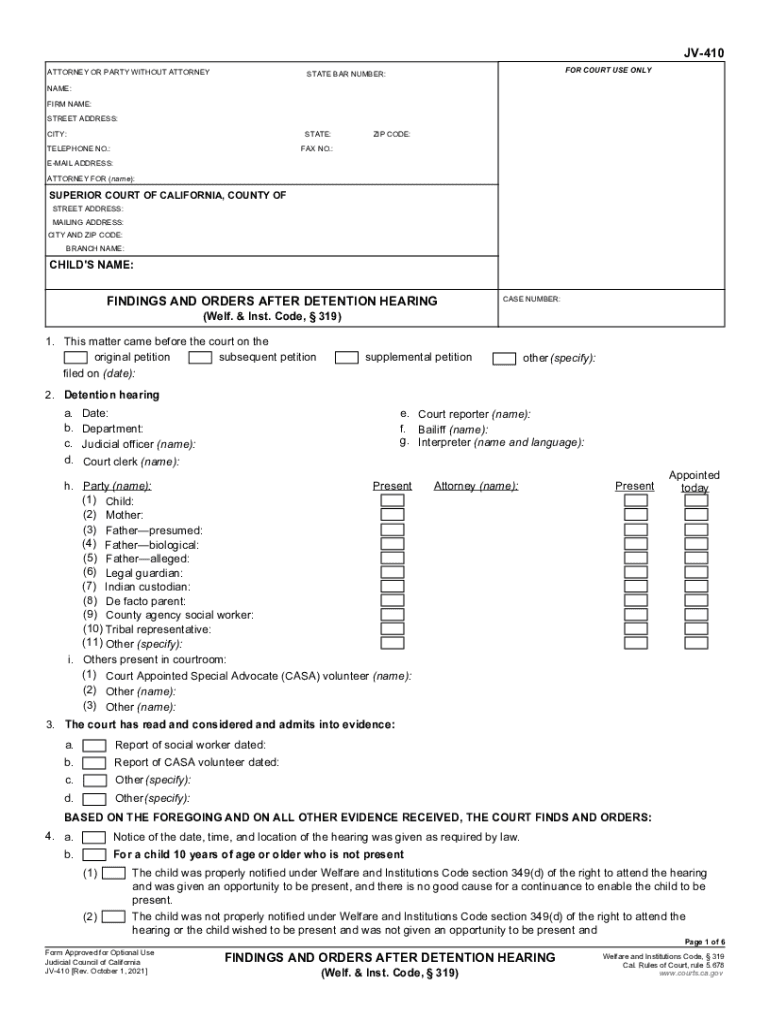
The JV-410 form is used in California's Superior Court to document findings and orders following a detention hearing concerning a child. This form is essential for recording the court's decisions and actions concerning a child’s welfare, potential placement, parental rights, representation, and necessary reunification or protection services. It helps ensure that all legal requirements are met in compliance with California law, particularly focusing on the best interests of the child and safeguarding their rights under acts like the Indian Child Welfare Act (ICWA).
Steps to Complete the JV-410
-
Gather Necessary Information: Before completing the JV-410, collect all relevant details about the case, including information about the child, parents or guardians, and legal representatives.
-
Fill Out the Form: Carefully complete each section of the form. Ensure that you accurately record the court's findings regarding parental rights, evidence reviewed, and any determinations about the child's welfare.
-
Include All Parties: Confirm that the presence of all parties involved in the hearing is documented. This may involve noting the participation of judges, attorneys, and family members.
-
Detail Court Orders: List any court orders issued as a result of the detention hearing. This includes orders related to placement, family services, and representation.
-
Review and Submit: Double-check the completed form for accuracy and completeness before submitting it to the court for filing.
How to Obtain the JV-410
The JV-410 form is available through the California Courts' official website or can be obtained directly from a local Superior Court. To ensure you have the most current version of the form, it is advisable to download it directly from the court's online resources or request a physical copy from the court clerk's office.
Who Typically Uses the JV-410
The JV-410 form is predominantly used by legal professionals involved in child custody and welfare cases in California. This includes judges, attorneys, child advocates, and social workers who participate in detention hearings to determine the best course of action for a child’s welfare.

Key Elements of the JV-410
- Court Findings: The form comprehensively details the judicial findings regarding the child's detention, such as evidence considered and the presence of legal representatives.
- Orders Issued: It documents the specific court orders for services, placement, or parental rights adjustments.
- Parties Involved: The JV-410 records the presence and roles of all parties at the hearing, ensuring transparency and accountability in the court proceedings.
- Child Welfare Considerations: Issues related to the child’s welfare, protection, and rights under the ICWA are addressed.
Legal Use of the JV-410
The JV-410 serves a critical role in the legal process by documenting court decisions and actions related to a child’s detention hearing. This ensures compliance with legal standards and acts as an official record that supports subsequent legal and administrative actions involving the child.
State-Specific Rules for the JV-410
In California, compliance with specific state laws and regulations is mandatory when using the JV-410. The form incorporates considerations unique to California's legal framework, such as the ICWA requirements. All entries and judicial findings must align with state-specific child welfare statutes and judicial precedents.
Examples of Using the JV-410
Consider a scenario where a child is removed from their home due to safety concerns. The JV-410 will be used to document the detention hearing proceedings, listing evidence presented regarding the child's living conditions, any representation provided, and the court’s orders for temporary placement or parental rights adjustments. This ensures that the child's situation is lawfully and thoroughly addressed.