




01. Edit your sa304a online
Type text, add images, blackout confidential details, add comments, highlights and more.

Type text, add images, blackout confidential details, add comments, highlights and more.

Draw your signature, type it, upload its image, or use your mobile device as a signature pad.

Send sa304a form via email, link, or fax. You can also download it, export it or print it out.
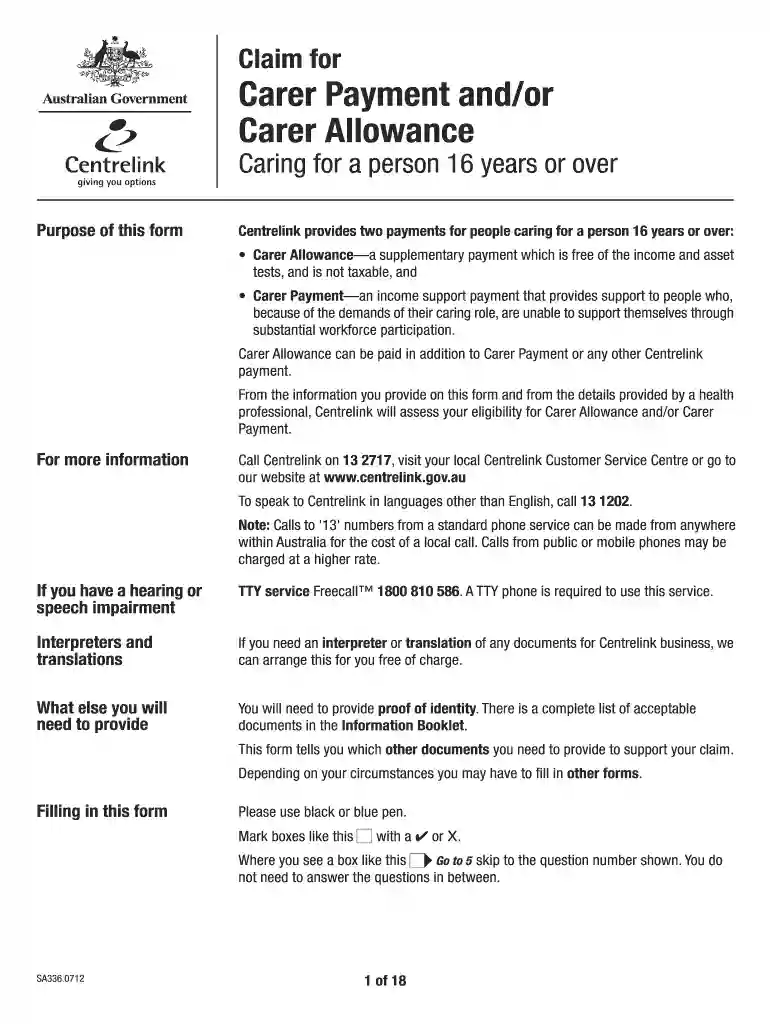
The sa304a form is a critical document used in Australia for individuals who are seeking financial assistance through Carer Payment or Carer Allowance. These provisions are designed to support those who provide full-time care to individuals over the age of 16 who have severe disabilities or medical conditions. The form serves to assess the eligibility of carers, providing necessary information to Centrelink regarding the carer's circumstances and the care recipient’s needs.
Understanding the sa304a form is essential for ensuring that the correct benefits are accessed, and it is the first step in a potentially immensely supportive process for both the carer and the care recipient.
Completing the sa304a form involves specific steps to ensure accuracy and compliance with Centrelink’s requirements. Detailed instructions are provided below to guide you through the process.
Gather Required Information: This includes personal identification details, information about the care recipient, and any relevant medical documentation. Items often needed include:
Fill Out Personal Details: Start by providing your full name, address, and any contact information. This information helps Centrelink to communicate with you effectively.
Detail Care Circumstances: Indicate the nature of the care provided, such as hours of care per week and specific needs of the recipient. This section requires careful attention to detail to ensure all circumstances are accurately represented.
Sign and Date the Form: Signatures confirm the information provided is accurate and truthful, which is a requirement for all Centrelink claims.
Review Before Submission: Double-check all entries to ensure everything is accurate. Inaccurate information can lead to delays or denials of claims.
When submitting the sa304a form to Centrelink, several supporting documents may be needed to validate your claim. It’s crucial to include all required documentation to avoid potential delays.
Ensure each document is clear and legible as Centrelink needs to verify your identity and the recipient’s eligibility for the benefits being claimed.
The sa304a form is predominantly used by individuals who are primary caregivers for those in need of significant assistance due to severe disabilities or health issues. This includes:
Understanding who utilizes this form helps clarify who can access the benefits provided under the Carer Payment and Carer Allowance, thereby expanding the awareness of the support available for those in caregiving roles.


The sa304a form serves as a legally binding document under Australian law concerning benefits for carers. It is essential for applicants to understand the legal implications of submitting this form.
Legally Binding Information: By signing the form, the caregiver affirms that all information provided is accurate to the best of their knowledge. False information can lead to penalties, including the potential for fines or criminal charges.
Compliance with Centrelink Policies: Understanding the obligations associated with the form safeguards both the applicant and the care recipient and ensures adherence to Centrelink’s guidelines for support and assistance.
This legal framework underlines the importance of transparency and accuracy during the application process, reassuring applicants of the integrity of the system in place to support caregivers.
We've got more versions of the sa304a form. Select the right sa304a version from the list and start editing it straight away!
At DocHub, your data security is our priority. We follow HIPAA, SOC2, GDPR, and other standards, so you can work on your documents with confidence.
View the University of Alabama at Birmingham profile of Rushil V. Patel. Including their scholarly creative works, grants, professional activities and
Feb 22, 2021 S.A. 304). Petitioner picked up a pint bottle from the ground and, while holding it over the victims head, told her he was going to bustRead more


