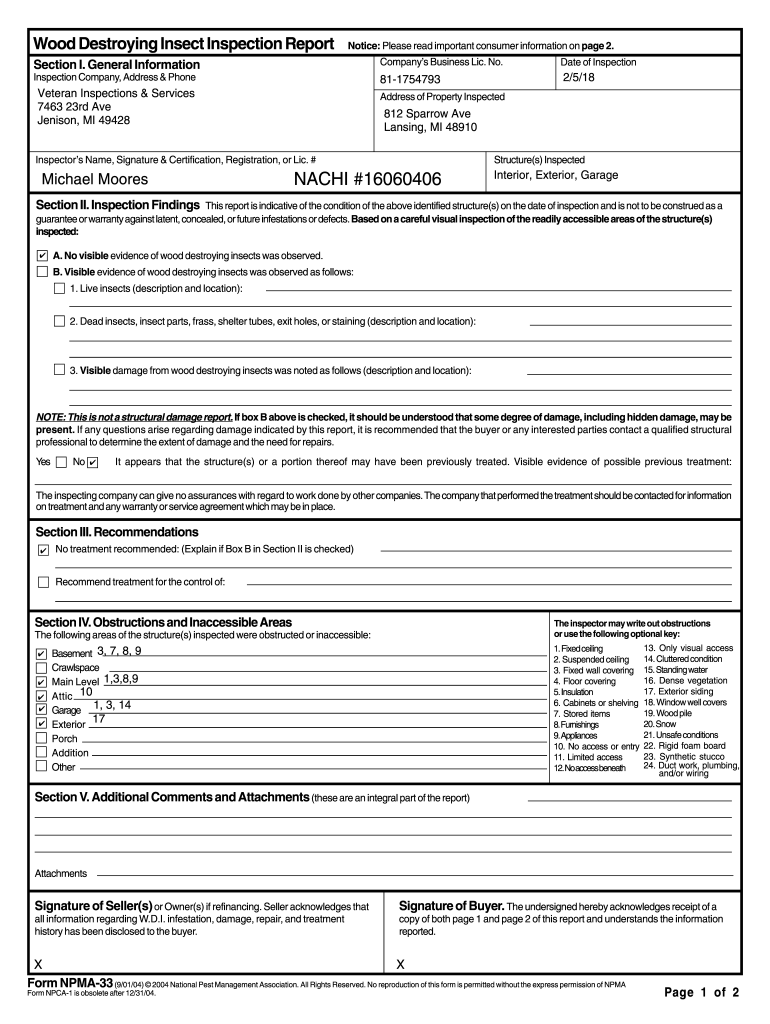







Definition and Purpose of the NPMA 33 Form
The NPMA 33 Form, also referred to as the NPMA 33 Pest Inspection form, is an official document used primarily in real estate transactions. Its intended purpose is to provide a detailed inspection report concerning the presence of wood-destroying insects, including termites, in residential and commercial properties. This form is essential for buyers, sellers, and lenders, particularly when financing is involved, as it ensures that properties are free from infestations that can lead to structural damage. The NPMA 33 Form is commonly required for loan applications, particularly with VA loans, which mandate a pest inspection as part of the underwriting process.
Key Components of the NPMA 33 Form
- Inspector Information: This section includes the inspector's name, license number, and contact information, ensuring accountability and traceability.
- Property Details: The form captures the address of the property inspected, which is crucial for locating and referencing the inspection report.
- Inspection Findings: This area details the findings from the inspection, specifically noting any visible signs of wood-destroying insects, damage present, and any treatments performed or recommended.
Steps to Complete the NPMA 33 Form
Filling out the NPMA 33 Form requires careful attention to detail. Below are the steps typically followed when completing this form:
- Gather Necessary Information: Collect vital details about the property, including the full address and any previous pest inspection reports.
- Conduct Inspection: A licensed inspector should perform a thorough examination of the property to identify any signs of pest activity.
- Document Findings: The inspector records observations, including types of pests found, areas affected, and recommendations for treatment if necessary.
- Complete the Form: Fill in the NPMA 33 Form with the gathered data, ensuring accuracy in every section.
- Review and Sign: Inspectors must review the completed form for accuracy and then provide their signature, verifying the inspection results.
Practical Tips for Inspectors
- Always provide a clear description of any potential issues and recommendations for follow-up inspections or treatments.
- Ensure that all information is legible and accurately documented to avoid misunderstandings.
Important Legal Considerations for the NPMA 33 Form
The NPMA 33 Form must comply with several legal obligations to be considered valid, particularly when used in the context of property transactions. Adhering to legal guidelines is essential for the form to hold up during disputes or when seeking remedies for pest-related issues.
Compliance with State and Federal Regulations
- Licensing Requirements: Inspectors must be licensed according to state regulations, ensuring that they meet the necessary qualifications to conduct pest inspections.
- Disclosure Requirements: Any findings that indicate significant pest infestations must be disclosed to all parties involved in a real estate transaction, ensuring transparency and informed decision-making.
Potential Legal Consequences
Failure to follow the regulations surrounding the NPMA 33 Form can result in various penalties, including fines, loss of license, and legal liability for damages resulting from pest-related issues.
Variants of the NPMA 33 Form
While the NPMA 33 Form specifically addresses the inspection of wood-destroying pests, there are several variants and related forms that may be utilized depending on the specific requirements of a transaction or inspection.
Related Forms
- VA Termite Inspection Form (VA NPMA 33): Specifically tailored for properties requiring inspection for VA loan transactions, ensuring compliance with VA standards.
- Other NPMA Forms: Various forms within the NPMA guidelines exist for different pest types and scenarios, including forms for general pest control and treatment.
Importance of Using the Correct Form
Using the correct version of the NPMA 33 Form is critical, as inaccuracies or outdated forms may lead to compliance issues during real estate transactions, potentially affecting financing or legal proceedings.
Examples of Using the NPMA 33 Form in Real Estate Transactions
The NPMA 33 Form plays a pivotal role in various real estate scenarios. Here are illustrative examples demonstrating its application:
Example Scenario 1: Buying a Home
A potential homebuyer must obtain an NPMA 33 Form before proceeding with the purchase of a property. The buyer's lender requires this form to ensure the property is free from pest issues, ultimately protecting the buyer's investment.
Example Scenario 2: Refinancing a Property
When refinancing a home, the lender may request a current NPMA 33 Form to confirm there are no active pest problems that could pose a threat to the property's value. The homeowner arranges for a pest inspection to fulfill this requirement.
Example Scenario 3: Selling a Property
As part of the sales process, the seller provides an NPMA 33 Form to prospective buyers, demonstrating that the property has been inspected and is free from wood-destroying pests. This reassurance can enhance buyer confidence and facilitate a smoother transaction.
Overview of NPMA 33 Form Submission Methods
Submitting the NPMA 33 Form can vary based on specific practices within different states or real estate practices. Understanding the preferred methods for form submission can simplify the transaction process.
Common Submission Methods
- Physical Delivery: The completed form can be handed directly to the parties involved, such as buyers, sellers, or lenders, ensuring immediate receipt.
- Email Submission: Many inspectors and real estate agents prefer to send completed forms electronically. This method facilitates quicker processing and documentation.
- Hard Copy Mail: In certain cases, mailing a hard copy may be necessary, particularly for records that require signatures or when dealing with institutions that mandate physical documentation.
Best Practices for Submission
- Always confirm with the relevant parties about their preferred method of receiving the NPMA 33 Form.
- Maintain copies of the submitted form for your records, which can be important in resolving potential disputes or claims later.
Comprehensively understanding the NPMA 33 Form, along with its legal importance and practical applications, equips all parties involved in real estate transactions with the knowledge needed to navigate legal requirements effectively and ensure property safety.