
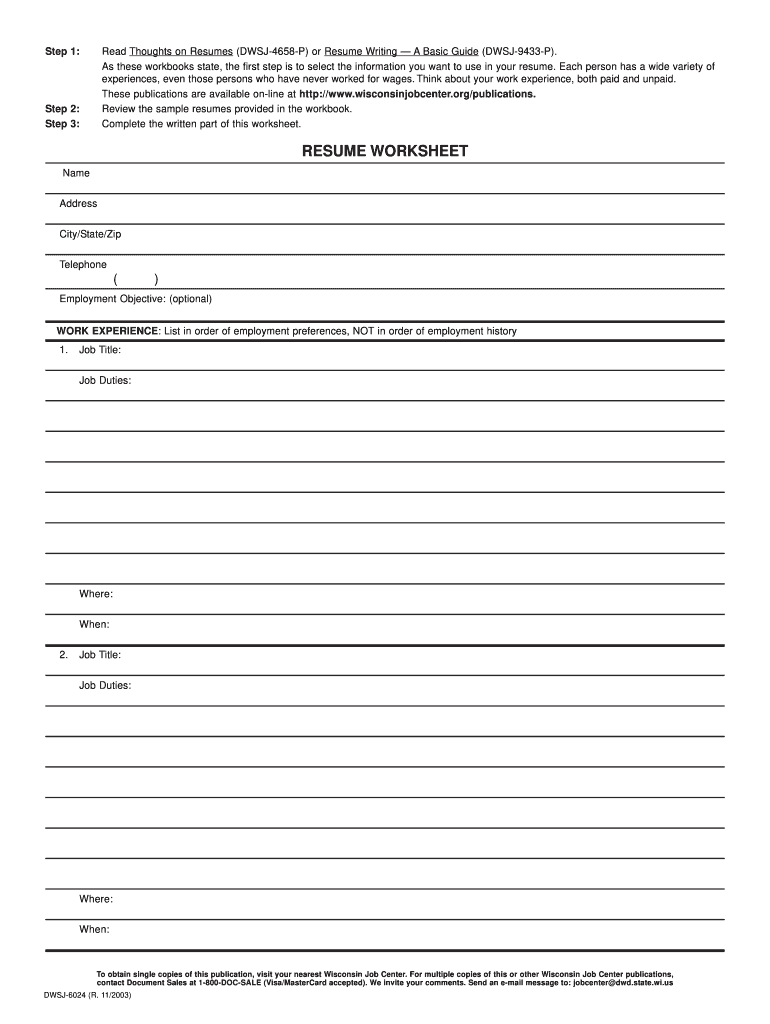







Definition and Purpose of the Resume Worksheet
A resume worksheet is a structured tool designed to aid individuals in compiling important personal information, work experience, education, skills, and references necessary for crafting an effective resume. It provides a systematic approach to documenting one’s career history and professional qualifications in an organized format. By using this worksheet, job seekers can streamline the process of creating a polished resume that accurately reflects their skills and experience, enhancing their chances of securing job opportunities.
In many cases, a resume worksheet includes sections labeled for name, contact information, previous employment details, educational background, skills, and references. This tool allows users to easily fill in relevant sections, making the subsequent resume-writing process more efficient. By taking advantage of a fillable format, users can develop their resume content in an organized manner, thus maximizing clarity and professionalism.
Steps to Complete the Resume Worksheet
Completing a resume worksheet involves a strategic approach to documenting your information systematically. Here are the key steps:
-
Personal Information: Start by entering your name, address, phone number, and email. Ensure that all your contact details are current and correctly formatted, as they will be crucial for potential employers to reach you.
-
Work Experience: List your previous jobs chronologically. For each position, include the job title, company name, location, dates of employment, and a brief description of your responsibilities and accomplishments. Bullet points can be effective in highlighting key contributions.
-
Education: Document your educational background, including the names of institutions, degrees obtained, and years of graduation. Include relevant courses or honors that could strengthen your candidacy.
-
Skills: Compile a list of skills that are relevant to the positions you are applying for. These can include both soft skills (e.g., communication, teamwork) and hard skills (e.g., software proficiency, technical skills).
-
References: Identify individuals who can serve as references. Include their name, relationship to you, and contact information. Ensure you have their permission to list them as references.
-
Review and Update: After filling out the worksheet, review all sections for accuracy and completeness. It’s beneficial to update this document regularly as you gain new experiences or skills.
Using this structured approach ensures thoroughness in your resume preparation, ultimately leading to a more compelling presentation of your qualifications.
Key Elements of the Resume Worksheet
A well-designed resume worksheet incorporates essential elements that contribute to a strong resume. Here are the key components:
-
Contact Information: Your details should be prominently placed at the top of the document for easy access by potential employers.
-
Objective Statement or Summary: While optional, including a brief statement about your career goals or a summary of your qualifications can help guide the employer’s understanding of your aspirations.
-
Employment History: This section should include all relevant positions held, ensuring to spotlight the most pertinent experiences related to the job being sought.
-
Educational Background: Education should be detailed with necessary institutions and credentials, which can bolster your suitability for certain roles.
-
Core Competencies or Skills: Clearly outline your skill set, focusing on those most relevant to the job description. This helps in aligning your qualifications with employer expectations.
-
References: Including a section for references or a statement that references are available upon request can enhance professional credibility.
Understanding these key elements will help ensure that you utilize the resume worksheet effectively, leading to a comprehensive and competitive resume.
How to Obtain the Resume Worksheet
To obtain a resume worksheet, several options are available that cater to various preferences and needs. Below are some access methods:
-
Online Templates: Many websites offer free or paid downloadable resume worksheet templates in various formats (Word, PDF, Google Docs). Search for “resume worksheet template” online to find numerous options tailored to your style and experience level.
-
Career Services: Local career centers, universities, and community colleges often provide resume worksheets as part of their job-seeking resources. Visiting these centers can offer additional guidance and support for creating effective resumes.
-
Professional Organizations: Many professional associations provide resources, including worksheets and templates, to their members. Joining such organizations can provide valuable career development tools.
-
Print Options: For those who prefer a physical format, printed worksheets can be found in libraries or purchased at office supply stores. This option allows for handwritten notes and edits.
Ensuring you have a well-structured resume worksheet is essential for collecting information efficiently as you prepare your job application materials.
Who Typically Uses the Resume Worksheet
The resume worksheet is a versatile tool that can benefit a wide audience. Here are the typical users:
-
Job Seekers: Anyone actively seeking employment, including recent graduates and career changers, finds the resume worksheet invaluable for organizing their professional experience.
-
Students: High school or college students preparing to enter the job market can use it to document part-time jobs, internships, and impactful volunteer experiences.
-
Professionals Seeking Advancement: Employees aiming for promotions or new career opportunities utilize the worksheet to assess and highlight their skills and achievements effectively.
-
Individuals Returning to the Workforce: Those re-entering the job market after an absence (due to caregiving or other reasons) can benefit from the worksheet to refresh their memory on past positions and experiences.
By understanding the diverse uses of the resume worksheet, one can see its significance in supporting various demographics throughout the job application process.


Examples of Using the Resume Worksheet
Utilizing a resume worksheet can take several forms, depending on individual needs and contexts. Here are a few illustrative examples:
-
Entry-Level Position Application: A recent college graduate completing a resume worksheet might focus on internships and academic projects relevant to their desired job. They would outline coursework, skills acquired, and roles held during their internships, ensuring a strong presentation despite limited work experience.
-
Career Transition Example: A professional transitioning from teaching to corporate training would use the worksheet to emphasize transferable skills such as public speaking, lesson planning, and team collaboration. They would adapt previous roles to highlight their relevance to corporate environments.
-
Returning to the Workforce: An individual rejoining the job market after several years might use the worksheet to remember past roles, volunteer work, and skills gained during their time away. This approach helps create a resume that fills potential gaps in employment with valuable personal experiences.
These examples illustrate the adaptable nature of the resume worksheet, showcasing its ability to serve various individual circumstances in the job market.
Important Terms Related to the Resume Worksheet
Familiarizing yourself with specific terminology related to the resume worksheet can greatly enhance its efficacy. Key terms include:
-
Chronological Format: A resume structure where work experience is listed in reverse chronological order, presenting the most recent roles first.
-
Functional Resume: A format emphasizing skills and experiences over chronological job history, beneficial for those with gaps in employment or changing careers.
-
ATS (Applicant Tracking System): Software used by employers to filter applications based on keywords and formatting. Understanding this is crucial for formatting your resume appropriately.
-
Keywords: Specific words or phrases derived from job descriptions that are often used to enhance the visibility of your application in ATS.
-
Summary Statement: A brief overview of your qualifications included at the top of a resume, designed to capture the hiring manager's attention.
By incorporating this terminology into your knowledge base, you can navigate the job application process more effectively and produce a compelling resume utilizing the worksheet efficiently.


