




01. Edit your pledge form online
Type text, add images, blackout confidential details, add comments, highlights and more.

Type text, add images, blackout confidential details, add comments, highlights and more.

Draw your signature, type it, upload its image, or use your mobile device as a signature pad.

Send pledge form template via email, link, or fax. You can also download it, export it or print it out.
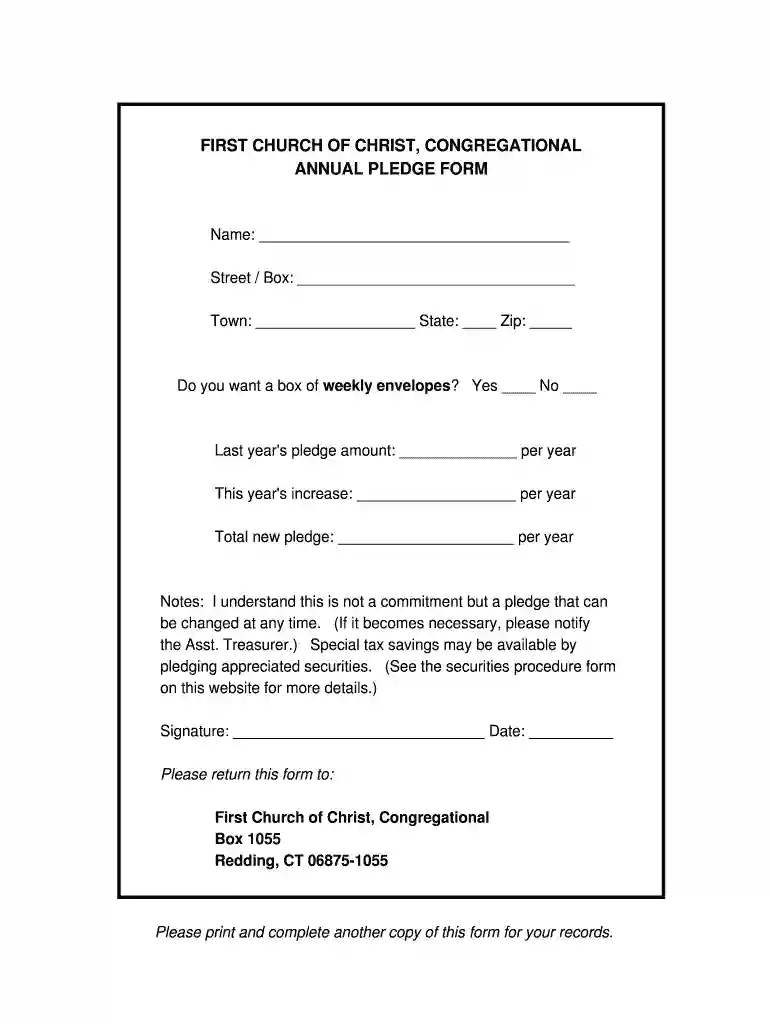
A pledge form is a document used to formalize an individual's or organization's commitment to contribute a specified amount of money or resources to a cause, project, or organization, typically over a designated time period. Pledge forms are particularly common in nonprofit fundraising, religious organizations, educational institutions, and various charitable initiatives. They serve to establish a clear understanding between the pledger and the entity receiving the pledge about the terms and amounts being promised.
The primary purpose of a pledge form is to document financial commitments, allowing organizations to project future income based on the commitments made by their supporters. It provides a structured way for pledgers to outline their intentions, ensuring that all parties have a clear agreement on expectations. This can include information on how often payments will be made, whether the pledge is one-time or ongoing, and any conditions or specifications related to the pledge.
A typical pledge form consists of several key elements that need to be carefully considered and included to ensure clarity and functionality:
Personal Information: This section collects basic details about the pledger, including name, address, email, and phone number. It ensures that the organization can reach out for follow-up or confirmations.
Pledge Amount: This is where the pledger indicates the total financial commitment they are making. It should clearly present both the total and any breakdowns if the pledge will be fulfilled in installments.
Payment Schedule: Organizations should include options for how and when payments will be made. This can include one-time payments, monthly, quarterly, or annually, allowing the pledger to select a plan that suits their financial circumstances.
Signature Line: To validate the pledge, a signature line is required. This indicates that the pledger agrees to the terms set forth in the form.
Date of Pledge: Recording the date on which the pledge is made ensures accountability and provides a timeline for the organization to track expected incoming funds.
Conditions or Limitations: If there are specific terms associated with the pledge (e.g., a requirement to maintain membership status in a church), these should be explicitly stated.
Confidentiality Clause: Some forms contain statements regarding how the pledged information will be used and whether it will remain confidential.
Filling out a pledge form involves several straightforward steps, which can help streamline the process for donors and organizations alike:
Gather Required Information: Before starting, ensure you have all necessary personal details and financial information available. This will include your contact information and the amount you wish to pledge.
Choose Your Pledge Amount: Decide how much you want to contribute. Consider whether this will be a one-time gift or if you prefer to split the donation over multiple payments.
Select a Payment Schedule: Determine if you will make your payment all at once or in installments. Specify the frequency of payments if applicable.
Read the Terms Carefully: Review any conditions or obligations associated with your pledge to ensure you understand your commitment.
Provide Your Signature: Sign and date the form, confirming your agreement to the terms outlined.
Submit the Form: Deliver the completed pledge form to the designated organization, either via mail, electronically, or in person, depending on their preferred submission method.
Pledge forms can be found in various formats, catering to different needs and preferences. Here are some common variants:
Printable Pledge Form: A simple PDF format allows individuals to fill this out manually or digitally before printing.
Online Pledge Form: Many organizations offer an online version, which can be filled out and submitted directly through their website. This is particularly useful for tech-savvy donors who prefer a quicker process.
Mobile Pledge Form: Designed for use on smartphones, these forms enable users to pledge while on the go, often integrated into mobile apps provided by the organization.
Pledge Form Template: Many resources provide pledge form templates for organizations to customize according to their specific requirements. These can often be edited in software such as Microsoft Word or Google Docs.
Pledge forms are essential tools in fundraising campaigns for several reasons:
Commitment to Giving: They help organizations gauge commitment levels from donors, ensuring that potential future revenue is accounted for in budgeting and planning.
Community Engagement: Utilizing pledge forms promotes interaction between the donor and the organization. This fosters a sense of belonging and partnership, particularly in nonprofit contexts where community involvement is crucial.
Tracking Contributions: Pledge forms facilitate the tracking of financial contributions over time, which is valuable for both accountability and maintaining accurate financial records.
Encouraging Repeat Giving: By outlining a clear commitment, pledge forms can encourage individuals to become repeat donors, creating a sustainable funding source for organizations.
A well-structured pledge form template might include the following sections:
Personal Information:
Pledge Details:
Conditions (if any):
Acknowledgment:
This structured approach ensures that all necessary information is collected clearly and efficiently, aiding organizations in the management of their fundraising efforts.
We've got more versions of the pledge form form. Select the right pledge form version from the list and start editing it straight away!
| Versions | Form popularity | Fillable & printable |
|---|---|---|
| 2011 | 4.6 Satisfied (41 Votes) |
At DocHub, your data security is our priority. We follow HIPAA, SOC2, GDPR, and other standards, so you can work on your documents with confidence.


