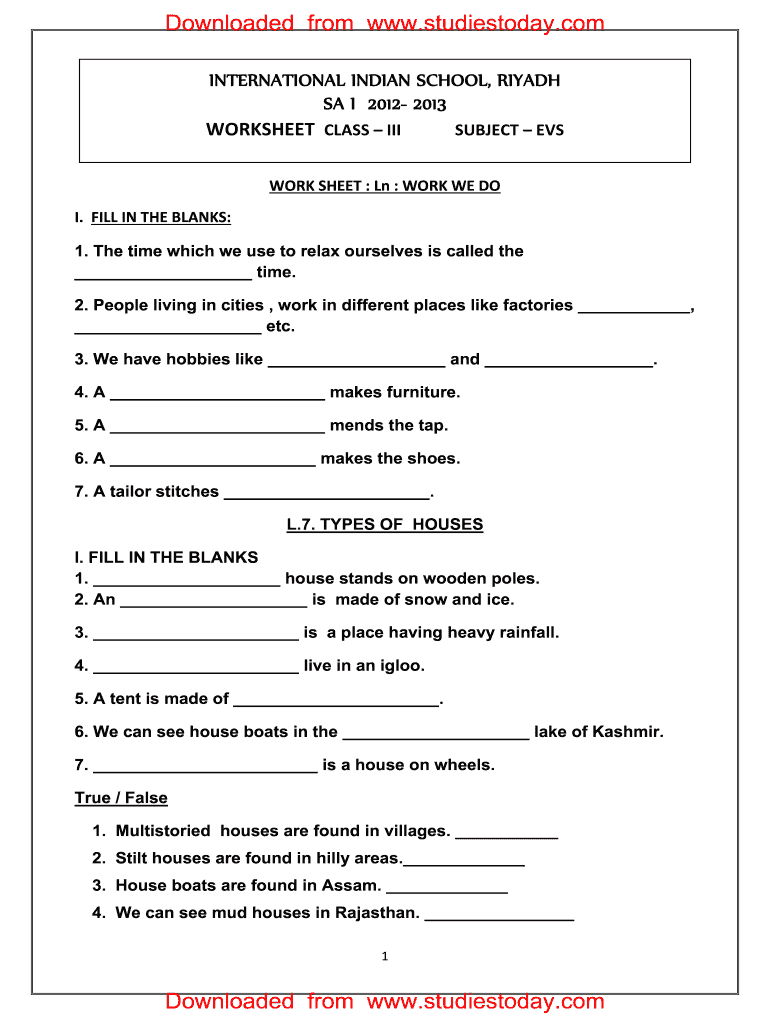







Definition and Purpose of EVS Chapter Food We Eat Worksheets
The "evs chapter food we eat class 3 worksheets" focus on educating third-grade students about food and nutrition, emphasizing the significance of food in daily life. These worksheets typically cover various themes related to food, including its types, sources, and benefits. The primary aim is to enhance students' understanding of the different foods we consume, how they affect our health, and their origins, thereby fostering a comprehensive view of nutrition and well-being.
Key Features of the Worksheets
- Fill-in-the-Blanks: This section helps students identify and recall essential terms associated with food and nutrition, reinforcing their understanding of the subject matter.
- True/False Questions: These are designed to test students’ knowledge and help them differentiate between facts and misconceptions related to food.
- Matching Activities: These exercises assist students in linking various food items to their nutritional benefits, sources, or characteristics, promoting analytical thinking.
- Short Answer Questions: This format encourages critical thinking and allows students to express their knowledge in their own words, which aids their comprehension.
Steps to Use the EVS Chapter Food We Eat Worksheets
Utilizing the "evs chapter food we eat class 3 worksheets" effectively involves a structured approach that fosters engagement and understanding.
- Review the Content: Before distributing the worksheets, educators should familiarize themselves with the topics covered, including food types, nutritional benefits, and sourcing.
- Explain the Objectives: Communicate the goals of the worksheet to the students, emphasizing the importance of nutrition and how food choices impact health.
- Distribute the Worksheets: Provide printed or digital versions of the worksheets to each student, ensuring everyone has access to the necessary materials.
- Guided Discussion: Engage the students in a discussion about food, encouraging them to share their favorite foods and what they know about them.
- Worksheet Completion: Allow students time to work on the worksheets individually or in groups, depending on the lesson plan's focus.
- Review Answers Together: After students complete the worksheets, review the answers as a class to provide immediate feedback and clarify any misunderstandings.
Why Use the EVS Chapter Food We Eat Worksheets
Incorporating the "evs chapter food we eat class 3 worksheets" into the curriculum provides numerous benefits for students.
- Promotes Health Awareness: Teaching students about healthy food choices can lead to better eating habits in their daily lives.
- Encourages Critical Thinking: The various formats of the worksheets, such as fill-in-the-blanks and short answer questions, stimulate cognitive skills and critical analysis.
- Supports Diverse Learning Styles: The combination of visual, auditory, and kinesthetic activities caters to different learning preferences among students.
- Facilitates Collaborative Learning: When students work in groups, they can discuss and share knowledge, fostering a collaborative environment that enhances learning outcomes.
Key Elements of the EVS Chapter Food We Eat Worksheets
Understanding the key components of the "evs chapter food we eat class 3 worksheets" can enhance their effectiveness in the classroom.
- Educational Standards Alignment: These worksheets are designed to align with educational benchmarks for third-grade science and health curricula, ensuring they meet learning objectives.
- Engagement Techniques: The use of interactive activities, such as matching and true/false questions, keeps students engaged and eager to learn.
- Diverse Content: Covering a range of topics from food groups to the significance of various nutrients, the worksheets provide a holistic approach to food education.
- Answer Keys: Providing answer keys for the worksheets helps educators efficiently assess student understanding and facilitates easy grading.
Examples of Activities in the EVS Chapter Food We Eat Worksheets
Various engaging activities can be found in the "evs chapter food we eat class 3 worksheets," each designed to reinforce learning.
- Food Group Sorting: Students categorize different foods into their respective food groups, helping them visualize a balanced diet.
- Food Diary: Students may be asked to track their food intake for a day, promoting awareness of their eating habits.
- Nutritional Label Reading: Introducing students to food labels teaches them how to interpret nutritional information, fostering health literacy.
- Cooking Class Questions: Questions related to how food is prepared and its cultural significance enhance understanding beyond basic nutrition.
Obtaining EVS Chapter Food We Eat Worksheets
Teachers and educators can obtain the "evs chapter food we eat class 3 worksheets" through multiple avenues.
- School Resources: Many schools provide access to educational materials, including worksheets tailored to the curriculum.
- Educational Websites: Platforms specializing in educational content often offer downloadable worksheets or printable versions.
- Collaborative Teacher Networks: Educators can share resources with one another, providing access to a wide range of worksheets that align with specific units of study.
- Publishers: Educational publishers frequently release updated versions of worksheets that follow common core standards, ensuring that students receive current content.
Who Typically Uses the EVS Chapter Food We Eat Worksheets
The "evs chapter food we eat class 3 worksheets" are primarily utilized by specific groups dedicated to enhancing students' learning experiences.
- Teachers and Educators: Primary school teachers incorporate these worksheets into their lesson plans to teach students about food and nutrition.
- Parents: Engaged parents can use the worksheets at home to reinforce lessons learned in school, promoting a supportive learning environment.
- Tutors: Tutors may incorporate these materials into their sessions to provide targeted assistance to students needing extra help with nutrition concepts.
- Educational Institutions: Schools and educational organizations may utilize these worksheets as part of broader health and nutrition programs aimed at improving student well-being.