


In limine motion ny 2026

Get Form
what is a motion in limine Preview on Page 1

Here's how it works

01. Edit your what is a motion in limine online
Type text, add images, blackout confidential details, add comments, highlights and more.
02. Sign it in a few clicks
Draw your signature, type it, upload its image, or use your mobile device as a signature pad.
03. Share your form with others
Send motions in limine via email, link, or fax. You can also download it, export it or print it out.

How to use or fill out in limine motion ny with our platform

Form edit decoration
9.5
Ease of Setup
DocHub User Ratings on G2
9.0
Ease of Use
DocHub User Ratings on G2
  1. Click ‘Get Form’ to open the in limine motion NY document in the editor.
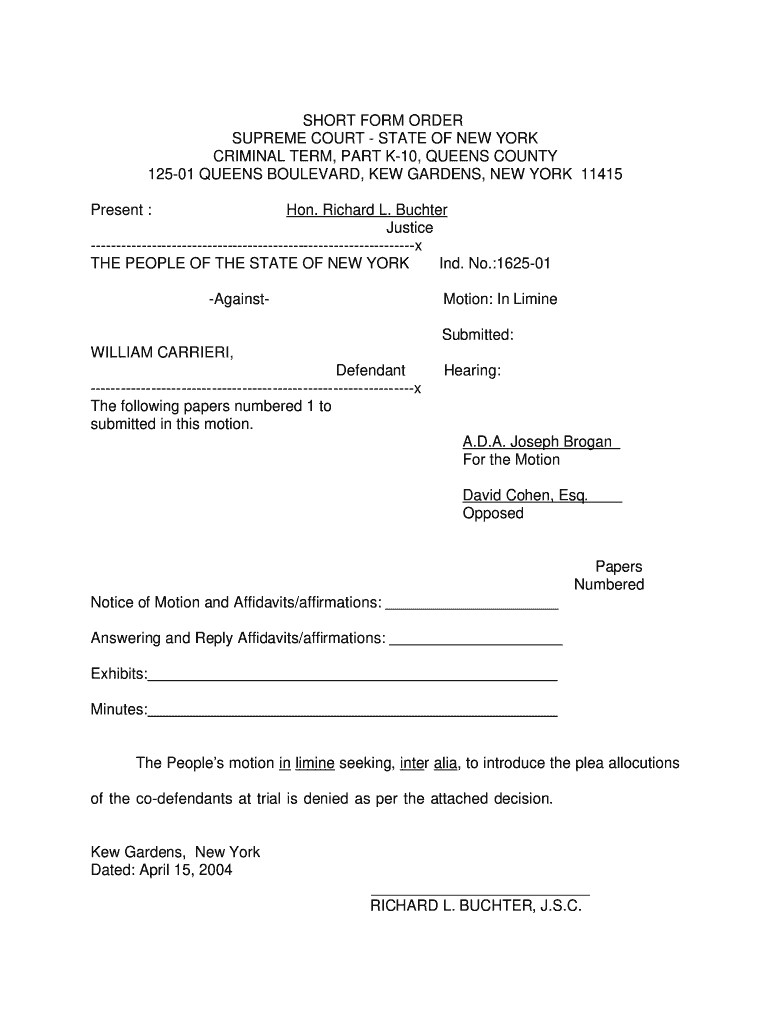
  2. Begin by filling out the header section, including the court name, term, and case number. Ensure accuracy as this information is crucial for proper identification of your motion.
  3. In the 'Present' section, list the names of all parties involved, including the judge presiding over the case. This helps establish context for your motion.
  4. Next, complete the 'Motion' field by clearly stating that you are submitting an in limine motion. This informs the court of your intent.
  5. Fill out any additional sections such as 'Papers Numbered' where you will reference supporting documents like affidavits or exhibits related to your motion.
  6. Finally, review all entries for clarity and correctness before saving or exporting your completed document for submission.

Start using our platform today to streamline your document editing and ensure a smooth filing process!

See more in limine motion ny versions

We've got more versions of the in limine motion ny form. Select the right in limine motion ny version from the list and start editing it straight away!
Versions Form popularity Fillable & printable
2004 4.8 Satisfied (121 Votes)
be ready to get more

Complete this form in 5 minutes or less

Get form

Got questions?

We have answers to the most popular questions from our customers. If you can't find an answer to your question, please contact us.
Contact us
The motion must clearly identify for the Court and opposing counsel what evidence would be excluded. Because orders in limine are enforceable by contempt, the Court will deny motions that would allow reasonable minds to differ on what evidence is covered.
Motions in limine should be used to address broader issues concerning, for example, (1) the receipt or exclusion of evidence, testimony, or arguments of a particular kind or concerning a particular subject matter, (2) challenges to the competence of a particular witness, or (3) challenges to the qualifications of
The most common use of a motion in limine is to prevent an opposing party from using unfairly prejudicial evidence.