




01. Edit your va form 10 2850c online
Type text, add images, blackout confidential details, add comments, highlights and more.

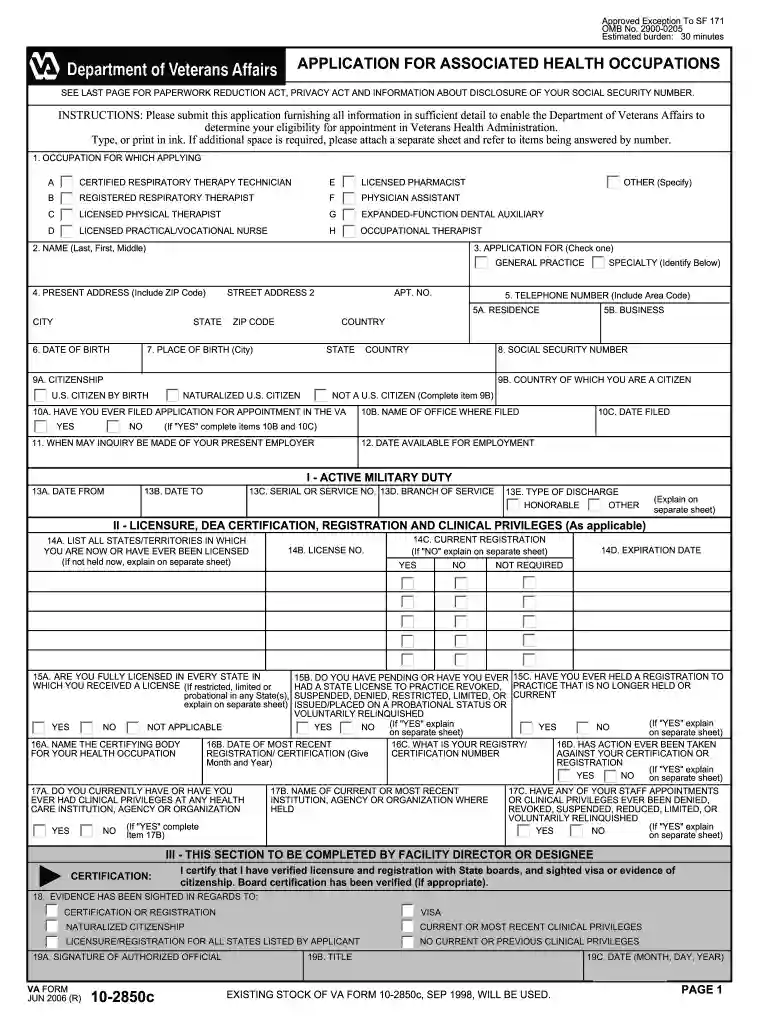
Type text, add images, blackout confidential details, add comments, highlights and more.

Draw your signature, type it, upload its image, or use your mobile device as a signature pad.

Send va10 2850c via email, link, or fax. You can also download it, export it or print it out.

Start using our platform today to fill out VA Form 10-2850C effortlessly and for free!
We've got more versions of the va form 10 2850c form. Select the right va form 10 2850c version from the list and start editing it straight away!
At DocHub, your data security is our priority. We follow HIPAA, SOC2, GDPR, and other standards, so you can work on your documents with confidence.




Fee Payment Details: fall and spring semesters have two fee payment deadlines. Registrations processed before the first deadline must be paid by the first.
INSTRUCTIONS: Please submit this application furnishing all information in sufficient detail to enable the Department of Veterans Affairs to.Read more


