




01. Edit your ga1 form online
Type text, add images, blackout confidential details, add comments, highlights and more.

Type text, add images, blackout confidential details, add comments, highlights and more.

Draw your signature, type it, upload its image, or use your mobile device as a signature pad.

Send ga 1 form via email, link, or fax. You can also download it, export it or print it out.
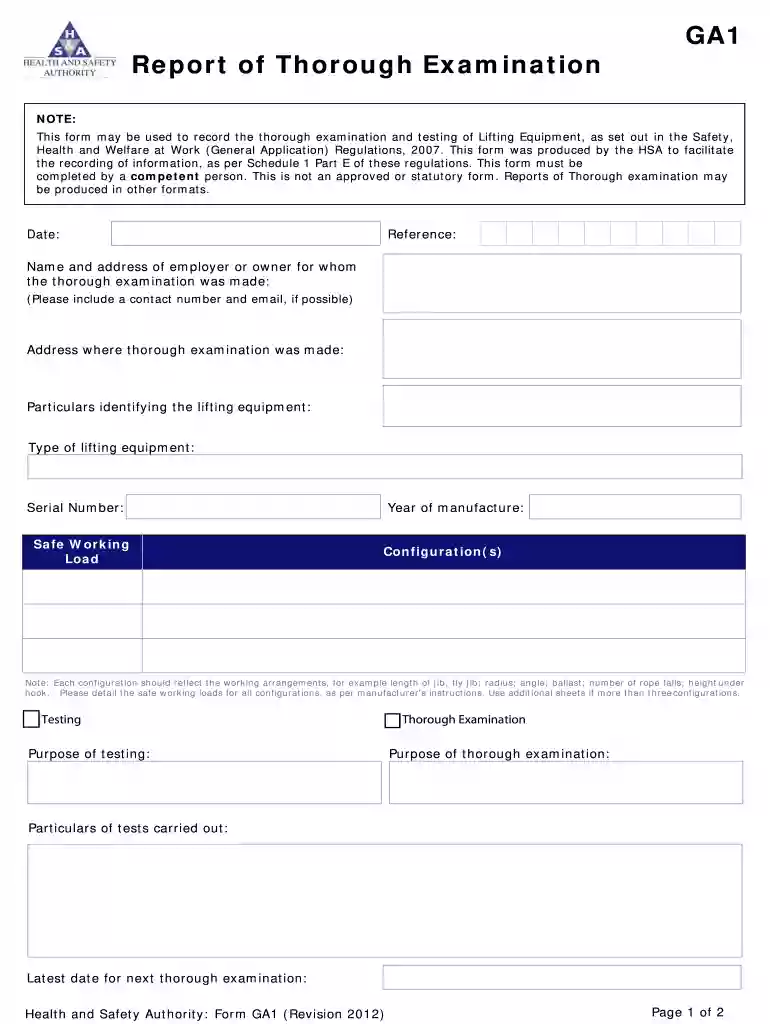
The GA1 form, often referred to in the context of lifting equipment inspections, serves as a critical document for compliance with safety regulations. It is specifically designed to ensure that equipment undergoes a thorough examination, providing essential details required for legal and operational accountability. This form is integral for organizations that prioritize safety and adherence to the Health and Safety Authority (HSA) regulations in Ireland.
Completing the GA1 form involves a systematic approach to ensure accuracy and compliance:
The GA1 form adheres to the legal framework established by the HSA in Ireland. It is essential that the form is completed accurately and retained for compliance with the Safety, Health and Welfare at Work regulations. Failure to comply with these legal obligations can result in penalties or safety violations.
The GA1 form is primarily utilized by:
The GA1 form is an indispensable element of safety management within organizations that utilize lifting equipment. By facilitating compliance with HSA regulations and documenting inspections, it plays a crucial role in ensuring workplace safety and operational integrity. Regular use and completion of the GA1 form equip companies with the necessary tools to foster a safe working environment.
We've got more versions of the ga1 form form. Select the right ga1 form version from the list and start editing it straight away!
| Versions | Form popularity | Fillable & printable |
|---|---|---|
| 2012 | 4.9 Satisfied (29 Votes) |
At DocHub, your data security is our priority. We follow HIPAA, SOC2, GDPR, and other standards, so you can work on your documents with confidence.
Your completed evaluations are to be filed in the students departmental employee record. Please do not send completed evaluation forms to the Graduate School.Read more
It uses industry standard mechanical components and high-performance connector technologies to provide an optimized system intended for rugged applications. ItRead more


