Eppoc questionnaire 2026

Get Form
eppoc questionnaire Preview on Page 1

Here's how it works

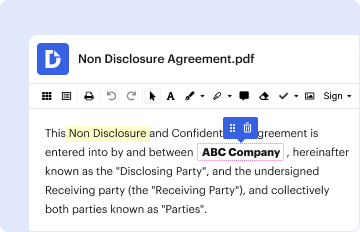
01. Edit your eppoc questionnaire online
Type text, add images, blackout confidential details, add comments, highlights and more.

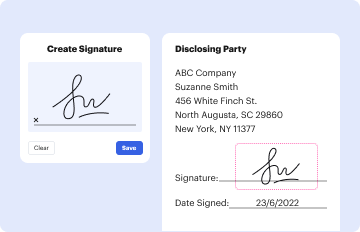
02. Sign it in a few clicks
Draw your signature, type it, upload its image, or use your mobile device as a signature pad.

03. Share your form with others
Send eppoc questionnaire pdf via email, link, or fax. You can also download it, export it or print it out.

How to use or fill out eppoc questionnaire with our platform

Form edit decoration
9.5
Ease of Setup
DocHub User Ratings on G2
9.0
Ease of Use
DocHub User Ratings on G2
  1. Click ‘Get Form’ to open the eppoc questionnaire in the editor.
  2. Begin with Section 1 – Your details. Fill in your family name, given names, date of birth, and contact information. Ensure accuracy as this information is crucial for your records.
  3. Proceed to indicate your gender and whether you require an interpreter. If applicable, specify the language needed.
  4. In Section 2 – Your work, answer questions regarding your employment status and how pain has affected your work hours and productivity over the past week.
  5. Move on to Section 3 – Medication use. List any medications you are currently taking, including their strengths and dosages.
  6. For Section 4 – Pain intensity and interference, shade areas on the provided diagrams where you feel pain and rate your pain levels based on the scale provided.
  7. Continue through Sections 5 to 7, responding to questions about mental health, confidence in managing pain, and thoughts during painful situations.

Start filling out your eppoc questionnaire today for free using our platform!

See more eppoc questionnaire versions

We've got more versions of the eppoc questionnaire form. Select the right eppoc questionnaire version from the list and start editing it straight away!
Versions Form popularity Fillable & printable
2018 4.8 Satisfied (87 Votes)
be ready to get more

Complete this form in 5 minutes or less

Get form

Got questions?

We have answers to the most popular questions from our customers. If you can't find an answer to your question, please contact us.
Contact us
Vowles et al. found that the average CPAQ-20 score of chronic pain patients with low acceptance is 29.1 (Standard deviation = 10.8) (17). Thus, standard deviation (SD) multiplied by 1.64 and then plus the average score, which is 46.8, could be used as the cut-off point to distinguish low and high acceptance.
The Strengths and Difficulties Questionnaire (SDQ) is for carers to complete in relation to the behaviour of a child or young person OOHC and placed in their care. The use of this valid and reliable questionnaire provides a robust way of capturing a child or young person strengths and difficulties over time.
The PSEQ is a 10-item questionnaire, where patients rate their confidence from 0 points (not at all confident) to 6 points (completely confident). Total scores are calculated by summing the individual items with a range from 0 points (less self-efficacy) to 60 points (more self-efficacy).
The Pain Questionnaire asks very specific questions about your pain such as: Where is it located? Is the pain a throb, ache, sharp, stabbing etc? How frequent is the pain?

Security and compliance

At DocHub, your data security is our priority. We follow HIPAA, SOC2, GDPR, and other standards, so you can work on your documents with confidence.

Learn more
ccpa2
pci-dss
gdpr-compliance
hipaa
soc-compliance
be ready to get more

Complete this form in 5 minutes or less

Get form