




Here's how it works
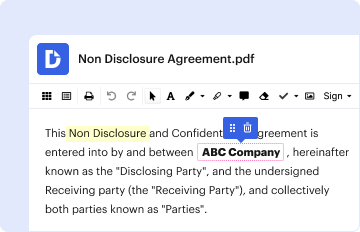
01. Edit your form online
Type text, add images, blackout confidential details, add comments, highlights and more.
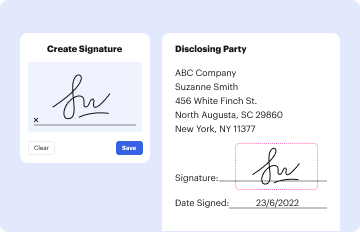
02. Sign it in a few clicks
Draw your signature, type it, upload its image, or use your mobile device as a signature pad.

03. Share your form with others
Send it via email, link, or fax. You can also download it, export it or print it out.
How to use or fill out form national fire with our platform

- Click ‘Get Form’ to open the application in the editor.
- Begin by filling out Section I - General Information. Provide a detailed description of your organization, including its functions and annual budget.
- Next, describe your specific duties and responsibilities at an executive level. Include the number of employees you supervise and your reporting structure.
- Proceed to Section II - Brief Essay Questions. Answer question three by detailing your most substantial professional achievement and its significance.
- For question four, outline the goals you hope to achieve through the Executive Fire Officer Program and how these will enhance your career.
- Continue with question five, explaining how your background and experience will contribute to the program and fellow participants.
- Finally, address question six by describing two significant management challenges you face and their impact on achieving organizational goals.
Start using our platform today for free to streamline your application process!
Fill out form national fire online
It's free
It's free
See more form national fire versions
We've got more versions of the form national fire form. Select the right form national fire version from the list and start editing it straight away!
| Versions | Form popularity | Fillable & printable |
|---|---|---|
| 2010 | 4.8 Satisfied (98 Votes) |
Got questions?
We have answers to the most popular questions from our customers. If you can't find an answer to your question, please contact us.
Contact us
What is fire 5 points?
Fire is a chemical process in which a fuel and an oxidizing agent react, yielding carbon dioxide and water. This process, known as a combustion reaction, does not proceed directly and involves intermediates. Although the oxidizing agent is typically oxygen, other compounds are able to fulfill the role.
Who is the biggest fire protection company in the USA?
These are the Top Fire Protection Companies in the USA Right Now Johnson Controls (JCI) Johnson Controls (JCI) is a major player in the fire protection space. Cintas. Pye-Barker Fire Safety. Summit Companies. Sciens Building Solutions.
Is the NFA part of FEMA?
In 1979, the Federal Emergency Management Agency (FEMA) purchased 107 acres of the property and 19 former college buildings for $3.5 million to house the U.S. Fire Administration and the National Fire Academy (NFA).
What are the five main principles of fire?
The principles outlined by the IFSS Prevention, Detection and Communication, Occupant Protection, Containment, and Extinguishment are broadly applicable, performance based, and interrelated.
Does fire have a form?
1:10 3:49 Safe one removing heat people have learned to fight fire by reducing the heat. So that a fire cannotMoreSafe one removing heat people have learned to fight fire by reducing the heat. So that a fire cannot burn. The most common way to do this is with water fire hydrants are hooked into the water supply.
Security and compliance
At DocHub, your data security is our priority. We follow HIPAA, SOC2, GDPR, and other standards, so you can work on your documents with confidence.
Learn more


People also ask
What are the five key points of the National fire Plan?
The NFP addresses five key points: Firefighting, Rehabilitation, Hazardous Fuels Reduction, Community Assistance, and Accountability. The National Fire Plan continues to provide invaluable technical, financial, and resource guidance and support for wildland fire management across the United States.
What are the five elements of a fire safety plan?
5 key elements of fire safety for businesses Fire Risk Assessments. Conducting regular fire risk assessments is the cornerstone of workplace fire safety. Fire Detection and Alarm Systems. Fire Extinguishers and Suppression Systems. Emergency Lighting and Signage. Employee Training and Fire Drills.
What are the five points of fire safety?
The foundation of a comprehensive fire safety plan lies in understanding these five key elements: prevention, detection, suppression, compartmentalization, and egress. Each of these components plays a critical role in ensuring that fire risks are minimized and that emergency responses are both timely and effective.