






Definition and Significance of the Chain of Custody Documentation Form
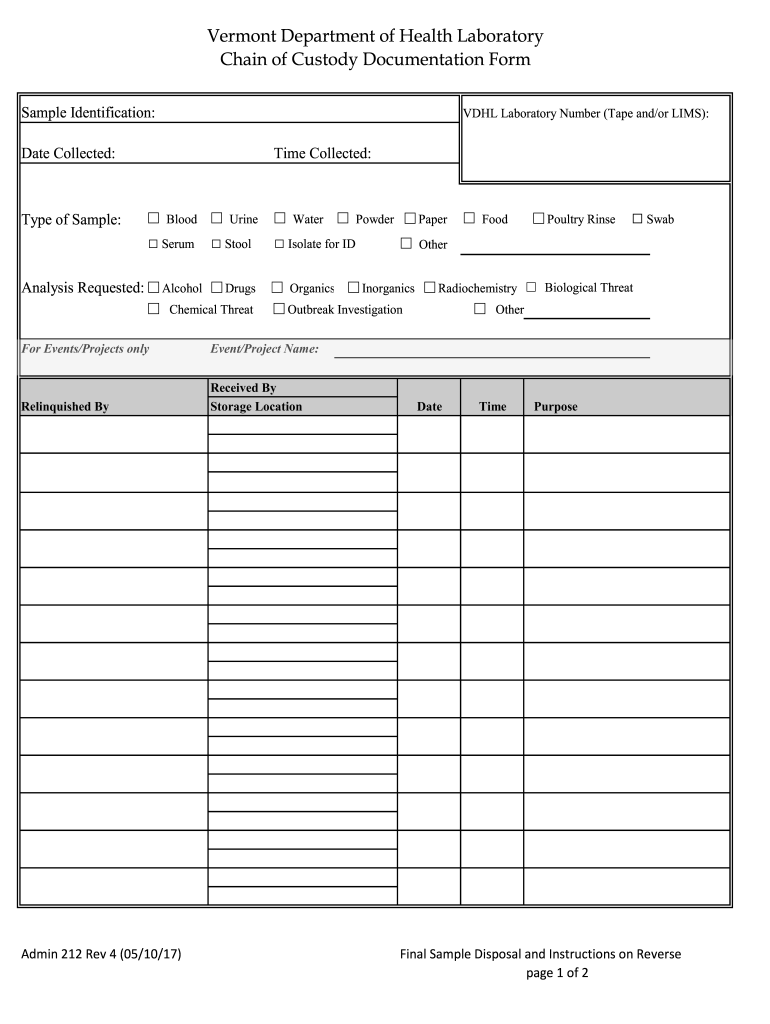
The Chain of Custody Documentation Form serves as a critical legal tool in the management of evidence and samples in various fields, including law enforcement, healthcare, and forensic analysis. It is designed to document the handling, storage, and transfer of evidence or samples, ensuring that the integrity of the material is maintained throughout the process. This form is essential for establishing an unbroken chain of custody, which is pivotal in legal proceedings where the authenticity of evidence must be guaranteed.
Key elements of this form typically include:
- Sample Identification: Unique identifiers for each sample or piece of evidence.
- Collection Date and Time: Documentation of when the sample was collected to track timelines.
- Transfer Records: Details on each individual who handles the sample, including signatures and timestamps.
- Analysis Instructions: Specific tests or analyses requested for the sample.
- Final Disposal: Instructions on the proper disposal of the sample after testing.
By maintaining a thorough record on the Chain of Custody Documentation Form, organizations and individuals can protect the validity of evidence, making it crucial in both civil and criminal cases.
How to Use the Chain of Custody Documentation Form
Using the Chain of Custody Documentation Form effectively involves a systematic approach to ensure all relevant data is accurately captured. The following steps outline a clear process for utilizing the form:
- Obtain the Form: Access a free printable Chain of Custody form or a digital template suitable for your needs.
- Fill Out Identification Sections:
- Complete fields for sample identifiers, including sample type and source.
- Retain unique labels to prevent mix-ups with other samples.
- Document Collection Details:
- Record the date and time when the sample is collected.
- Include the identity of the person collecting the sample.
- Track Transfer of Custody:
- Every change in custody must be recorded.
- Use signature lines for each person who takes possession of the evidence.
- Specify Analysis Instructions:
- Clearly state what testing is needed for the sample.
- Include any specific handling instructions necessary for analysis.
- Finalize the Document:
- After testing, note the final disposal instructions.
- Store the document in a secure location to preserve evidence integrity.
By following these steps, users can ensure that the chain of custody for any sample or evidence remains unbroken, thereby ensuring its reliability in legal contexts.
Key Elements Included in the Chain of Custody Documentation Form
Understanding the key elements of the Chain of Custody Documentation Form is vital for proper use and compliance. This form thrives on providing detailed and organized documentation that establishes a clear pathway for the handling of evidence. Essential components typically include:
- Sample Description: Detailed information about the sample type (e.g., biological, digital, or physical).
- Location of Collection: Exact details of where the sample was collected, enhancing traceability.
- Collector's Information: The name and signature of the individual collecting the sample.
- Domain of Analysis: Notation regarding what type of analysis is being requested, ensuring that the correct procedures are followed.
- Dates and Times Stamped: Explicit dates and timestamps for every action, from collection through to final disposal, which are critical for authenticity in judicial scenarios.
- Signatures of Each Custodian: A documented sign-off for each individual who handles the sample, thereby supporting accountability throughout the custody process.
These key elements are designed to comprehensively outline the journey of the evidence from its initial collection to its final disposition, thereby reinforcing the integrity and credibility of the evidence presented in legal contexts.
Legal Uses of the Chain of Custody Documentation Form
The legal implications surrounding the Chain of Custody Documentation Form are profound, especially in contexts such as criminal investigations, legal disputes, and regulatory compliance. This form ensures that all evidence remains admissible in court by documenting its handling and transfer.
Key legal uses include:
- Criminal Justice: Ensuring that evidence remains untainted and credible throughout an investigation.
- Forensic Sciences: Providing a track record for samples collected for lab analysis, essential for the fortitude of forensic evidence.
- Healthcare Compliance: Documenting evidence in cases involving medical malpractice or public health issues.
- Regulatory Compliance: Meeting industry-specific requirements for evidence management, particularly in sectors like pharmaceuticals and environmental services.
Failure to properly use the Chain of Custody Documentation Form can lead to penalties, including the inadmissibility of evidence, which may severely impact legal proceedings. Overall, its legal uses underscore the importance of meticulous record-keeping in maintaining the integrity of evidence.
Common Examples and Scenarios Using the Chain of Custody Documentation Form
The Chain of Custody Documentation Form is utilized across various scenarios where evidence integrity is paramount. Here are common examples illustrating its application:
- Law Enforcement: When police officers collect physical evidence from a crime scene, they complete a Chain of Custody form to document the seizure and transfer of that evidence to a laboratory for analysis. For instance, a firearms unit would use this form for a firearm collected as evidence in a shooting case.
- Environmental Testing: In the event of a pollution incident, environmental agencies collect soil or water samples to test for contaminants. A Chain of Custody Form is employed to track who collected the samples, where they were taken, and the analyses performed, ensuring compliance with environmental regulations.
- Medical Laboratories: In public health scenarios, samples collected for testing diseases such as COVID-19 need clear documentation. The Chain of Custody Form helps ensure that samples are processed correctly and results are trusted by public health officials.
- Digital Evidence: In cases involving cybercrime, when digital devices are seized, a Chain of Custody document records every step from seizure to analysis in a lab, underscoring the importance of maintaining digital forensics integrity.
These scenarios highlight the diverse applications of the Chain of Custody Documentation Form in preserving evidence integrity across disciplines.