




01. Edit your hyaluronidase consent form online
Type text, add images, blackout confidential details, add comments, highlights and more.

Type text, add images, blackout confidential details, add comments, highlights and more.

Draw your signature, type it, upload its image, or use your mobile device as a signature pad.

Send hylenex consent form via email, link, or fax. You can also download it, export it or print it out.
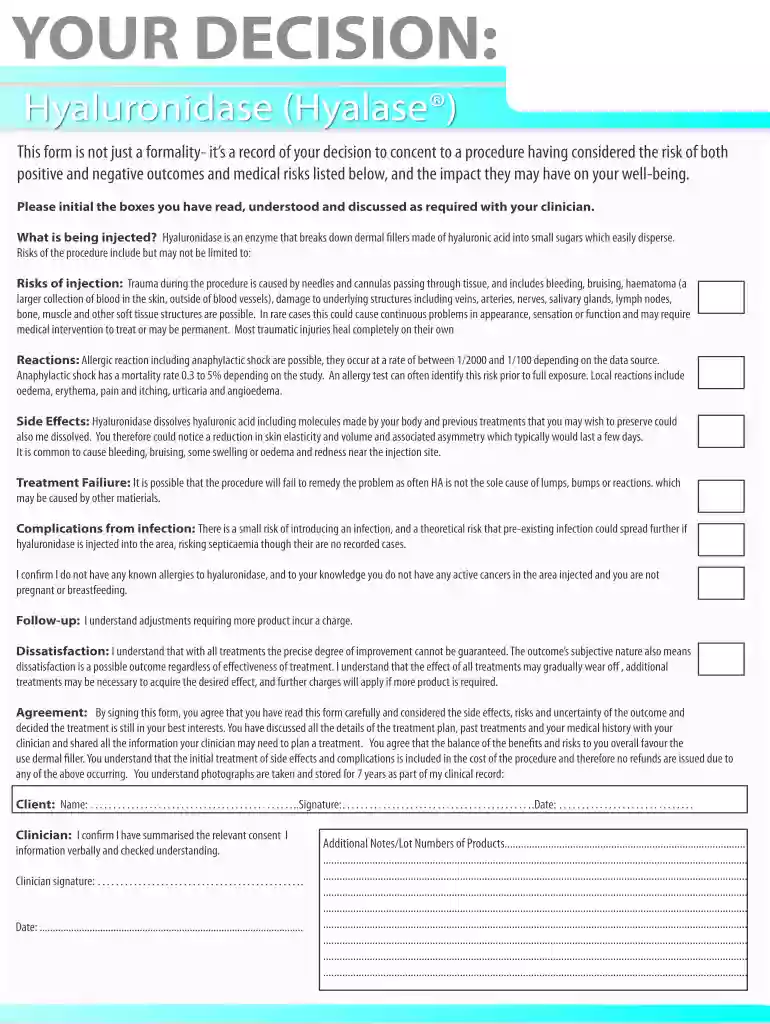
The hyalase consent form serves as a legal document that outlines the agreement between a patient and a healthcare provider regarding the administration of Hyaluronidase, commonly known as Hyalase®. This enzyme is frequently utilized to dissolve hyaluronic acid-based dermal fillers effectively. The form is essential in establishing clear communication about the procedure, its implications, and the associated risks before proceeding with treatment.
The hyalase consent form ensures that the patient is well-informed about the procedure. By detailing the injection process, it provides clarity on what to expect during the treatment. It also serves as a record that demonstrates the patient's willingness to undergo this specific treatment after considering potential outcomes and alternatives.
Understanding these components is crucial to ensuring a well-rounded awareness of what the treatment entails, allowing for informed decisions that prioritize patient safety.
Utilizing the hyalase consent form involves several key steps to ensure that both the patient and the healthcare provider engage in a clear and structured agreement regarding treatment. It is crucial for healthcare providers to present the form in a manner that promotes understanding and transparency.
Preparation: Before presenting the hyalase consent form, ensure that the patient has been appropriately assessed and is a suitable candidate for the procedure.
Explanation: Clearly explain the treatment process, benefits, and risks associated with Hyalase injections. Address any questions or concerns the patient may have.
Documentation: Provide the hyalase consent form for the patient to review. It's essential to allow sufficient time for the patient to read and consider its contents thoroughly.
Medical History Review: Engage in a discussion about the patient's medical history, focusing on allergies and previous filler treatments to identify any potential contraindications.
Obtaining Consent: After the patient has had time to consider the information and ask questions, request their signature to indicate informed consent. It is vital that this process feels collaborative and supportive.
Utilizing the hyalase consent form with care establishes a framework of trust and communication between patient and provider, ensuring that the patient's rights and safety are prioritized.
Completing the hyalase consent form requires methodical attention to detail to ensure that all necessary information is included, which is essential for legal protection and patient safety. The following steps guide both patients and healthcare providers in finalizing the consent form accurately.
Patient Information: Fill in relevant patient details, including name, contact information, and date of birth, ensuring accuracy for future references.
Procedure Description: Include a clear outline of the intended Hyalase injection process and its purpose, giving the patient context for the treatment.
Acknowledgment of Risks: The patient must read and acknowledge understanding of all risks, side effects, and potential complications associated with the procedure.
Medical History Confirmation: Ensure the patient confirms that they have discussed their medical history fully with the provider, emphasizing any prior reactions to fillers or anesthesia.
Signature and Date: The patient should sign and date the form to validate their consent. Providers should also sign to affirm the discussion and patient comprehension.
These steps create a comprehensive and precise record of the patient's consent for the hyalase injection, serving both as a practical guide and a legal protection measure.
The hyalase consent form is critical not only for patient safety but also to protect healthcare providers legally. Using this form is essential for several reasons:
Informed Decision-Making: The hyalase consent form ensures that patients are fully informed about the procedure. This openness fosters informed decision-making, helping to alleviate anxiety related to unknown aspects of treatment.
Legal Protection: Having a signed consent form safeguards both the patient and the provider. It proves that the patient was informed of the risks and consented to the treatment, which is vital should any disputes arise later regarding the procedure or its outcomes.
Risk Management: By documenting the patient’s understanding of potential risks, healthcare providers can reduce liability. Should an adverse effect occur, the consent form presents a clear record of the informed consent process processed prior to the injection.
Standard Practice: Utilizing a consent form is considered standard practice within medical and cosmetic treatments. This practice ensures that all parties adhere strictly to industry guidelines and ethical considerations.
Using the hyalase consent form is a best practice that reinforces the importance of communication and legal responsibility in medical treatment.
Understanding the specific terminology associated with the hyalase consent form is crucial for both healthcare providers and patients. Familiarity with these terms ensures clarity in communication and reinforces informed consent principles.
Hyaluronidase: An enzyme used to dissolve hyaluronic acid in dermal fillers, often utilized in aesthetic medicine for corrective procedures.
Informed Consent: The process by which a patient is educated about the risks and benefits associated with a medical procedure and provides their voluntary consent.
Adverse Effect: Any negative outcome resulting from a medical intervention, including allergic reactions, infections, or cosmetic dissatisfaction.
Injection Site Trauma: Any injury or irritation at the location where the Hyalase injection is administered, which can occur during the procedure.
Follow-Up Treatments: Subsequent procedures that may be necessary to achieve desired results following the initial Hyalase injection.
By understanding these important terms, patients and providers can engage in more meaningful discussions, which fosters trust and clarity throughout the treatment process.
We've got more versions of the hyaluronidase consent form form. Select the right hyaluronidase consent form version from the list and start editing it straight away!
| Versions | Form popularity | Fillable & printable |
|---|---|---|
| 2019 | 4.3 Satisfied (27 Votes) |
At DocHub, your data security is our priority. We follow HIPAA, SOC2, GDPR, and other standards, so you can work on your documents with confidence.
Please read this form carefully. It tells you important information about a research study. A member of our research team will also talk toRead more
Consent, Autonomy and Data Security. InkSight is a semi-permanent tattoo that makes health information visible, making informed and voluntary user consent theRead more
While there is no specific legal requirement for written informed consent, it is considered best medical practice to document such consent in the patientsRead more


