
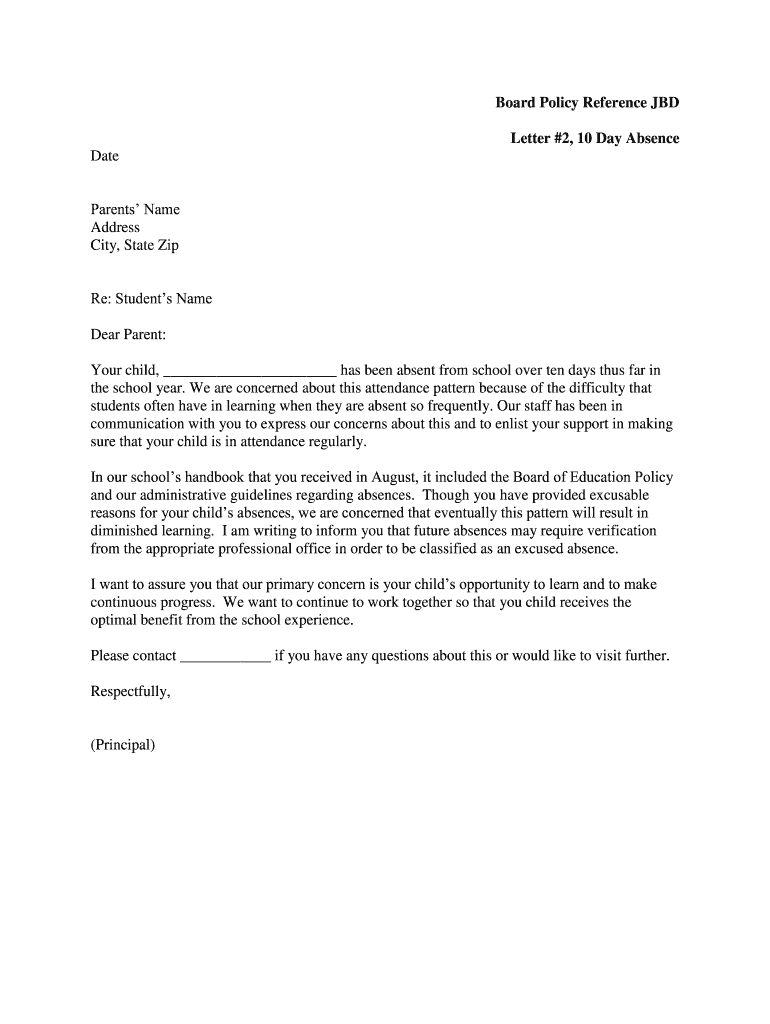







Definition and Purpose of a Truancy Letter
A truancy letter serves as official communication from a school to a parent or guardian regarding a student's excessive absences. This document typically highlights a student's attendance record, specifically noting when absences exceed permitted days. The primary purpose of a truancy letter is to convey the school’s concern over the impact of these absences on the student's academic performance and overall progress. By formally notifying the parent, the school emphasizes the importance of consistent attendance and encourages parents to engage in dialogue regarding their child's situation.
- A truancy letter clarifies the school's attendance policies.
- It often states that future absences may require professional documentation for them to be considered excused.
- The letter aims to foster a proactive approach to address any underlying issues leading to the unexcused absences.
Components of a Truancy Letter
A comprehensive truancy letter includes several critical elements to ensure clarity and facilitate effective communication between the school and the parent.
- Header Information: Includes the school’s name, address, and contact details, along with the date.
- Recipient Details: Clearly states the name of the parent or guardian receiving the letter.
- Student Information: Lists the student’s name and grade level for identification.
- Attendance Record: Details the specific dates and number of absences that triggered the truancy letter.
- Call to Action: Encourages parents to contact the school to discuss potential solutions to improve attendance.
Each of these components contributes to a professional tone while making the important points regarding the student's academic responsibilities.
Legal Implications of Truancy Letters
In the United States, truancy letters have legal implications, particularly when a student’s absences reach a point where intervention may be required. Schools must adhere to local and state laws regarding attendance. If a child accumulates a certain number of unexcused absences, the school may be required to escalate the situation, potentially leading to filing a report with child welfare services.
- Legal requirements vary by state, hence it's crucial to understand local policies surrounding truancy.
- Parents may face legal repercussions if their child’s attendance does not improve, as chronic truancy can lead to fines or mandatory attendance programs.
- Some states implement intervention strategies following the issuance of Truancy letters, necessitating meetings between parents and school officials.
Responding to a Truancy Letter
When a parent receives a truancy letter, there are several recommended steps to ensure a constructive response. It is critical to address the issue promptly and effectively to support the child's educational needs.
- Review the Letter: Carefully read the letter to understand the specific attendance concerns and any stated policies.
- Gather Documentation: If applicable, collect any medical or legal documents that support legitimate absences.
- Initiate Communication: Contact the school’s attendance officer or principal to discuss the situation and seek solutions.
- Create an Attendance Improvement Plan: Collaborate with the school to develop a plan that may include regular check-ins, tutoring options, or counseling services.
- Monitor Attendance: Follow up with your child to ensure compliance with the agreed attendance plan and maintain communication with the school for updates.
Active engagement can help foster a supportive environment for the student and encourage improved attendance.
Truancy Letter Templates and Examples
For those who need to draft a truancy letter or respond to one, templates can be a valuable resource. A well-structured template can streamline the process of communication between parents and schools.
-
Simple Truancy Letter Template:
- Date
- School Letterhead
- Parent Name and Address
- Subject line indicating the concern
- Body detailing the absences, their impact, and a request for communication.
-
Response Template to a Truancy Letter:
- Acknowledgment of letter receipt.
- Explanation of absences—be concise and provide context.
- Proposal for a meeting to address concerns.
- Closing with appreciation for the school’s support.
These templates can be customized to fit the unique situation and ensure clarity in communication.
Importance of Communication Between Parents and Schools
The relationship between parents and schools is vital in addressing truancy issues. Open lines of communication can significantly affect a student’s academic journey and emotional well-being. Effective communication can help uncover underlying issues that may cause absences, such as health concerns, bullying, or family dynamics.
- Encouraging regular updates about the child's activities can help schools spot potential attendance problems early.
- Schools can provide resources, such as counseling or mentoring programs, that might assist both the student and family in improving attendance.
- Establishing a partnership with the school can foster trust and encourage children to engage more fully with their education.
Maintaining this proactive approach encourages a supportive educational environment that may lead to improved attendance and academic success.




