
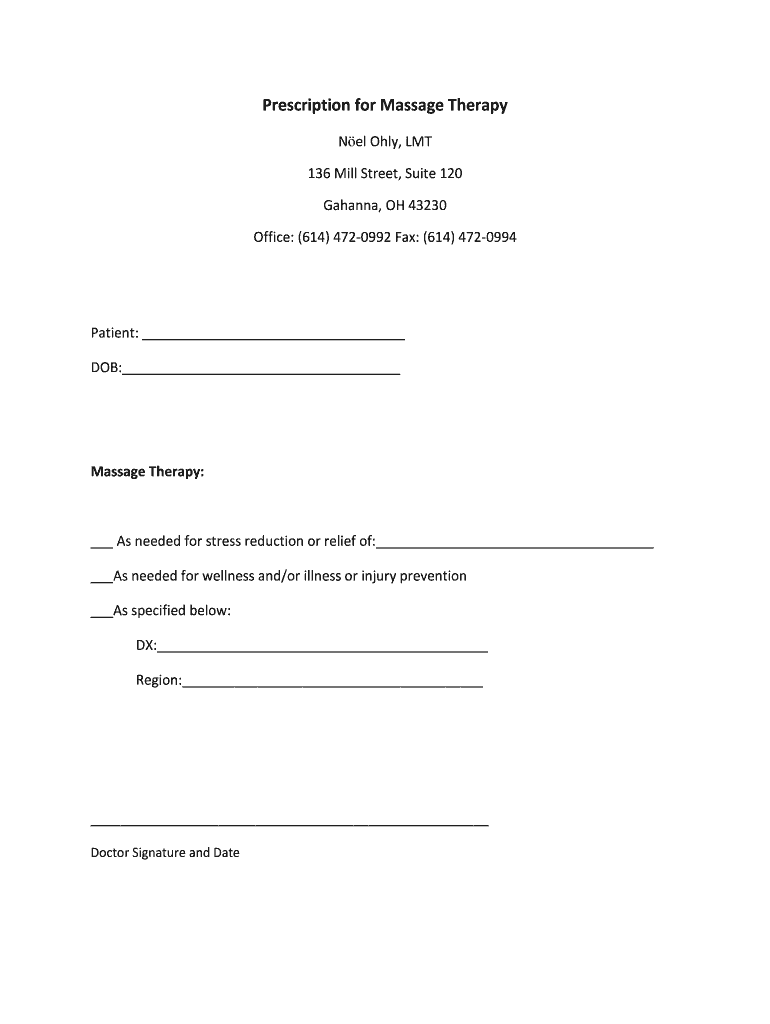







Understanding the Prescription for Massage Therapy
A prescription for massage therapy serves as a formal recommendation from a licensed healthcare provider for a patient to receive massage treatment. This document outlines the patient's details, including name, contact information, and relevant medical history. The healthcare provider specifies the purpose of the therapy, which may encompass stress relief, pain management, rehabilitation from injury, or addressing specific medical conditions.
Components of a Medical Necessity Letter for Massage Therapy
A letter of medical necessity for massage therapy is essential when pursuing insurance coverage. This document typically includes the following components:
- Patient Information: Name, address, date of birth, and contact details to identify the patient clearly.
- Provider Details: The healthcare provider's name, credentials, and contact information should be clearly stated to authenticate the prescription.
- Diagnosis: Complete details of the medical condition or circumstances justifying the massage therapy. This may include physical impairments, chronic pain issues, or stress-related conditions.
- Treatment Rationale: An explanation outlining why massage therapy is necessary for the patient's health. This may reference current symptoms, treatment history, and how massage can specifically benefit the patient's condition.
- Frequency and Duration: Recommendation of the frequency and duration of massage sessions, which reinforces the long-term need for therapy rather than a one-time treatment.
- Signature: A valid signature from the healthcare provider, along with a date, is crucial to validate the prescription formally.
How to Obtain a Prescription for Massage Therapy
To receive a prescription for massage therapy, patients typically follow these steps:
- Consultation: Schedule an appointment with a licensed healthcare provider, such as a physician or physical therapist, to discuss your condition and potential benefits of massage therapy.
- Assessment: Undergo a thorough evaluation to determine if massage therapy is a suitable treatment for your specific needs.
- Request Prescription: If deemed appropriate, request a prescription or a letter of medical necessity for massage therapy. Discuss the frequency and duration that might be beneficial.
- Submit to Insurance: If you intend to use insurance or an HSA for payment, submit the prescription or letter to your insurance company or HSA administrator to verify coverage.
- Find a Provider: Locate a licensed massage therapist or a clinic that accepts insurance for therapeutic massage and schedule your sessions.
Insurance Coverage and Medical Necessity
Understanding the intersection of medical necessity letters and insurance coverage is vital for patients seeking reimbursement for massage therapy:
- Insurance Policies: Not all insurance policies cover massage therapy. It often depends on whether the therapy is deemed medically necessary due to a diagnosed condition.
- Documentation: Insurance companies require substantial documentation to substantiate the medical necessity. This includes not only the prescription but also treatment progress notes and any previous related treatments.
- HSA and FSA Use: Health Savings Accounts (HSA) and Flexible Spending Accounts (FSA) may also cover massage therapy. Patients should check their specific account guidelines to confirm eligibility.
Common Health Conditions Benefiting from Massage Therapy
A variety of health conditions can warrant a prescription for massage therapy. These may include:
- Chronic Pain Disorders: Such as fibromyalgia or arthritis, where massage therapy can help alleviate persistent pain.
- Post-Surgical Recovery: After surgeries, massage may assist in faster recovery and management of scar tissue.
- Stress and Anxiety: Therapeutic massage is known to reduce stress and aid in managing anxiety disorders, resulting in overall improved mental health.
- Injury Rehabilitation: For those recovering from sports injuries or accidents, massage therapy can enhance healing and improve range of motion.
Conclusion - Importance of a Prescription for Massage Therapy
A prescription for massage therapy is a significant tool in accessing necessary treatments. It not only enhances communication between healthcare providers and therapists but also facilitates the insurance claims process. Proper understanding and obtaining a prescription can ensure patients receive the benefits associated with massage therapy as part of their overall healthcare plan. Understanding these elements is essential for maximizing the utility of therapy and safeguarding financial aspects associated with treatment.




