




01. Edit your vehicle condition report form online
Type text, add images, blackout confidential details, add comments, highlights and more.

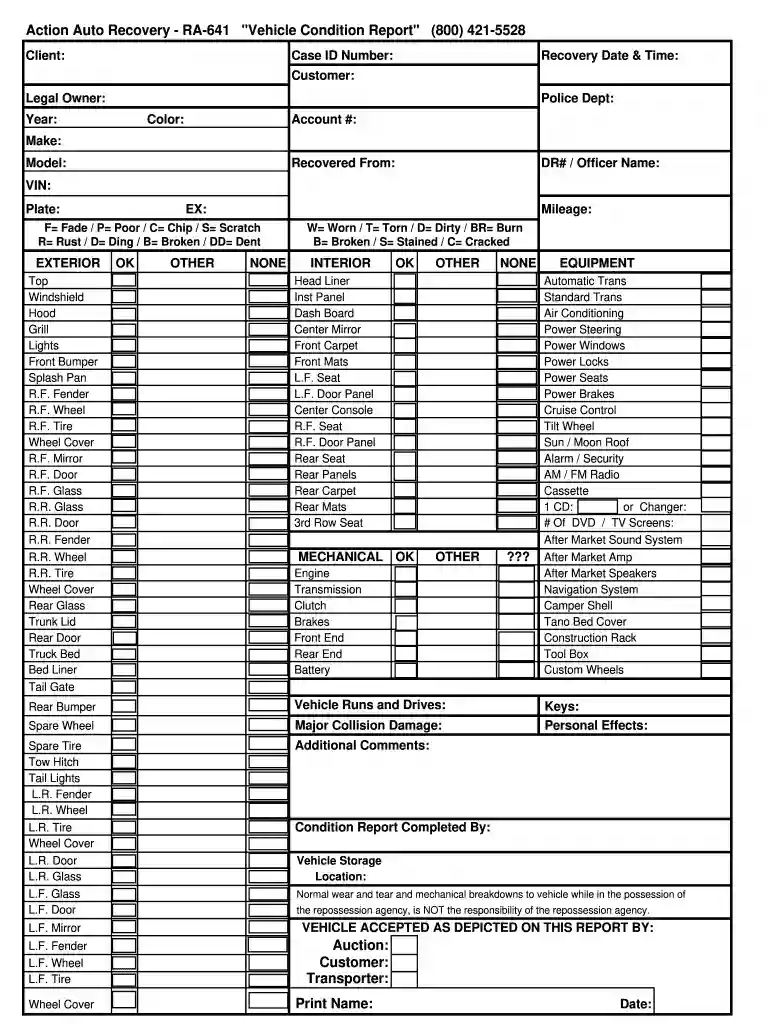
Type text, add images, blackout confidential details, add comments, highlights and more.

Draw your signature, type it, upload its image, or use your mobile device as a signature pad.

Send vehicle condition report template word via email, link, or fax. You can also download it, export it or print it out.
The vehicle condition report form is an essential document used in the automotive industry to evaluate and record the state of a vehicle. This report is crucial not only for dealerships but also for individual sellers, buyers, and recovery agents. It serves as a detailed account of the vehicle's condition at a specific point in time, assisting in the transparent transfer of ownership and ensuring that all parties involved in a transaction have a clear understanding of the vehicle’s current state.
A vehicle condition report form provides critical insights that help in making informed decisions regarding the buying or selling of a vehicle. A comprehensive report enhances trust between parties and can prevent disputes over the vehicle's condition post-sale.
The vehicle condition report typically contains multiple sections that cover various aspects of the vehicle. Each section is critical for providing a thorough evaluation.
Completing a vehicle condition report form requires a systematic approach to ensure all necessary details are captured accurately.
The vehicle condition report form can be utilized in various scenarios, ensuring that it meets the needs of different stakeholders involved in the vehicle lifecycle.
Real-world scenarios illustrate the practical applications of the vehicle condition report form. For instance:
Utilizing a vehicle condition report form is critical for ensuring all parties involved in a vehicle transaction or assessment are informed and protections are in place. This straightforward documentation process aids in building trust, providing necessary legal protection, and catering to the various transactional needs in vehicle handling.
At DocHub, your data security is our priority. We follow HIPAA, SOC2, GDPR, and other standards, so you can work on your documents with confidence.
ANY MISREPRESENTATION OF THE ACTUAL VEHICLE CONDITION ON THIS FORM VOIDS THE. APPRAISED TRADE VALUE OFFERED BY SAXON FLEET SERVICES.Read more
Drivers Vehicle Inspection Report. Check ANY Defective Item and Give Details Condition of the above vehicle is satisfactory. Drivers SignatureRead more
Bus Adm Form 844. University ID. License No. Department. UNIVERSITY OF MINNESOTA. Fleet Vehicle Condition Report. Year. Make. Account No. Model. Location. Date.Read more


