
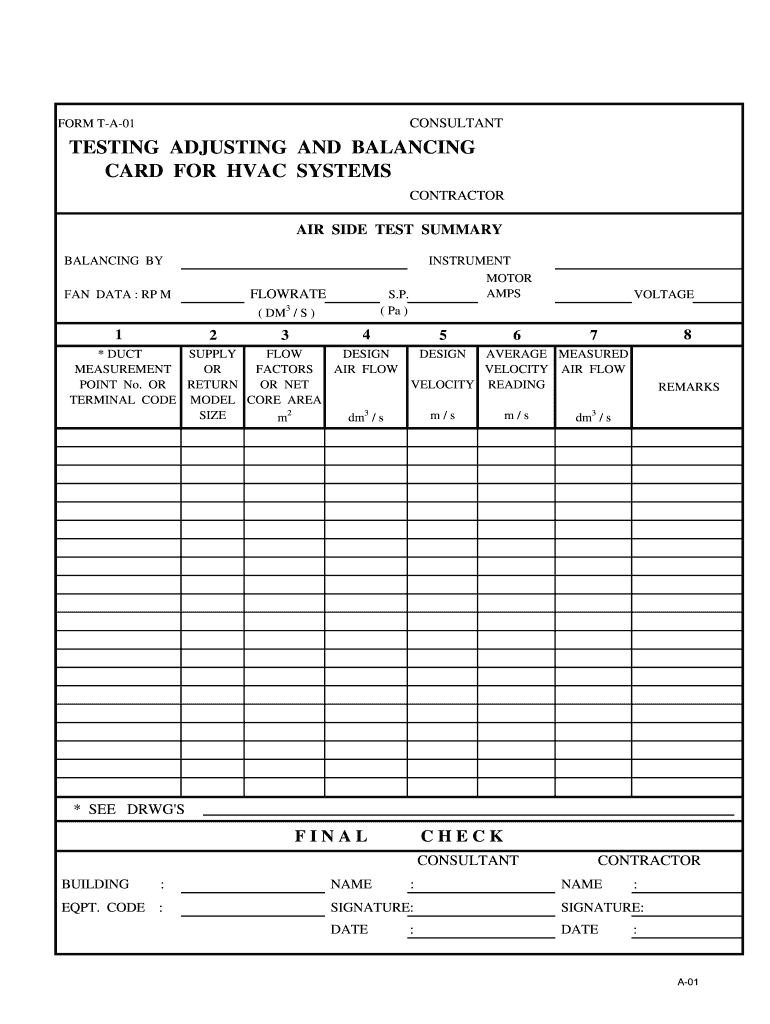







Definition and Meaning of FORM T-A-01
The FORM T-A-01 TESTING ADJUSTING AND BALANCING CARD FOR HVAC is an essential document used in the heating, ventilation, and air conditioning (HVAC) industry. Its primary purpose is to systematically record the findings and measurements while testing, adjusting, and balancing the HVAC systems. This form facilitates the documentation of various performance metrics, ensuring that HVAC systems operate efficiently and meet industry standards.
This form includes several key sections where technicians can note specific data, including but not limited to airflow measurements, air pressure levels, and temperature variations. This collected data provides insights into the operational status and efficiency of HVAC systems, helping to identify necessary adjustments for optimal performance. The accurate use of the FORM T-A-01 is critical for compliance with industry regulations and for delivering quality assurance to clients.
How to Use the FORM T-A-01
Using the FORM T-A-01 involves a structured approach that ensures all relevant metrics are recorded accurately. Technicians generally follow a set of procedures when employing this card during HVAC assessments. Initially, they commence with visual inspections of the HVAC equipment to check for any visible defects or irregularities. Following this, the technicians will:
- Measure Airflow: Utilizing flow hoods or anemometers, technicians will capture airflow rates at various points throughout the system.
- Record Temperature Data: They will log temperature differences across the supply and return air systems, using thermometers for accuracy.
- Conduct Pressure Checks: Instruments such as manometers gauge static and dynamic pressure readings that help understand the system's efficiency.
After collecting this data, it is crucial to analyze the results and compare them to the HVAC system's design specifications. Corrections should be made as needed, and all relevant findings should be documented on the form to ensure a complete record for future reference or audits.
Steps to Complete the FORM T-A-01
Completing the FORM T-A-01 is pivotal for achieving thorough and accurate assessments. The following steps outline the procedure:
-
Preparation:
- Gather necessary tools, including measuring devices and the FORM T-A-01 itself.
- Review system specifications to understand required parameters.
-
Document Header Information:
- Fill in basic details such as the date, location, and technician’s name.
-
Perform Measurements:
- Measure and record airflow, temperature, and pressure at designated points as dictated by system design.
- Ensure each measurement is clear and legible to maintain professional standards.
-
Analyze Results:
- Compare recorded measurements with accepted standards or specifications.
- Identify any discrepancies or areas needing adjustment.
-
Finalize Form:
- Confirm that every section of the form has been completed.
- Include comments or notes for additional context where needed.
- Sign and date the completed form to validate findings.
By following these steps, technicians can ensure that the balancing and testing protocols are adhered to, providing a solid basis for optimal HVAC system performance.
Key Elements of the FORM T-A-01
The FORM T-A-01 encompasses several critical components that must be understood to facilitate its effective use. The key elements include:
-
Header Information: Includes date, technician’s name, location, and client information.
-
Measurement Sections:
- Airflow Measurement: Specific areas for capturing airflow data, typically in cubic feet per minute (CFM).
- Temperature Readings: Areas to note supply and return temperatures in degrees Fahrenheit.
- Pressure Measurements: Spaces dedicated to recording static and dynamic pressure values.
-
Adjustments Tab: A section where technicians can document any modifications made to the HVAC system during the balancing process.
-
Comments and Observations: An area designated for any notes that might aid in future inspections or provide context for the recorded measurements.
Understanding these key elements allows HVAC professionals to utilize the FORM T-A-01 effectively in documenting and analyzing system performance comprehensively.
Examples of Using the FORM T-A-01
Using the FORM T-A-01 effectively includes various practical scenarios where it proves to be invaluable for HVAC technicians. Examples include:
-
Routine Maintenance Checks: During regular service visits, technicians can utilize the form to verify that system parameters meet set standards. They may address any inefficiencies noted in previous visits.
-
Post-Installation Verification: After the installation of a new HVAC system, the form aids in supportive documentation to ensure that the installation meets specified performance criteria laid out by manufacturers.
-
Remedial Actions: If a building experiences temperature inconsistencies, technicians can record their findings on the FORM T-A-01 to develop targeted solutions, such as recalibrating ducts or adjusting machinery settings.
These examples illustrate how the FORM T-A-01 serves as a practical tool not only for recording observations but also for guiding responses to specific HVAC issues effectively.
Legal Use of the FORM T-A-01
The FORM T-A-01 has significance beyond routine operational use; it also plays a critical role in legal contexts. HVAC companies may be required to present documentation to regulatory bodies upon request or during inspections. Such legal uses include:
-
Compliance Verification: Regulatory frameworks may require proof that HVAC systems meet specific operating standards. The FORM T-A-01 provides evidence of testing and balancing activities performed.
-
Liability Protection: In the event of service disputes or claims, having a comprehensive record of the HVAC adjustments and measurements can protect companies from liability by demonstrating adherence to established protocols.
-
Certifications and Verifications: Organizations may need documentation to support certification processes or claims of energy efficiency. The FORM T-A-01 can serve as a foundational document in such cases.
Understanding the legal implications of the FORM T-A-01 is crucial for HVAC professionals, as it ensures compliance and aids in protecting their business interests.




