




01. Edit your omha game card online
Type text, add images, blackout confidential details, add comments, highlights and more.

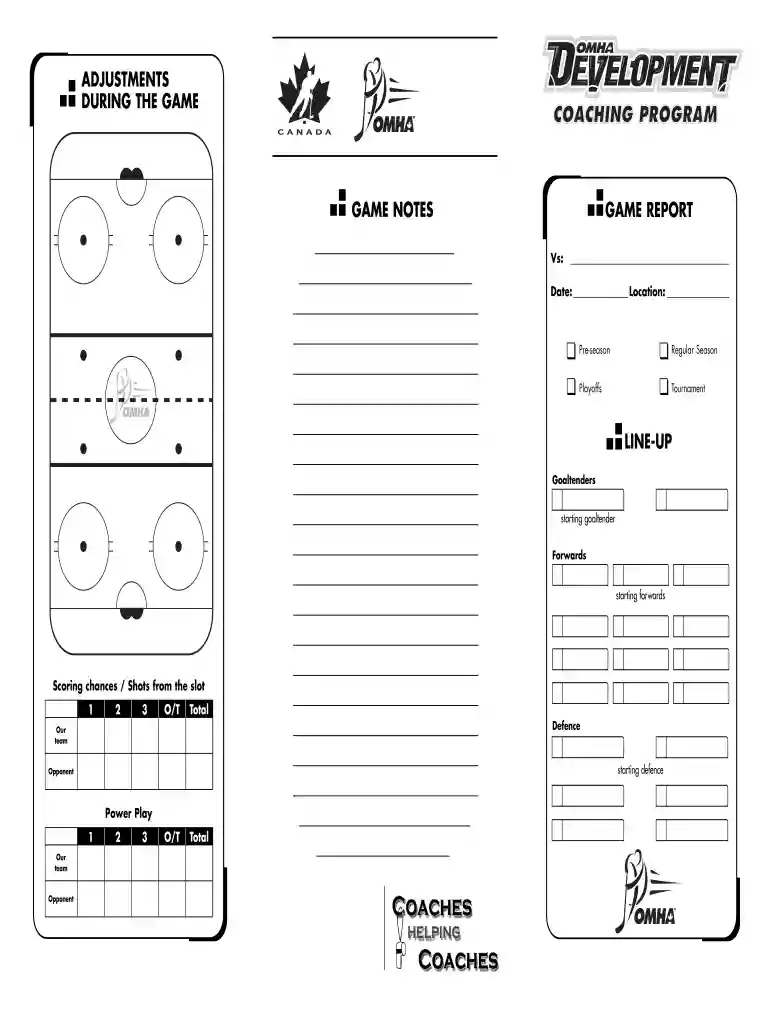
Type text, add images, blackout confidential details, add comments, highlights and more.

Draw your signature, type it, upload its image, or use your mobile device as a signature pad.

Send hockey coach game card via email, link, or fax. You can also download it, export it or print it out.
The OMHA game card serves as an essential tool for hockey coaches, providing structured documentation of game details and player performance. It is a standardized format designed for ease of use during matches. The card captures vital information such as team line-ups, scoring events, and individual player statistics, ensuring that coaches can make informed decisions in real time. Utilizing this card can enhance communication and strategy execution on the ice.
Understanding the structure of the OMHA game card is crucial for effective usage. The following components are typically included:
To ensure accuracy and completeness, follow these guidelines for filling out the OMHA game card effectively.
Pre-Game Preparation: Before the game, confirm the player roster and verify player statuses (injured, absent, etc.).
Complete Team Line-ups: Clearly list all players with their positions. Make sure to note any team strategies that may affect line changes.
Track Scoring Events: During the game, mark goals immediately, noting time stamps and key contributions from players, which helps with post-game analysis.
Document Penalties Thoroughly: Record penalties right after they occur. This ensures that you have accurate information for future reference and discipline audits.
Post-Game Review: After the game, take time to review the completed game card. This includes ensuring that all sections are filled out and modeling any patterns in scoring or penalties to strategize for future games.
Accurate documentation through the OMHA game card is not only crucial for current game management but also for ongoing development and strategy building.
Utilizing the OMHA game card effectively hinges on adopting best practices that can enhance the coaching experience and the team's performance.
While the OMHA game card is widely used, there are various alternatives and adaptations that some teams might consider.
Understanding and effectively utilizing the OMHA game card can significantly enhance coaching strategies, player performance tracking, and overall team development within the framework of organized hockey.
We've got more versions of the omha game card form. Select the right omha game card version from the list and start editing it straight away!
| Versions | Form popularity | Fillable & printable |
|---|---|---|
| 2005 | 4.9 Satisfied (27 Votes) |
Sure, electronically drawing your signature is acceptable, but only if you utilize a tool that complies with industry laws and regulations. Try DocHub, which ensures eSignature validity under ESIGN and UETA requirements. All you need to eSign your hockey coach lineup card is an account with DocHub and an internet connection. When you open your file in our editor, click Sign and choose the Draw tool.
If you use Chrome, there are two easy methods to edit your hockey coaches game card online. First, go to the DocHub site, add your file, and edit it using our toolbar. You may also install our Chrome extension and edit any document by dragging and dropping it in your web browser window.
At DocHub, your data security is our priority. We follow HIPAA, SOC2, GDPR, and other standards, so you can work on your documents with confidence.
... with the York Simcoe Express, Goodrow finished second in OMHA/Eastern AAA Hockey League scoring with 67 goals and 47 assists for 114 points in 71 games.
Growing up in Aurora, Barclay started playing ice hockey at the age of five ... Goodrow finished second in OMHA/Eastern AAA Hockey League scoring with 67 ...


