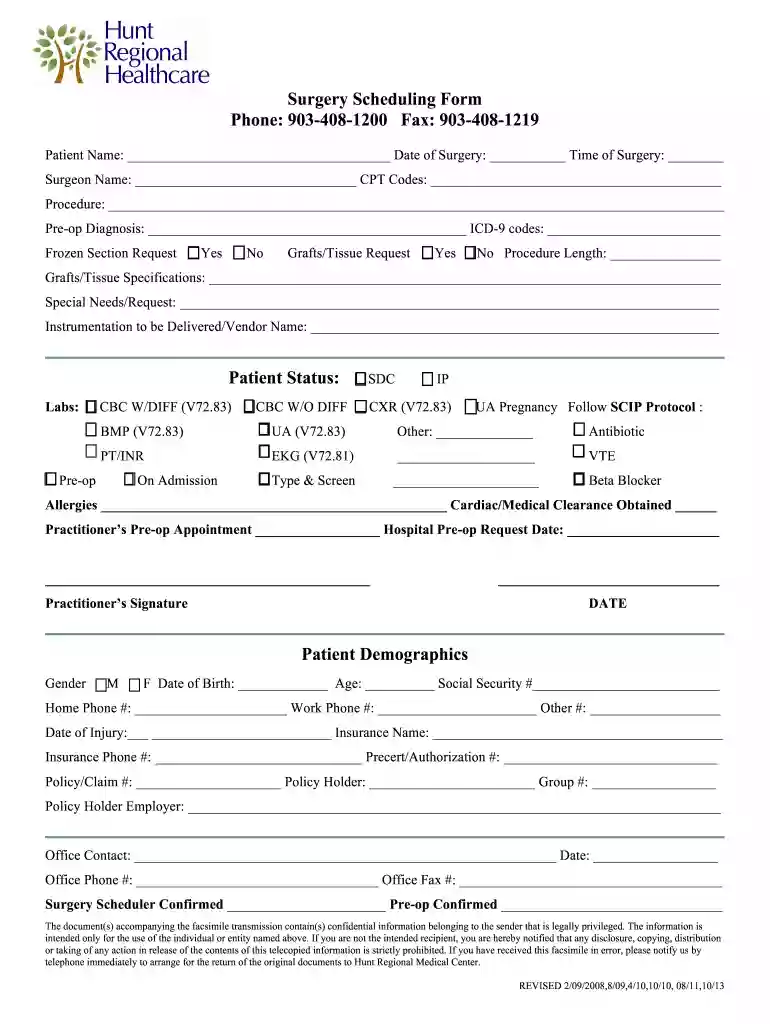
Definition and Importance of the Surgery Scheduling Form
The surgery scheduling form is a critical document used in medical environments to collect detailed information necessary for scheduling surgical procedures. It encompasses essential patient data, surgery specifics, pre-operative requirements, and insurance information. This form serves as a communication tool between healthcare providers and patients, ensuring that all parties have the necessary information for effective preparation and coordination.
Key Components of the Surgery Scheduling Form
- Patient Information: Includes full name, date of birth, contact information, and medical history.
- Surgery Details: Specifies the type of surgery, desired date and time, and surgeon information.
- Pre-operative Instructions: Outlines any preparations required prior to the procedure, such as fasting or medication adjustments.
- Insurance Information: Captures details about the patient’s insurance provider, policy number, and coverage specifics.
- Emergency Contacts: Allows for the collection of information about who should be contacted if complications arise during the procedure.
This form functions not only for the operational aspects of scheduling and resource allocation but also helps to mitigate risks by ensuring that all pre-operative requirements are understood and met. Accurate completion of the surgery scheduling form aids in minimizing delays and cancellations, significantly enhancing patient safety and satisfaction.
How to Use the Surgery Scheduling Form Effectively
Using the surgery scheduling form effectively requires familiarity with its components and careful attention to detail during completion. Here is a structured approach:
- Gather Necessary Information: Before starting, collect all relevant documents, including medical records, insurance cards, and personal identification.
- Fill Out Patient Information Accurately: Ensure that all patient details are correct and up-to-date, as inaccuracies can lead to scheduling conflicts or insurance issues.
- Specify Surgery Details: Clearly indicate the type of surgery being requested and preferred dates, keeping in mind that some procedures may have specific scheduling requirements.
- Review Pre-operative Instructions: Follow any provided guidelines that might be mandatory before the surgery date. This includes dietary restrictions or medication alterations.
- Confirm Insurance Coverage: It is vital to verify that the required surgery is covered under the patient’s insurance plan by entering all necessary insurance details accurately.
- Secure Approval: If necessary, obtain the signature of a physician endorsing the proposed surgery, which may be needed for insurance authorization.
Following these steps can streamline the process of scheduling surgery and advance the healthcare system's ability to deliver timely patient care.
How to Obtain the Surgery Scheduling Form
There are several methods for acquiring the surgery scheduling form. Understanding these options ensures that patients can access the necessary documentation conveniently and efficiently.
Methods of Acquisition
- Healthcare Provider Office: Most surgical centers and hospitals have physical copies available in their administrative offices. Patients can request a form in person.
- Online Access: Many healthcare systems provide downloadable versions of the surgery scheduling form on their websites. This option allows patients to fill out the form at their convenience.
- Email Request: Patients can also request a copy directly from their healthcare provider via email. Many facilities can send the form electronically for faster access.
- Patient Portals: If associated with a healthcare provider, patients often have access to a secure online portal where various forms, including the surgery scheduling form, can be accessed.
Each of these methods offers a convenient way to ensure timely completion of necessary documentation ahead of surgical procedures.
Steps to Complete the Surgery Scheduling Form
Completing the surgery scheduling form properly involves a systematic approach to guarantee all essential information is captured accurately. Here are the sequential steps to follow:
- Download or Acquire the Form: Start by obtaining the latest version of the form to ensure that all fields are current and relevant.
- Input Patient Information: Fill out personal details like name, address, telephone number, and date of birth.
- Detail Surgery Needs: Explicitly write down the nature of the surgery, including any preferred dates or times, while checking against potential conflicts in scheduling.
- Document Pre-operative Needs: Clearly mark any specific pre-surgery instructions that are required for the procedure, which could include dietary restrictions.
- Enter Insurance Details: Fill in insurance provider information accurately to facilitate smooth coverage and billing processes.
- Check and Review: After completing the form, double-check all entries for accuracy. Inaccurate information can lead to delays or complications in the surgical process.
- Submit the Form: Return the completed form to the healthcare provider through the designated method—be it in person, electronically via email, or through an online portal.
Taking care with these steps ensures a smoother scheduling process, enhancing the surgical experience for both patient and medical staff.
Legal Considerations Regarding the Surgery Scheduling Form
The surgery scheduling form is not merely a procedural tool; it also has legal implications that are important for both healthcare providers and patients. Understanding these aspects is crucial for ensuring compliance and patient rights.
Compliance with Healthcare Regulations
- HIPAA Compliance: The form must comply with the Health Insurance Portability and Accountability Act (HIPAA), which safeguards patient confidentiality and regulates how patient information can be shared.
- Insurance Requirements: Many insurance providers have specific guidelines regarding documentation for coverage of surgical procedures. The form can serve as a necessary document for claims processing.
Patient Rights and Responsibilities
- Informed Consent: Completion of the surgery scheduling form often precedes the provision of informed consent. It ensures that the patient understands the procedure and its associated risks.
- Record Keeping: The form acts as a legal record that documents patient requests and provider agreements, which can be crucial in potential disputes or clarifications regarding care.
Understanding the legal framework surrounding the surgery scheduling form can help patients advocate for their rights and ensure that healthcare providers are held accountable.
Best Practices for Effective Surgery Scheduling
Implementing best practices when using the surgery scheduling form can lead to enhanced satisfaction and operational efficiency. Here are crucial recommendations to consider:
Recommendations for Patients
- Early Submission: Submit the surgery scheduling form as early as possible to avoid potential delays in processing.
- Comprehensive Information: Provide complete and accurate information to facilitate effective scheduling and planning.
- Follow Up: After submission, actively follow up with healthcare providers to confirm receipt and check on any additional requirements.
Recommendations for Healthcare Providers
- Standardization: Use a standard surgery scheduling form for consistency across departments, which simplifies processing and reduces errors.
- Training Staff: Ensure that all staff members involved in scheduling are trained on the importance of accurate form completion and the implications of errors.
- Utilize Technology: Leverage online form submissions or electronic health records to streamline data entry and enhance communication between patients and providers.
Adhering to these best practices fosters a collaborative environment that benefits both patients and healthcare professionals during the surgical scheduling process.