





Definition & Meaning of Roof Inspection Report Template
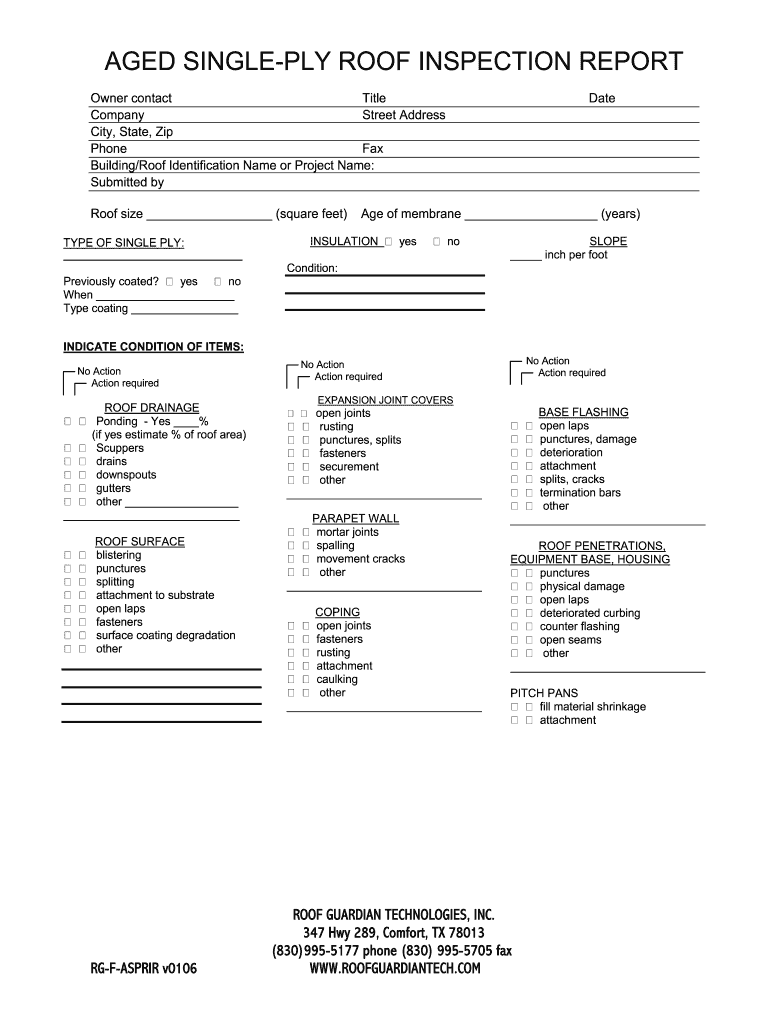
A roof inspection report template serves as a structured format for documenting the condition and maintenance needs of a roof. It provides essential information regarding various components of the roof, such as drainage systems, surface conditions, insulation status, and any necessary repairs. By utilizing this template, professionals can ensure a thorough assessment and provide actionable insights based on the inspection.
Components of a Roof Inspection Report Template
- Roof Type: Identification of the type of roofing system, such as flat or pitched.
- Inspection Date: The specific date when the inspection was performed.
- Observations: Detailed notes about the roof's current state, including damage, wear, or maintenance needs.
- Recommendations: Actionable items based on findings, including immediate repairs or long-term maintenance suggestions.
- Photographs: Visual documentation of areas of concern for reference.
Importance of the Template
Using a template streamlines the inspection process and helps ensure consistency in reporting. It facilitates effective communication among stakeholders, including property owners, inspectors, and contractors. A well-structured report not only aids immediate corrective actions but also serves as a historical document for future reference.
How to Use the Roof Inspection Report Template Word
Utilizing a roof inspection report template in Word format can enhance the efficiency and accuracy of inspections. Follow these steps to ensure effective use.
Step-by-Step Process for Utilizing the Template
- Download the Template: Obtain a roof inspection report template in a compatible Word format from a trusted source.
- Fill in Basic Information: Begin by entering foundational data such as the property details, inspection date, and the inspector's name.
- Conduct the Inspection: Perform a thorough examination of the roof. Take notes on any observed issues related to drainage, surface conditions, and other relevant aspects.
- Record Observations and Recommendations: Use the designated sections of the template to document findings and suggestions clearly.
- Include Visuals: Upload photographs or diagrams that illustrate key points. Visual aids enhance the report's effectiveness and clarity.
- Finalize the Document: Review for completeness and correctness before saving and sharing the final version with stakeholders.
Tips for Effective Use
- Customize the Template: Tailor sections of the report to suit specific inspection criteria relevant to different roof types.
- Maintain Consistency: Use the same template across various inspections to ensure uniform reporting.
Using a structured template allows for organized record-keeping and effective communication regarding roof conditions and maintenance requirements.
Important Terms Related to Roof Inspection Report Template Word
Understanding key terminology associated with a roof inspection report is crucial for effective communication and comprehension of inspection results.
Key Terminology
- Membrane: The waterproof layer of a roofing system that protects the building structure.
- Flashing: Material used to prevent water penetration at joints and seams of the roofing system.
- Penetrations: Areas where pipes or structures protrude through the roof, requiring special attention during inspections.
- Parapet: A low wall along the edge of a roof, which can affect drainage and water accumulation.
- Condition Assessment: The process of evaluating the current state of the roof to determine maintenance or repair needs.
Importance of Familiarity with Terms
Familiarity with these terms enhances the effectiveness of communication among inspectors, contractors, and property owners. It ensures that everyone involved has a clear understanding of the findings and the recommended actions.
Key Elements of the Roof Inspection Report Template Word
A comprehensive roof inspection report template includes several critical elements that ensure a complete evaluation.
Essential Elements of the Template
- Executive Summary: A brief overview summarizing key findings and action points from the inspection.
- Detailed Inspection Findings: Sectioned analysis of each roof component, providing insights into conditions and potential issues.
- Pre-existing Conditions: Documentation of previously noted issues to compare changes over time.
- Maintenance Recommendations: Clear instructions on required repairs, maintenance actions, and suggested timelines.
- Acknowledgments and Signatures: A section for both the inspector and the client to sign, confirming the review of findings and recommendations.
Additional Considerations
Including adequate detail within each element enhances the template's usefulness. This information becomes crucial for ongoing maintenance planning and helps avoid costly repairs over time.
Examples of Using the Roof Inspection Report Template Word
Utilizing examples can clarify how to implement the roof inspection report template effectively. Case scenarios illustrate practical applications.
Practical Examples of Report Utilization
- Residential Property Inspection: A homeowner requires an inspection following a severe storm. The inspector uses the template to identify specific damage to flashing and surface wear, suggesting prompt repair work.
- Commercial Roof Assessment: A property management company schedules inspections across multiple buildings. Technicians use the template to standardize reports, documenting differences in waterproofing systems and required maintenance across varied roof styles.
- Pre-purchase Evaluations: A potential buyer hires an inspector to evaluate the roof condition of a prospective purchase. The template provides a detailed assessment of maintenance needs, influencing the buyer's decision.
- Routine Maintenance Checks: Property owners conduct annual inspections. Using the report template, they schedule regular reviews to keep track of the roof's condition and ensure timely repair work.
The Value of Examples
These scenarios underscore the template's versatility, applicable to various contexts, including residential, commercial, and maintenance situations. Using specific examples can enhance understanding and demonstrate the practical significance of thorough roofing inspections.
Who Typically Uses the Roof Inspection Report Template Word
Several professionals and stakeholders utilize the roof inspection report template to ensure proper documentation and maintenance of roofs.


Typical Users of the Template
- Roof Inspectors: Professionals assessing the condition of roofs and determining necessary repairs. They rely on the template for detailed documentation.
- Property Managers: Individuals overseeing residential or commercial properties who need to track and maintain roof conditions efficiently.
- Contractors: Specialists involved in roofing repairs or installations who require clear information regarding roof conditions to propose maintenance schedules or repairs.
- Homeowners: Individuals looking to monitor their roof's health, especially when preparing for sales or annual maintenance checks.
- Real Estate Agents: Professionals who may present roof inspection reports to potential buyers to provide assurance about property value and condition.
Benefits for Users
The template standardizes and streamlines the inspection process, ensuring comprehensive reporting for all involved parties. This consistency aids in decision-making and enhances communication about necessary actions.