







Definition and Purpose of the Seat Belt Exemption Certificate
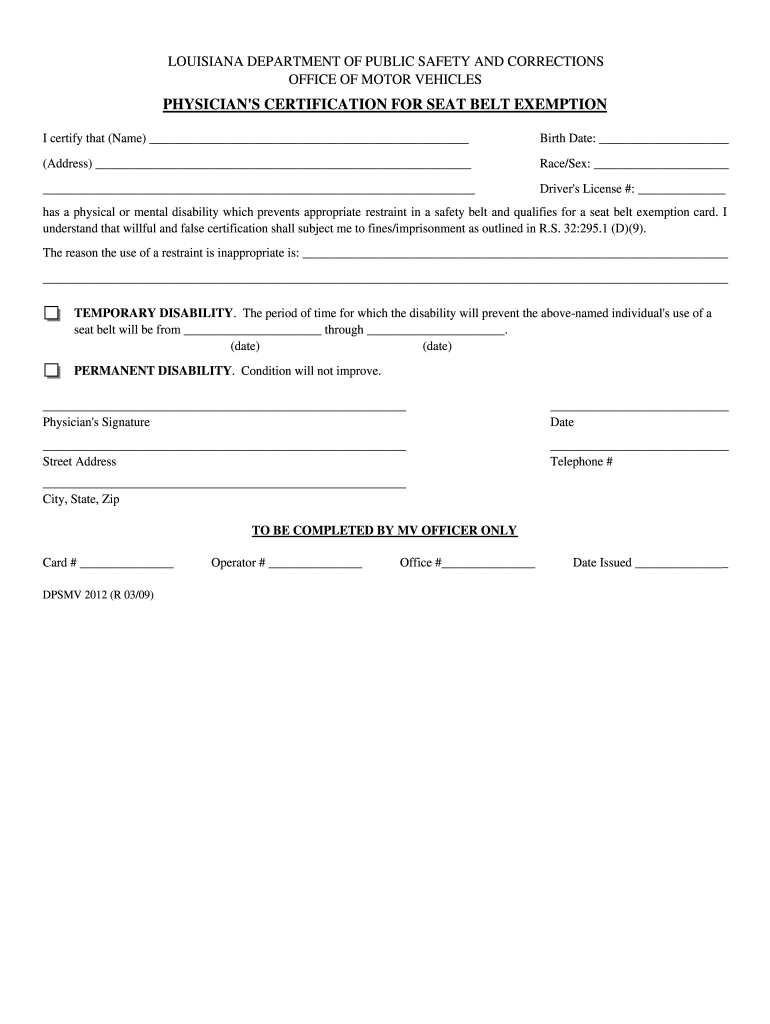
A seat belt exemption certificate is an official document that certifies an individual's exemption from the requirement to wear a seat belt due to specific medical or physical disabilities. This form is crucial for individuals whose health conditions prevent them from safely using standard seat belts. The documentation serves as legal proof when these individuals are required to justify their exemption to law enforcement or other authorities.
Key Elements of the Seat Belt Exemption Certificate
- Personal Information: The certificate includes the individual's full name, address, and contact details.
- Medical Condition: A section dedicated to detailing the medical or physical disability that necessitates the exemption.
- Physician’s Verification: This usually contains a signature and contact information from a qualified physician who can validate the individual's condition.
- Legal Consequences: The form often outlines the implications of false certification, ensuring individuals understand the seriousness of providing accurate information.
Understanding these elements is fundamental for individuals seeking an exemption and for medical professionals who assist them in the application process.
Steps to Complete the Seat Belt Exemption Certificate Download
The process of obtaining a seat belt exemption certificate involves several specific steps to ensure accuracy and completeness. Below is a systematic breakdown of the steps required:
-
Download the Form: Locate the seat belt exemption certificate download from a trusted source. In many cases, this will be a government website or the website of relevant health services.
-
Fill Out Personal Information: Complete the sections requiring personal details, including name, date of birth, and contact information.
-
Document Medical Condition: Clearly describe the medical or physical condition that qualifies you for the exemption. It may be beneficial to use precise medical terminology.
-
Obtain Physician’s Certification: Schedule an appointment with a physician to discuss your condition. The physician must fill out their section of the form, confirming the disability.
-
Review for Accuracy: Double-check all information entered on the form to prevent mistakes that could delay the process.
-
Submit the Form: Follow the submission guidelines laid out by the state or relevant authority. This may include online submission, mailing, or in-person delivery.
Legal Use of the Seat Belt Exemption Certificate
The seat belt exemption certificate is legally binding and recognized by law enforcement across the United States. However, there are specific legal uses and requirements that must be adhered to:
- Verification: The certificate must be presented when requested by a law enforcement official. It is advisable to carry a copy in your vehicle.
- Limited Validity: The exemption is not indefinite; certain states require renewal or reevaluation after a specified time frame.
- Jurisdictional Differences: Each state has its regulations governing seat belt exemptions. Hence, individuals must ensure they comply with their state-specific laws.
Understanding the legal implications ensures that individuals utilize their exemptions correctly and maintain compliance with applicable laws.
Who Typically Uses the Seat Belt Exemption Certificate
Various individuals may require a seat belt exemption certificate due to medical or physical considerations. Common users of the seat belt exemption form include:
- Individuals with Disabilities: People with conditions that limit their mobility, such as certain spinal injuries or chronic illnesses.
- Elderly Persons: Some older adults may find that standard seat belts are not suitable for their specific health concerns.
- Pregnant Women: In some cases, medical advice may suggest that pregnant women require adjustments or exemptions based on their unique circumstances.
The seat belt exemption certificate serves to protect these individuals legally while ensuring their safety is prioritized.


Important Terms Related to Seat Belt Exemption Certificate
Familiarity with the terminology associated with the seat belt exemption certificate can aid in understanding the process and legalities. Important terms include:
- Medical Exemption: A legal designation for individuals who are excused from using a seat belt due to medical reasons.
- Physician Certification: A verification by a doctor that endorses the applicant's need for the exemption based on their medical evaluation.
- Compliance: Adhering to local laws and regulations regarding the use of seat belts and exemptions.
Being well-versed in these terms can simplify conversations with medical professionals or legal authorities regarding the exemption.
Examples of Using the Seat Belt Exemption Certificate
Understanding how the seat belt exemption certificate functions in real-world scenarios is vital. Here are a few examples:
- Traffic Stops: If an individual is pulled over for not wearing a seat belt, presenting the exemption certificate can clarify their legal status and prevent fines.
- Insurance Considerations: Some insurance companies may request a copy of the exemption for policy adjustments or claims related to accidents involving the insured individual.
- Travel Arrangements: Individuals may need the certificate when traveling with specific transportation services, ensuring they are accommodated appropriately.
These examples highlight the practical significance of having and utilizing the seat belt exemption certificate in various situations involving law enforcement, insurance, and travel.




