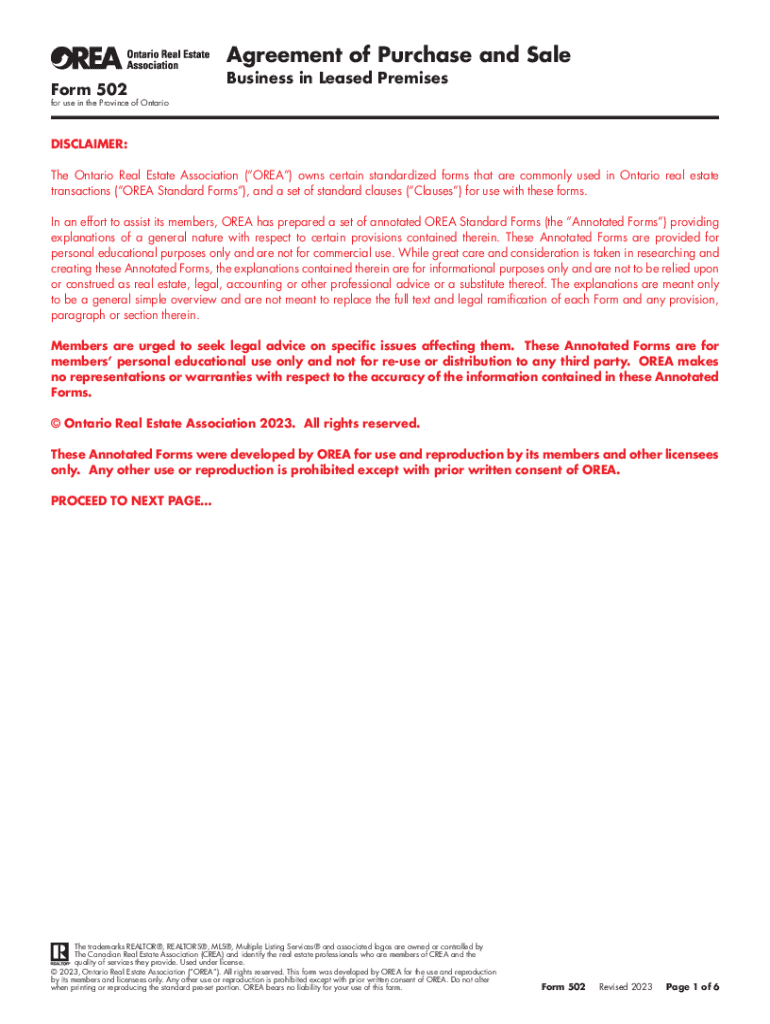





What OREA Form 502 Is
Fillable OREA Form 502, the Agreement of Purchase and Sale for a business in leased premises, is a standardized Ontario real estate form used when the buyer is purchasing a business that operates from rented space. It is different from a standard real estate purchase agreement because the transaction usually involves both the business itself and the right to occupy the leased location, subject to landlord approval and the lease terms.
This form is commonly used in Ontario commercial transactions where the value of the deal depends on the business continuing to operate at the same address. Examples include restaurants, salons, retail stores, medical offices, convenience stores, and service businesses that depend on foot traffic or a specific neighborhood location.
The form helps set out the key commercial terms in a structured way, including the purchase price, included assets, deposit, closing date, lease assignment or consent requirements, and any conditions that must be satisfied before the sale completes. Because the premises are leased, the agreement often has to address both business assets and occupancy rights.
The significance of Form 502 is that it brings clarity to a transaction that can otherwise become complicated very quickly. A buyer may be purchasing equipment, inventory, goodwill, trade name rights, customer lists, and the benefit of an existing lease, all at the same time. The form helps reduce ambiguity about what is included and what still needs approval, documentation, or separate negotiation.
For many parties, this form also functions as a planning tool. It identifies which items will transfer at closing, what needs to be delivered before completion, and whether the deal is contingent on landlord consent, financing, due diligence, or lease assignment. In practice, that makes it easier to coordinate the legal, financial, and operational pieces of the sale.
Because it is an OREA standardized form, it is intended for use within Ontario real estate practice and should be completed carefully to reflect the exact deal structure. Small differences in wording can change whether a condition protects the buyer, the seller, or both.
Who Uses This Form
OREA Form 502 is typically used by business buyers and sellers, real estate agents handling commercial or mixed-use transactions, and lawyers who review or finalize the agreement. It is especially relevant when the business operates from leased premises rather than owned property.
Sellers use it to record the terms under which they are willing to transfer the business, including the assets sold, any exclusions, and the obligations that must be satisfied before closing. A seller may want to make clear that only certain equipment is included, that accounts receivable are excluded, or that the buyer must obtain landlord consent before taking possession.
Buyers use the form to protect themselves by setting conditions that allow time to review the lease, inspect the business, verify financial records, and confirm that the landlord will permit the new operator. A buyer purchasing a café, for example, may need confirmation that the lease can be assigned and that the landlord will accept the new tenant’s financial qualifications.
Real estate professionals use the form to document the transaction in a format that aligns with Ontario practice. In a business sale tied to leased premises, an agent often helps identify practical issues early, such as lease assignment restrictions, permitted use clauses, and whether a separate asset purchase agreement is needed.
Lawyers also rely on the form when the transaction requires legal review, custom clauses, or additional closing documents. That may include a lease assignment, consent agreement, bill of sale, non-competition covenant, or corporate resolutions if one of the parties is a company rather than an individual.
In more complex transactions, accountants and business advisors may review the form as part of the broader sale structure. This is especially important when the sale involves inventory valuation, taxes, allocation of purchase price among assets, or assumptions about employee retention and operating liabilities.
Main Terms and Clauses
The form usually covers the core commercial terms first, because those are the parts that most directly affect whether the transaction is workable. These include the parties’ names, the property or premises address, the business name if applicable, the price, the deposit, and the date the offer becomes binding if accepted.
A major section of the agreement focuses on what is actually being sold. In a business sale, that may include furniture, fixtures, equipment, signage, inventory, intellectual property, phone numbers, website assets, customer records, and goodwill. The agreement should be precise about whether each item is included, excluded, or subject to a separate inventory count.
Lease-related terms are especially important in this form. If the business operates in leased premises, the buyer will usually need the landlord’s consent to assign the lease or to enter into a new lease. The agreement should identify whether assignment is required, who is responsible for obtaining consent, and what happens if the landlord refuses.
Conditions are another critical part of the form. Common conditions may include financing approval, satisfactory review of business records, inspection of assets, landlord consent, and confirmation that required licenses or permits can be transferred or obtained. These conditions are often time-sensitive and must be written clearly to avoid disputes.
The agreement may also address closing adjustments and liabilities. For example, the parties may need to determine how prepaid rent, security deposits, utility bills, payroll obligations, and supplier invoices will be handled at closing. If the business has employees, the agreement may also need to clarify whether employment is being assumed or whether the seller is terminating employees before completion.
Other common clauses relate to representations, warranties, and post-closing obligations. A seller may represent that the business is not in default under the lease, that equipment is owned free and clear, or that there are no undisclosed encumbrances. A buyer may require access to books and records before closing or a covenant that the seller will assist with transition matters after completion.
How to Complete the Form
Completing Fillable OREA Form 502 usually begins with identifying the parties correctly and describing the business transaction with enough detail to avoid confusion later. The buyer and seller names should match their legal identities, especially if one of the parties is a corporation, partnership, or numbered company.
The next step is usually to define the subject business and premises. This includes the business name, address of the leased location, and any identifying details that help make the transaction specific. If the business uses a trade name that differs from the legal owner name, that distinction should be clear.
The purchase price and deposit terms should be filled in carefully. The form should state the total price, the amount of the deposit, when the deposit is due, and where it will be held. A deposit structure can vary depending on the deal, but the agreement should always state the timing and treatment of the funds.
The section on included items requires close attention. Items should be listed or described clearly, especially if the buyer expects to receive equipment, inventory, signs, recipes, software access, or telephone numbers. If something is not included, it is safer to say so explicitly rather than assume it will be excluded by implication.
Conditions must be drafted with practical deadlines. For example, if the buyer needs landlord consent, the agreement should say who is responsible for obtaining it and by what date. If financing is a condition, the time frame should allow the buyer to secure approval without leaving the file open indefinitely.
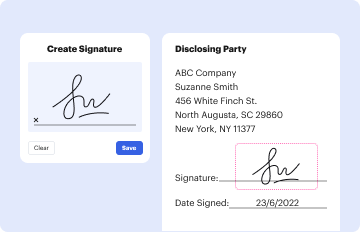
After the core terms are entered, both parties should review signature blocks, witness requirements if any, and any schedules or attachments. A common mistake is overlooking an addendum that changes the asset list, lease terms, or closing responsibilities. In a fillable format, it is also important to confirm that all entered fields are complete and legible before signing.
Common completion issues
- Vague asset descriptions, such as “all equipment,” without a list or inventory reference.
- Missing lease assignment language when the business depends on a rented location.
- Unclear deposit instructions, including who holds the deposit and under what trust arrangement.
- Conditions with no deadline, which can delay or undermine the transaction.
- Inconsistent names between the agreement, corporate records, and lease documents.
Landlord Consent and Lease Issues
Landlord consent is often one of the most important issues in a business sale involving leased premises. Even if the buyer and seller agree on the price and assets, the transaction may still fail if the landlord will not consent to an assignment or replacement tenant arrangement.
The lease must usually be reviewed before the agreement is finalized. Some leases prohibit assignment without written consent, while others require consent that cannot be unreasonably withheld, subject to strict notice or financial review requirements. The wording of the lease often determines how much flexibility the parties actually have.
A buyer should understand that purchasing the business does not automatically transfer the right to occupy the premises. If the business depends on a favorable location, the lease assignment or new lease is often just as important as the asset transfer itself. In a café sale, for instance, the site may be the main source of value.
Sellers also have an interest in resolving lease issues early. If the landlord’s consent is delayed or denied, the seller may remain tied to the lease or risk breaching its obligations. That can create exposure for rent, repairs, and other obligations even after the business sale has been negotiated.
Some transactions involve a condition that the buyer obtain a satisfactory lease assignment, amendment, or new lease before closing. In other cases, the landlord may require a personal guarantee, corporate guarantee, higher security deposit, or updated business plan from the buyer. Those requirements should be anticipated and reflected in the agreement where possible.
Practical examples matter here. A salon in a shopping plaza may require landlord approval based on the new tenant’s financial statements. A restaurant may need the landlord to consent to the transfer of exclusive use rights, venting systems, or patio access. A medical clinic may need confirmation that the use is permitted under zoning and the lease.
Required Documents and Timing
Business sales involving leased premises usually require more than the agreement itself. The parties often need supporting documents to verify the business, confirm the lease rights, and complete the transfer cleanly.
Common supporting documents include the existing lease, lease amendments, landlord consent forms, corporate status documents, financial statements, inventory lists, equipment schedules, and identity or signing authority documents. If the buyer is a company, corporate authorization may be needed to show who can sign on its behalf.
If employees are involved, employment-related documents may also be relevant. These can include payroll summaries, vacation accrual records, benefit obligations, and any notices required for employee transition or termination. Even when employees are not being transferred, their status can affect closing adjustments and post-closing obligations.
Timing is critical because many conditions are time-bound. The agreement may set deadlines for deposit delivery, due diligence review, financing approval, landlord consent, and closing. If any of those deadlines are missed, the agreement may terminate, be extended, or become disputed depending on the wording.
The closing date should allow enough time for all approvals and deliverables to be completed. In a straightforward transaction, that may be a few weeks after acceptance. In a more complex deal, especially one involving landlord review or financing, a longer period may be more realistic.
A practical issue often overlooked is transfer timing for operational assets. For example, the buyer may need early access to train staff or review systems, while the seller may want to remain in control until closing. The agreement should clarify whether pre-closing access is allowed and under what supervision or insurance requirements.
Legal and Compliance Considerations
OREA Form 502 is a legal agreement, so accuracy matters. Once accepted, its terms may be binding, and disputes over unclear language can become expensive. The form should reflect the actual deal rather than a generic template filled in with assumptions.
One major legal issue is whether the transaction is an asset sale, a share sale, or a hybrid structure. Form 502 is commonly used where business assets are being sold and the premises are leased, but the parties may need additional documents if the buyer is also acquiring shares of a company. That distinction affects liability, taxes, and ongoing obligations.
Compliance with the lease is another major concern. The buyer should not assume that the lease can simply be transferred without conditions. The landlord may require updated guarantees, financial disclosure, insurance coverage, or amendments to permitted use. If the lease contains default provisions, those should be reviewed before signing.
There are also regulatory issues that vary by business type. A restaurant may need food handling, liquor, health, or fire safety considerations. A medical or personal services business may require licensing, sanitation compliance, or professional authorization. The agreement should account for whether those approvals are transferable or need to be reissued.
Representations and warranties can create legal risk if they are inaccurate. If the seller states that equipment is in working order or that no lease default exists, those statements should be based on fact. Buyers should also be careful not to overstate conditions they have not verified, especially in short closing timelines.
In Ontario, legal advice is often important where the transaction is substantial, the lease is complex, or the business has employees, permits, or tax issues. The form itself is a standardized starting point, but many transactions require custom clauses to address the real-world details of the deal.
Examples and Common Scenarios
A common example is the sale of a neighborhood bakery operating in a rented storefront. The buyer wants the ovens, display cases, recipes, trade name, and lease assignment. The agreement would need to identify those items, set a deposit, make landlord consent a condition, and specify whether inventory is included at cost or excluded from the sale price.
Another example is a hair salon where the equipment is owned by the seller, but the value of the transaction depends heavily on the location and existing clientele. In that case, the form should address the transfer of styling stations, wash basins, booking system access, phone numbers, and the lease. If the landlord refuses consent, the agreement may need to unwind or be amended.
A third scenario involves a convenience store with leased premises and significant inventory turnover. The agreement may require a separate inventory count on closing day, a schedule of fixtures and equipment, and a clause addressing cash on hand, lottery rights, or supplier contracts. That type of business often needs very precise wording because the asset mix changes daily.
A professional office, such as a dental or physiotherapy clinic, raises additional issues. The buyer may need to verify that treatment rooms, fixtures, and specialized equipment are included, and that the premises are approved for the intended use. The lease may also contain restrictions on signage, subletting, or professional use that affect the deal structure.
A more difficult case is a business with declining revenue but a long-term lease. The seller may be motivated to exit quickly, while the buyer needs protection against hidden obligations. In that situation, conditions for books and records review, tax clearance, or lease review become especially important.
These examples show why the form is more than a price-and-signature document. It is a framework for dealing with ownership, occupancy, operations, and risk in a single transaction.
Digital Use and Alternatives
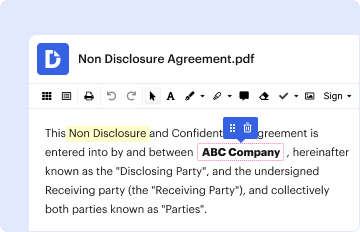
The fillable version of OREA Form 502 is often easier to manage than a paper copy because it supports cleaner completion, faster revision, and more organized sharing between parties. A fillable format also reduces the risk of unreadable handwriting and makes it simpler to keep consistent formatting across multiple drafts.
Digital completion is especially useful when the transaction requires input from several people. A buyer, seller, broker, and lawyer may all need to review changes, and an editable file makes that process more efficient. It also helps when schedules, addenda, or revised dates need to be updated after negotiations.
Paper use is still common in some settings, particularly when a transaction is being reviewed manually or when signatories prefer physical signatures. In a paper workflow, the same caution applies: every handwritten change should be legible, initialed where required, and consistent across copies. Missing initials or unreadable edits can lead to disputes about the final terms.
Related or alternative documents may be needed depending on the transaction structure. A separate lease assignment, bill of sale, confidentiality agreement, asset schedule, or non-competition agreement may be used alongside Form 502. In more complex sales, a custom asset purchase agreement may supplement or replace parts of the standardized form.
Older versions or modified forms can also matter if the parties began negotiations earlier and are updating a draft. It is important that all parties are working from the same version, with the same schedules and amendments attached. Mismatched drafts are a common source of avoidable error in business sales.
When alternatives may be used
- When the sale includes shares of a corporation instead of only assets.
- When the lease assignment requires a separate landlord agreement.
- When the business has significant intellectual property, licenses, or regulated operations.
- When the parties need more detailed indemnities, non-compete terms, or tax allocation language than the standard form provides.