




What the waiver means
A Disclosure and Waiver of Possible Conflict of Interest is a written notice and consent document used when a lawyer, law firm, or other professional relationship may involve divided loyalties, overlapping representations, or another situation that could affect independent judgment. In plain terms, it explains a possible conflict, identifies who may be affected, and records whether the involved person still agrees to proceed.
The form is often used before the professional work begins, but it can also appear after a potential conflict is discovered during an ongoing matter. The core purpose is disclosure. The professional explains the relevant facts in enough detail for the client or affected person to understand the risk and decide whether to waive the conflict.
This type of document is commonly tied to the American Bar Association’s Model Rules of Professional Conduct, especially rules on conflicts, informed consent, and client communication. In the United States, the exact requirements depend on state ethics rules, court rules, and sometimes the type of legal matter involved.
The phrase “possible conflict” matters. It does not always mean a disqualifying conflict already exists. Sometimes the issue is a risk of future conflict, such as representing two clients with related interests, a former client connection, or a lawyer’s personal interest that could intersect with the matter.
Typical situations include:
- Joint representation of multiple parties in a transaction.
- Representation of a client whose interests may overlap with a former client.
- A law firm representing one client while another lawyer in the firm has a separate relationship that may matter.
- A matter where a lawyer has a personal, financial, or family connection to someone involved.
A waiver is not automatic. It is only effective when the disclosure is sufficiently detailed, the person giving consent has enough information to make an informed decision, and the waiver is permitted under the applicable rules. Some conflicts cannot be waived at all if the law or ethics rules prohibit it.
When the form is used
The Disclosure and Waiver of Possible Conflict of Interest is most often used in legal practice, but similar forms may appear in compliance, consulting, mediation, and other professional services where loyalty and independence are important. In a law office, it is usually used before or during representation when the lawyer sees a situation that requires written consent.
Common use cases include litigation, estate planning, business transactions, family law matters, and real estate closings. For example, a lawyer may represent both spouses in an uncontested estate plan, but only if the relationship and potential risks are fully disclosed and the state rules allow it.
The form is also used when a lawyer switches firms or when a firm takes on a new client whose matter is connected to work done for a former client. In these situations, the disclosure helps show that the affected person was told about the risk and had a fair opportunity to object or consent.
Practical scenarios include:
- A business lawyer representing two co-founders in forming an LLC.
- A probate lawyer representing siblings with aligned interests in settling an estate.
- A corporate attorney handling a deal involving a company that also does business with a current firm client.
- A family law lawyer asked to advise both parties in a narrow, mostly administrative issue.
The document can also be used as part of internal conflict clearance procedures. Large firms often use it after an initial conflict check identifies a concern that is not automatically disqualifying but still requires disclosure and consent before work proceeds.
In some cases, the form is paired with a scope limitation. The lawyer may agree to represent the client only for one part of a matter, or only after the parties agree in writing on how conflicts will be handled. That scope should be specific and easy to understand.
Disclosure essentials
The most important part of the form is the substance of the disclosure. A valid waiver depends on how clearly the possible conflict is described. A vague statement that a conflict “may exist” is usually not enough on its own. The recipient should understand what the conflict is, who is involved, and how the lawyer’s duties could be affected.
A strong disclosure usually explains:
- The nature of the current or potential conflict.
- The identities of the clients, parties, or interested persons.
- The matter or transaction at issue.
- How the conflict could affect representation.
- Whether the lawyer’s loyalty, confidentiality, or judgment could be limited.
- The options available if the person does not consent.
The disclosure should be tailored to the facts. For example, a conflict in a business transaction may involve negotiating leverage and confidentiality, while a conflict in litigation may involve cross-claims, settlement strategy, or witness issues. The form should explain the specific risk, not just recite general ethical language.
Some situations require especially careful explanation:
- Joint representation, where communications may later be shared among the clients.
- Former client matters, where confidential information from earlier work may matter.
- Representation of related individuals, such as family members or corporate affiliates.
- Personal interest conflicts, such as a lawyer’s financial stake, close relationship, or prior involvement in the issue.
The disclosure should also identify any limits on confidentiality. In some joint representations, one client may assume the lawyer will keep communications separate, but that assumption may not be correct. The form should not leave that point ambiguous.
If the waiver is intended to be informed consent, the document should give enough information for a reasonable person to weigh the pros and cons. In practice, that usually means a clear explanation of the actual risk, the effect on strategy or advice, and the consequences if the conflict later becomes unmanageable.
Key terms to know
Several terms appear frequently in conflict disclosure forms and related ethics analysis. Understanding them helps explain what the waiver does and does not do.
Informed consent
Informed consent means the person agrees after receiving adequate information and an explanation of the material risks and reasonably available alternatives. It is more than a signature. The person should understand the choice being made.
Material limitation
A material limitation exists when a lawyer’s ability to represent one client is significantly limited by responsibilities to another client, a former client, a third person, or the lawyer’s own interests. This is one of the most common concepts behind a conflict disclosure.
Concurrent conflict
A concurrent conflict exists when representing one client is directly adverse to another client, or when the lawyer’s responsibilities to another client or personal interest may materially limit the representation. These are often the conflicts that require disclosure and, sometimes, waiver.
Former client conflict
A former client conflict may arise when a new matter is substantially related to a prior matter involving a former client, especially if confidential information from the earlier matter could be relevant.
Waivable conflict
A waivable conflict is one that ethics rules allow the client to approve after disclosure. Not every conflict is waivable, and some require more than consent, depending on the jurisdiction and matter type.
Nonwaivable conflict
A nonwaivable conflict cannot be cured by consent. Examples can include certain directly adverse representations, conflicts barred by law, or situations where a reasonable lawyer could not believe competent and diligent representation is still possible.
These terms matter because the form should match the legal significance of the problem. If the conflict is nonwaivable, a disclosure form alone may not be enough. If the conflict is waivable, the form should still be detailed enough to support valid informed consent.
How to complete it
Completing a Disclosure and Waiver of Possible Conflict of Interest usually involves a careful, fact-specific process. The form should not be filled out as a generic template without reviewing the matter, the parties, and the jurisdiction’s rules.
Step 1: Identify the conflict
The first step is to determine what relationship or circumstance creates the possible conflict. This may come from a conflict check, a new fact discovered during representation, or a change in the client’s goals.
Step 2: Define the affected parties
The form should clearly identify the clients, former clients, related entities, or other persons involved. If a company, trust, or family member is involved, the names and roles should be precise.
Step 3: Explain the risk
The disclosure should describe how the conflict could affect loyalty, strategy, confidentiality, negotiation, or timing. It should be specific enough that the person can understand the practical consequences.
Step 4: State the consent decision
The waiver section should make it clear whether the person consents to the representation, consents with conditions, or does not consent. Ambiguous wording can create later disputes.
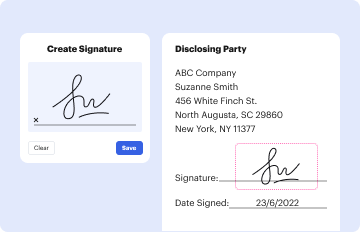
Step 5: Document signatures and dates
The form should be signed and dated by the person giving consent and, when needed, by the lawyer or firm representative. In some matters, separate consents from each affected client are appropriate.
Step 6: Preserve the record
The final executed form should be retained in the client file along with any related conflict analysis, email exchanges, or supporting notes. This creates a clear record if the issue is later questioned.
Common completion errors include:
- Using broad language that does not explain the actual conflict.
- Leaving out a materially affected person.
- Failing to mention confidentiality limits.
- Treating one person’s consent as covering everyone.
- Overlooking state-specific requirements for written informed consent.
A well-completed form is both a disclosure record and a risk-management document. It should reflect the actual situation, not a template description copied from another matter.
Who uses it
This form is most commonly used by attorneys, law firms, legal departments, and sometimes individual practitioners who need to document informed consent around a conflict issue. It is especially important in practices where overlapping client relationships are common.
Typical users include:
- Solo practitioners handling closely related client matters.
- Small firms representing multiple family members, small businesses, or closely held entities.
- Mid-size and large firms with formal conflict-check systems.
- In-house counsel coordinating with outside counsel.
- Transactional lawyers working on business deals involving several stakeholders.
Clients also play a role because their consent is central to the waiver. In many cases, the document is drafted by the lawyer but signed by the client after the issues are explained.
Certain business situations may also use similar disclosures in a broader professional context, such as mediators, consultants, trustees, or advisors who need to disclose divided loyalties or overlapping interests. The exact legal effect depends on the role and the governing rules.
The form is especially relevant when the person signing may not be sophisticated in legal ethics. That means the language should be clear and practical, not overly technical. If a business owner, spouse, trustee, or individual client is the signer, the form should explain the issue in a way that fits the actual audience.
State rule differences
Conflict waiver rules in the United States are not fully uniform. While the ABA Model Rules provide a common framework, each state may modify the text, add comments, or interpret the rules differently through opinions and case law.
Common state-level variations
- Some states require more detailed written informed consent language.
- Some jurisdictions are stricter about conflicts in joint representations.
- Some states place additional limits on waivers involving former clients.
- Some states require the lawyer to reasonably believe competent and diligent representation is still possible before accepting consent.
- Some courts apply special rules in litigation, criminal matters, or class actions.
Why local rules matter
A waiver that is adequate in one state may be insufficient in another. For example, one jurisdiction may allow a limited waiver if the conflict is explained carefully, while another may require the lawyer to decline the matter entirely.
Multi-state practice concerns
When a law firm handles matters across state lines, the conflict analysis may need to consider:
- The client’s location.
- The lawyer’s licensing state.
- The forum state if litigation is pending.
- Any applicable court or agency rules.
- Choice-of-law provisions in the engagement agreement.
Examples of state-sensitive issues
- A corporate matter involving a Delaware entity with counsel based in another state.
- A family law matter where one spouse moved to a different jurisdiction.
- A probate matter where the estate is administered in one state but some interested persons live elsewhere.
Because the rules can vary, the form should not rely on generic wording alone. It should be reviewed against the relevant state bar guidance, especially when the conflict involves multiple clients, a former client, or a litigation matter.
Legal and ethical limits
A waiver can help address a conflict, but it does not solve every problem. The document is only effective if the underlying situation is one that can legally be waived and if the disclosure is adequate under the applicable ethics rules.
Some conflicts are not waivable because the law forbids the representation or because the lawyer could not reasonably provide competent and diligent representation even with consent. In those cases, a signed form does not cure the problem.
The lawyer also has continuing duties. If the facts change, the original disclosure may no longer be enough. A new conflict may arise, or the original risk may become more serious. In that case, additional disclosure or a new waiver may be needed.
Important legal limits include:
- The lawyer cannot use the waiver to conceal material facts.
- Consent must be voluntary.
- The person must have enough information to understand the risk.
- The representation must still be permissible under the relevant rules.
- Confidentiality obligations may survive even if the client later revokes consent.
There are also practical risks if the waiver is incomplete. A court, disciplinary authority, or opposing party may later argue that the disclosure was too vague or that the consent was not informed. That can lead to disqualification, ethical complaints, or malpractice exposure.
For that reason, the form should be consistent with the engagement letter, conflict-check records, and any internal firm procedures. If those documents conflict with one another, the waiver may be harder to defend.
Required supporting records
A conflict waiver is stronger when it is supported by clear background documentation. The form itself is important, but it is usually not the only record that matters.
Useful supporting materials include:
- The engagement letter or fee agreement.
- Conflict-check results.
- Notes from the disclosure conversation.
- Emails confirming the explanation and the client’s questions.
- Prior representations that are relevant to the conflict analysis.
- Corporate records, trust documents, or other identity materials when entity relationships matter.
These records help show that the disclosure was timely and fact-specific. They can also help clarify whether the client had enough information to make an informed decision.
In some matters, the supporting records should explain why the lawyer concluded the conflict was waivable. That analysis can be especially important if the situation is later challenged. For example, a file note may record that the lawyer evaluated whether the representation could remain competent and diligent despite the overlap.
Examples of useful file documentation:
- The exact date the issue was identified.
- The names of everyone involved.
- A summary of the conflict explanation given to the client.
- Any conditions placed on the representation.
- Whether the client asked for independent counsel or time to consider the issue.
This is especially helpful in business and estate matters, where family relationships, ownership interests, and entity structures can create layered conflict questions. Clear records reduce uncertainty if the waiver is reviewed months or years later.
Common mistakes to avoid
The most serious mistake is assuming that a signed form automatically makes the conflict acceptable. The legal analysis comes first. The form only records a valid consent if the conflict is actually waivable and the disclosure is sufficient.
Another common issue is using language that is too broad. Statements like “I understand there may be a conflict” are usually not enough unless the surrounding explanation is very specific. The form should identify what the conflict is and how it might matter in the actual representation.
Other recurring problems include:
- Failing to update the waiver when facts change.
- Not explaining confidentiality implications in a joint representation.
- Omitting a related client, affiliate, or family member.
- Using a template that does not fit the matter type.
- Relying on oral explanations without preserving a written record.
- Forgetting to confirm that the signer has authority to consent on behalf of an entity.
The form can also be weakened if it is presented after the representation has already begun and the client has little real choice. Timing matters because consent should be voluntary and informed, not merely signed under pressure.
In addition, a waiver should not promise more than the lawyer can deliver. If the law requires the lawyer to withdraw upon a later conflict, the form should not suggest the representation is guaranteed to continue regardless of future developments.
Practical examples and variations
The form appears in many real-world settings, and its content should vary based on the context. A few examples show how the disclosure changes depending on the matter.
Business formation example
Two co-founders ask one lawyer to form their startup. The waiver may explain that the lawyer is not representing them as adversaries, that conflicts could arise if disputes develop later, and that confidential information shared by one may not be protected from the other in a joint representation.
Estate planning example
A lawyer is asked to draft reciprocal wills for spouses. The disclosure may explain that both spouses want the same plan, but if a disagreement develops later, the lawyer may not be able to favor one spouse over the other. It may also address whether information from each spouse will be shared.
Litigation example
A firm is approached to represent a company in a dispute while another department within the same firm has handled work for an affiliate. The waiver may need to explain the relationship between the entities, the risk of access to confidential information, and whether screening or other safeguards are available.
Former client example
A lawyer represented a vendor in a contract matter last year and is now asked to represent a buyer in a related dispute. The disclosure may explain the related subject matter, the possibility of confidential information overlap, and whether the former client’s interests could be materially affected.
Family law example
A lawyer is asked to assist both spouses in a narrow settlement issue. The disclosure must be especially careful because family matters often involve changing interests, emotional pressure, and the risk that one person may not fully appreciate the implications.
Each variation should reflect the actual facts. A strong conflict waiver is specific, balanced, and easy to understand. It shows the issue clearly, avoids overstatement, and preserves a clear record of informed consent.