




Definition and Meaning of 403(b)(9) Retirement Savings Plan Enrollment Form
The 403(b)(9) Retirement Savings Plan Enrollment Form is a crucial document allowing eligible individuals to enroll in a specific retirement plan tailored for certain religious and non-profit organizations in the United States. These plans are often associated with churches or related organizations and allow employees to set aside part of their salary into a retirement savings account. The form ensures that the participant's personal information, beneficiary details, and contribution preferences are accurately captured to establish their account and manage future contributions effectively.
Importance of the 403(b)(9) Plan
- Tax Advantages: Contributions to a 403(b)(9) Retirement Savings Plan can be made on a pre-tax basis, reducing the participant's taxable income for the year.
- Investment Options: These plans generally offer a range of investment choices, allowing participants to align their retirement savings strategies with their financial goals.
- Structured for Non-Profits: The enrollment form is specifically designed for non-profit organizations, making it suitable for those employed within religious, educational, or similar sectors.
How to Obtain the 403(b)(9) Retirement Savings Plan Enrollment Form
Securing the enrollment form for a 403(b)(9) Retirement Savings Plan is a straightforward process but may vary depending on the administering institution.
-
Contact Employer: Usually, the employer provides access to the form if they offer the plan. It may be available through the human resources or benefits department.
-
Visit Plan Administrator: If specific benefits management companies handle your organization’s plans, they can provide the necessary enrollment documents.
-
Download Online: Many administering organizations offer electronic copies of the form through their websites, allowing for easy downloading and printing at your convenience.
Important Considerations
- Information Assurance: Ensure that any form downloaded is the most current version and is authentic to avoid errors in submission.
- Employer Guidance: It may also be helpful to have your employer's human resources department guide you through the process to ensure you select the appropriate options suitable for your financial and retirement goals.
Steps to Complete the 403(b)(9) Retirement Savings Plan Enrollment Form
Completing the 403(b)(9) Retirement Savings Plan Enrollment Form correctly is critical in ensuring accurate contribution and efficient handling of retirement savings.
Enrollment Process
-
Personal Information:
- Enter complete name, address, contact information, and employee identification number.
-
Selection of Beneficiaries:
- Provide details for primary and contingent beneficiaries, including names, relationship to you, and their social security numbers.
-
Contribution Settings:
- Decide on the percentage or fixed amount of your salary you wish to contribute and whether it will be pre-tax or Roth (after-tax).
-
Investment Allocations:
- Choose how you wish to allocate contributions among the available investment options, aligning with your risk tolerance and retirement goals.
-
Authorization:
- Sign and date the form to authorize the deductions specified and confirm all provided information is accurate.
Common Errors to Avoid
- Incomplete Fields: Ensure all personal data and beneficiary information are accurate and complete.
- Incorrect Contribution Amounts: Verify that the planned amount or percentage aligns with what you intended to prevent financial discrepancies.
Who Typically Uses the 403(b)(9) Retirement Savings Plan Enrollment Form
The 403(b)(9) enrollment form is mainly utilized by employees of religious and non-profit organizations in the U.S. whose employers offer such a retirement savings plan.

Eligible Users Include
- Clergy Members: Those working within churches or religious institutions where such plans are offered.
- Non-Profit Organization Employees: Those serving in educational or social services roles within non-profit entities.
- Volunteers: Sometimes eligible for certain plan benefits if they perform substantial services similar to employees.
Enrollment Eligibility Criteria
- Employees typically need to meet specific criteria set by their organization, which might include a minimum period of service or a certain number of hours worked annually.

Key Elements of the 403(b)(9) Retirement Savings Plan Enrollment Form
Understanding key elements within the enrollment form ensures the participant properly completes it, thus ensuring valid enrollment without delays.
Core Sections
- Personal and Employment Information: Required for establishing the participant's identity and their connection to the employer.
- Contribution Details: Includes choices around salary deferral percentages, contribution types (traditional vs. Roth), and any employer match details.
- Investment Choices: Options can range from mutual funds and fixed annuities to other investment vehicles affected by market performance.
Necessary Documents
- Identification Documents: Social security card or driver's license for verification.
- Proof of Employment: Sometimes required to reaffirm eligibility or organization affiliation.
IRS Guidelines
The IRS stipulates guidelines specific to 403(b)(9) plans, ensuring compliance and proper utilization of these retirement accounts.
Compliance Areas
- Maximum Contribution Limits: These follow standard 403(b) limits, which are adjusted annually by the IRS.
- Required Minimum Distributions (RMDs): Once participants reach a certain age (typically 72), distributions are mandatory, per IRS regulations.
Tax Implications
- Pre-tax contributions reduce taxable income in the year of the contribution, while Roth contributions do not reduce taxable income but allow for tax-free withdrawals in retirement.
Form Submission Methods
Submitting the 403(b)(9) Retirement Savings Plan Enrollment Form correctly enhances processing efficiency and ensures participant enrollments are accurately captured.
Available Methods
- Online Submission: Some organizations allow for electronic submissions through secure portals, facilitating swift processing.
- Mail: Hard copies can be mailed to the plan administrator, though ensuring tracking methods might be beneficial for proof of delivery.
- In-Person: Direct submission to human resources or benefits administration can expedite processing and provide immediate feedback if corrections are necessary.
Verification of Submission
- Confirmation Receipts: Always request or print a confirmation of submission to ensure the form was received and to address any potential disputes.
Legally Binding Electronic Signatures
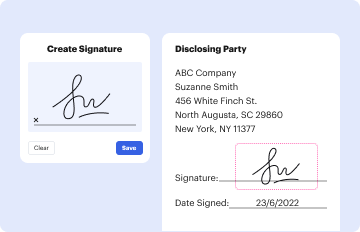
The 403(b)(9) Retirement Savings Plan Enrollment Form allows for electronic signatures, providing a legally binding method to authorize the contents of the form.
Validity and Security
- ESIGN Act Compliance: Electronic signatures adhered to legal standards ensuring they carry the same weight as traditional signatures.
- Security Measures: Utilization of password protections and encryption during submission to maintain personal data security.
Common Uses
- Remote Enrollments: Particularly useful for employees working remotely or when physical submission proves inconvenient.
- Streamlined Processes: Facilitates quicker administrative handling given the instantaneous transmission of the document compared to mailing physical forms.