






Definition & Meaning
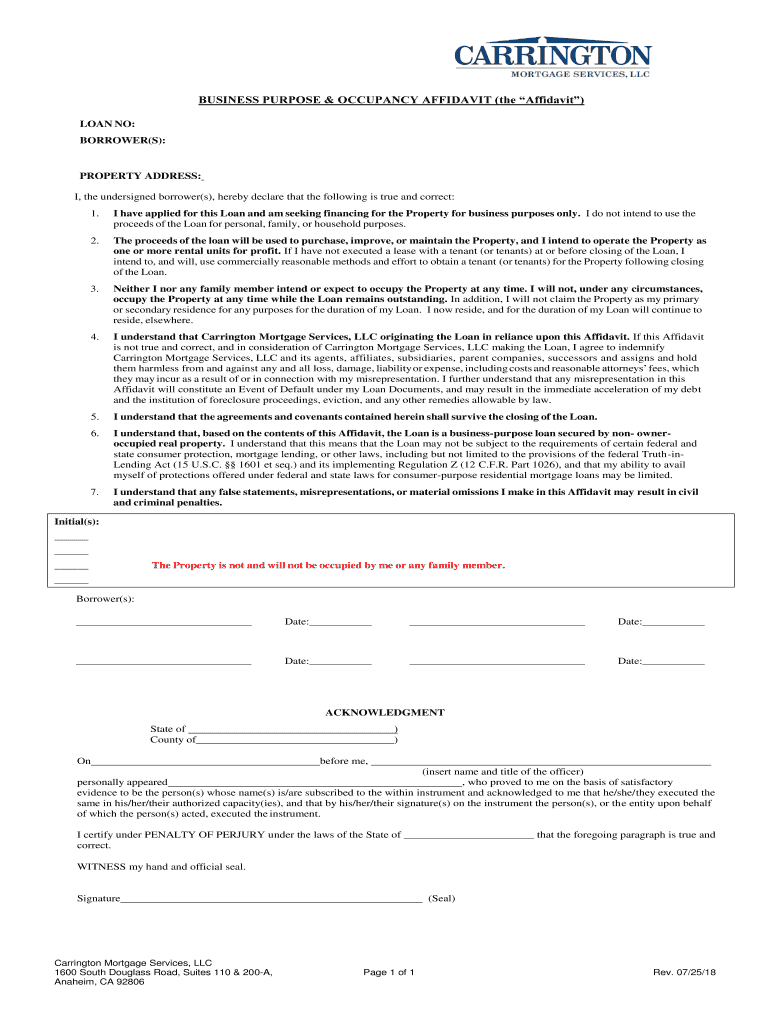
The Business Purpose and Occupancy Affidavit (the Affidavit) is a legal document used to declare the intended commercial use of a property and confirm its occupancy status. Typically associated with loan applications, this affidavit ensures that borrowers accurately represent their property usage to lenders or regulatory bodies. It serves as an essential instrument in legal and financial sectors, confirming that a property will be used for business purposes rather than personal or residential activities.
Importance of Correct Representation
- Legal Compliance: Misrepresentation can lead to legal consequences, including penalties or loan adjustments.
- Financial Accuracy: Ensures lenders have correct information to assess risk and loan terms.
- Operational Clarity: Provides clarity about the property's operational intention, aligning with zoning laws and regulations.
How to Use the Business Purpose and Occupancy Affidavit
The affidavit is used in various scenarios, particularly when securing commercial financing or adhering to zoning requirements. It is a critical document for buyers, lenders, and developers to validate legal occupancy and intended property use.
Procedures for Effective Use
- Understand Requirements: Ensure clarity on the necessity from the lender or authority requesting the affidavit.
- Accurate Completion: Fill all fields accurately, reflecting true intentions for property use.
- Verification: Cross-check details with relevant documents like property titles or business plans.
- Submission: Present the completed affidavit to the requesting entity, usually accompanying loan documents.
Steps to Complete the Business Purpose and Occupancy Affidavit
Completing the affidavit correctly demands attention to detail and an understanding of the form’s requirements. Here's a guide to help fill it out meticulously:
- Gather Necessary Information: Prepare relevant details, including borrower information, property address, and loan number.
- Fill Initial Sections: Begin with borrower(s) details; ensure names, contact information, and identifying numbers are correct.
- Describe Property Use: Clearly outline the intended business activities and any specific occupancy arrangements.
- Legal Declarations: Affirm the truthfulness of the information with a signature, acknowledging potential penalties for inaccuracies.
Practical Tips
- Consult with a legal advisor to ensure compliance with specific legal wording.
- Review similar affidavits, if available, for guidance on structure and content.
Key Elements of the Business Purpose and Occupancy Affidavit
Understanding the critical components of the affidavit ensures that you address all necessary legal and financial stipulations.
Components Breakdown
- Borrower Information: Names, addresses, and identifying details of those responsible for the property’s intended use.
- Property Details: Complete address and zoning information.
- Business Purpose Description: Detailed account of the nature of the business activities planned.
- Legal Attestations: A section confirming that the provided information is truthful, typically signed by the involved parties.
Legal Use of the Business Purpose and Occupancy Affidavit
The affidavit plays a vital role in complying with legal and financial regulations related to property use for business purposes.
Compliance Relevance
- Loan Approval: Integral in the approval process for commercial property loans, ensuring alignment with financial regulations.
- Zoning Conformity: Assists in complying with local zoning laws by verifying that property use aligns with legislated purposes.
- Tax Implications: Supports any taxation queries related to property use and income generation.
State-Specific Rules for the Business Purpose and Occupancy Affidavit
Laws and regulations affecting the affidavit can differ significantly across states, affecting how the document is interpreted and enforced.
Regional Differences
- Zoning Laws: States vary in how business occupations are categorized and regulated.
- Regulatory Bodies: Different states may require submission to distinct agencies, affecting the process.
- Legal Form Variations: Some states might have additional clauses or a different format in their official versions.
Required Documents
When completing the affidavit, having certain documents on hand is crucial for ensuring accuracy and credibility.
Essential Documentation
- Proof of Ownership: Property title documents to confirm rightful ownership.
- Business Registration: Incorporation or business licenses reflecting business legitimacy.
- Tax Identification: Tax-related documents to establish the business's financial profile.
Penalties for Non-Compliance
Misrepresentations or inaccuracies in the affidavit can lead to significant legal and financial repercussions.
Potential Consequences
- Fines and Penalties: Legal infringements can result in financial sanctions.
- Loan Adjustments: Loan terms may be revised if inaccuracies are discovered.
- Legal Action: In severe cases, misleading information could lead to lawsuits or criminal charges.