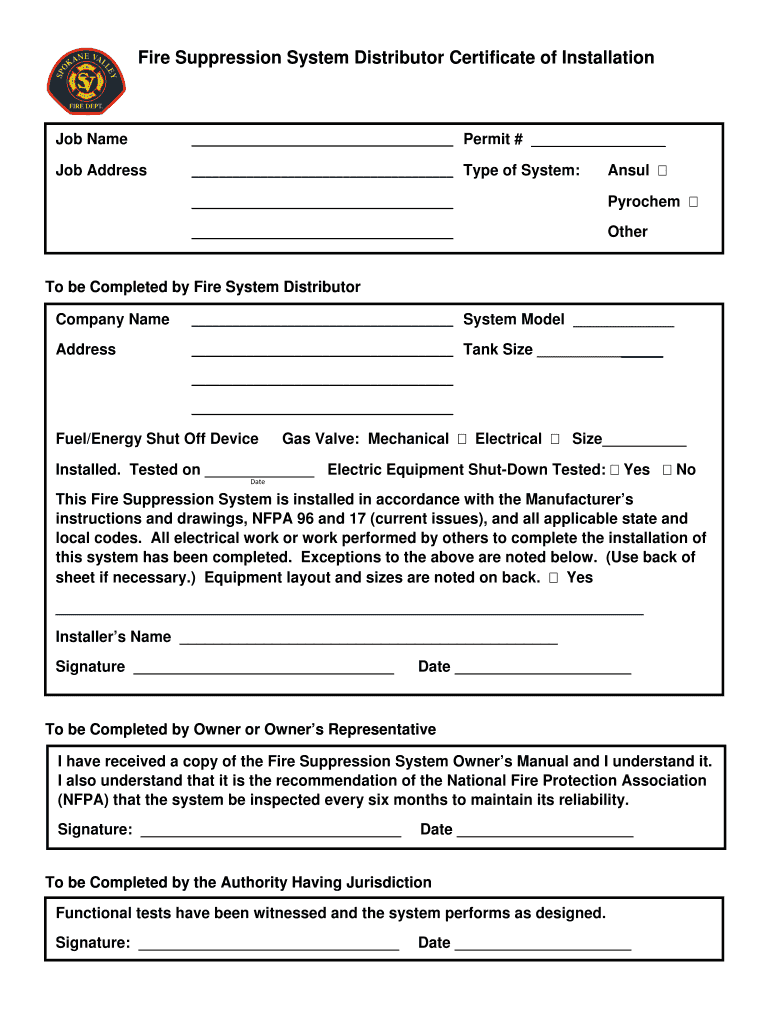







Definition and Meaning
The "Fire Suppression System Distributor Certificate of Installation" is an official document that verifies the proper installation of a fire suppression system by a certified distributor. This certificate is crucial for ensuring compliance with fire safety regulations and validating that the system meets the required safety standards. It typically contains specific details about the installation process, including the type of system installed, job name, permit number, job address, and distributor's credentials.
Components of the Certificate
- Job Name and Permit Number: Identifies the specific project for which the system was installed.
- Job Address: The physical location where the fire suppression system is installed.
- Type of System: Specifies the fire suppression system's model and make.
- Distributor Information: Includes the company name and contact details of the distributor responsible for the installation.
How to Use the Fire Suppression System Distributor Certificate of Installation
Proper utilization of the certificate ensures compliance with legal and safety standards. Understanding how to effectively use it is crucial for both property owners and fire safety inspectors.
Verification Process
- Ensure Authenticity: Confirm that the certificate is signed by an authorized distributor.
- Check Details: Review the document for accuracy, including installation dates and system types.
- Store Securely: Keep the certificate in a safe location for easy access during inspections.
Presentation During Inspections
- Provide to Inspectors: Show the certificate when requested by fire safety officials.
- Ensure Completeness: The certificate should contain all necessary details, including signatures and dates.
Steps to Complete the Fire Suppression System Distributor Certificate of Installation
Accomplishing this certificate involves several steps to ensure that all information is accurately documented.
Gathering Information
- Collect Installer Details: Obtain the full legal names, contact information, and credentials of the installers.
- Document System Specifications: Include technical details about the fire suppression system, such as brand, model, and capacity.
Filling Out the Certificate
- Input Job Details: Enter the job name, address, and permit number.
- Record System Information: Clearly state the type and model of the system installed.
- Sign and Date: Authorized personnel from the distributor company must sign and date the certificate.
Who Typically Uses the Fire Suppression System Distributor Certificate of Installation
The certificate serves various stakeholders who require proof of compliant fire suppression system installation.


Primary Users
- Building Owners: Ensure legal compliance for building safety regulations.
- Fire Safety Inspectors: Verify system installation as part of routine checks.
- Insurance Companies: Require evidence of compliant installations for coverage purposes.
Important Terms Related to Fire Suppression System Distributor Certificate of Installation
Understanding specific terminology associated with this certificate can aid in its proper usage and interpretation.
Key Terms
- Distributor: The certified entity responsible for installing the fire suppression system.
- Installation: The process of setting up the fire suppression system according to the specified safety standards.
- Compliance: Adherence to fire safety regulations and standards during the installation.
Legal Use of the Fire Suppression System Distributor Certificate of Installation
The certificate serves as a legal document verifying the installation complies with local fire codes.
Compliance and Regulations
- Local Fire Codes: Ensure installations meet local legal requirements.
- Building Regulations: Align with building safety laws to prevent penalties or fines.
Examples of Using the Fire Suppression System Distributor Certificate of Installation
Practical scenarios illustrate the utility of maintaining a completed certificate for various purposes.
Real-World Scenarios
- Construction Projects: Required before a new building receives its certificate of occupancy.
- Insurance Claims: Used to validate compliance during fire damage claims.
- Real Estate Transactions: Part of due diligence when selling a commercial property.
Required Documents
Ensuring all necessary documentation accompanies the certificate will confirm its validity and completeness.
Supporting Documents
- Building Permits: Verify legal permissions for the installation.
- Installer Certifications: Confirm the distributor's credentials and authority to issue the certificate.
- System Specifications Sheet: Provide detailed information about the fire suppression system installed.
Form Submission Methods
How to properly submit the certificate is essential for regulatory compliance and verification processes.
Submission Options
- Online: Many regulatory bodies allow electronic submissions via dedicated portals.
- Mail: Physical copies can be sent to appropriate fire safety regulatory authorities.
- In-Person: Delivering the certificate in person to local fire departments for verification and logging.